Mansoa hirsuta
Mansoa hirsuta · Accepted scientific name
Scientific literature: Very Sparse (6 studies) · ★☆☆☆☆
Mansoa hirsuta, scientifically known as Mansoa hirsuta, is a versatile flowering vine native to tropical regions. Commonly called "Bignonia" or "Golden Trumpet," this medicinal plant is highly valued in traditional folk medicine for its anti-inflammatory, analgesic, and antimicrobial properties, often used to treat skin ailments and various infections.
- Family
- Bignoniaceae
- Native range
- Southern America
- Parts used
- Leaf
- Common names
- Not available
- Scientific synonyms
- Not available
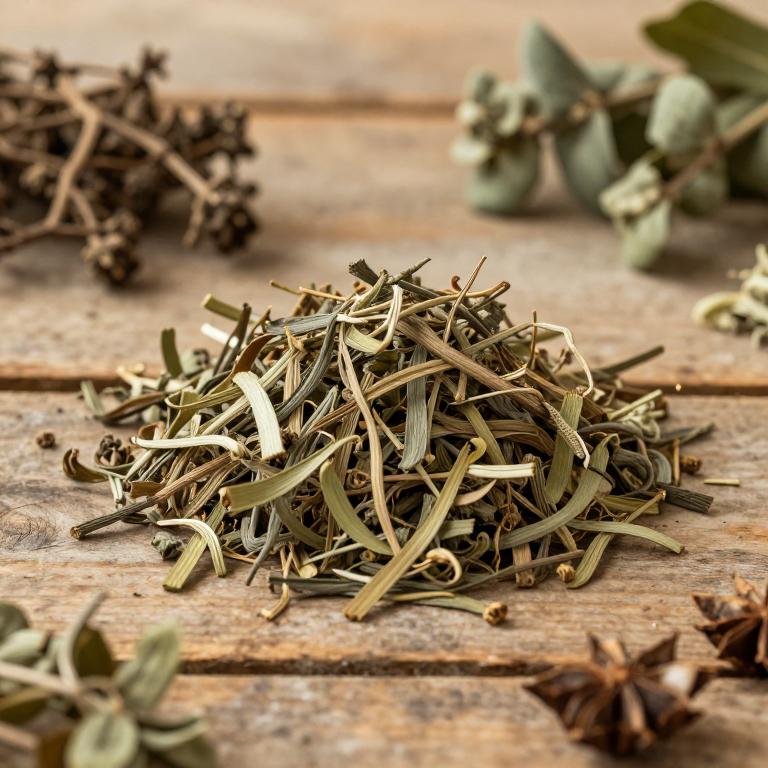
Names and Synonyms
Scientific Names
Accepted name
Mansoa hirsutaSources: Wikidata
Taxonomical Classification
This plant, Mansoa hirsuta, belongs to the kingdom Plantae and the phylum Streptophyta. Within the class Equisetopsida and subclass Magnoliidae, it is classified under the order Lamiales and the family Bignoniaceae. Finally, it is situated within the genus Mansoa.
| Rank | Classification |
|---|---|
| Kingdom | Plantae |
| Phylum | Streptophyta |
| Class | Equisetopsida |
| Subclass | Magnoliidae |
| Order | Lamiales |
| Family | Bignoniaceae |
| Genus | Mansoa |
Sources: The World Checklist of Vascular Plants (WCVP)
Distribution
This plant exhibits a specific geographical presence within the diverse landscapes of Brazil. Its distribution is primarily concentrated in the West-Central region of the country. Additionally, it can be found growing across the Northeast portion of Brazil. These two distinct areas represent the known habitats where the species thrives. Consequently, its range is characterized by these specific Brazilian territories.
| Region | Area |
|---|---|
| Brazil | Brazil West-Central |
| Brazil | Brazil Northeast |
Sources: The World Checklist of Vascular Plants (WCVP)
Botanical Identification
Ecology
The ecology of Mansoa hirsuta is fundamentally defined by its adaptation to the diverse semi-arid and seasonal landscapes of Brazil, specifically occupying the Caatinga (stricto sensu) and Cerrado (lato sensu) biomes. In these environments, the species demonstrates resilience to fluctuating moisture levels and distinct wet and dry seasons. Within the Caatinga, it thrives in xeric conditions characterized by high temperatures and irregular rainfall, while in the Cerrado, it integrates into more varied mosaic structures. Its presence in these specific habitats indicates an ecological niche capable of navigating the soil compositions and thermal variations inherent to these tropical savanna and thorn scrub ecosystems.
- Habitat :
- Caatinga (stricto sensu), Cerrado (lato sensu)
Morphology
The morphology of Mansoa hirsuta is characterized by its growth habit as a woody liana, functioning as an obligatory climber that requires external support to ascend. It is strictly a terrestrial plant, lacking aquatic or semiaquatic tendencies, and it maintains an independent existence as it does not function as a parasite. Furthermore, the species is non-epiphytic, remaining rooted in the ground rather than growing as a holoepiphyte, hemiepiphyte, or any other epiphytic form. Its structural development is defined by its woodiness, which provides the necessary rigidity for its climbing mechanism.
- Aquatic :
- terrestrial
- Climber :
- liana
- Climber :
- obligatory
- Epiphyte :
- terrestrial
- Parasite :
- independent
- Woodiness :
- woody
Sources: Global Inventory of Floras and Traits (GIFT)
Plant Parts
Mansoa hirsuta has 1 reported plant parts identified across 1 scientific publications and several other databases that are studied for medicinal purposes. The most consistently reported plant part include leaf.
| Plant part | Supporting sources | Consensus |
|---|---|---|
| Leaf | 1 supporting sources | ★☆☆☆☆ |
Leaf
- Biomedicine & pharmacotherapy = Biomedecine & pharmacotherapie
Activities
Mansoa hirsuta has 1 reported activities identified across 1 scientific publications and several other databases. The most consistently reported activities include Analgesic.
| Activity | Supporting sources | Consensus |
|---|---|---|
| Analgesic | 1 supporting sources | ★☆☆☆☆ |
Analgesic
- Biomedicine & pharmacotherapy = Biomedecine & pharmacotherapie
Conditions
Mansoa hirsuta has 4 reported investigations on conditions identified across 1 scientific publications and several other databases. The most consistently reported conditions include antihypertensive, edema, inflammation, pain.
| Condition | Supporting sources | Consensus |
|---|---|---|
| Antihypertensive | 1 supporting sources | ★☆☆☆☆ |
| Edema | 1 supporting sources | ★☆☆☆☆ |
| Inflammation | 1 supporting sources | ★☆☆☆☆ |
| Pain | 1 supporting sources | ★☆☆☆☆ |
Antihypertensive
- Phytomedicine : international journal of phytotherapy and phytopharmacology
Edema
- Biomedicine & pharmacotherapy = Biomedecine & pharmacotherapie
Inflammation
- Biomedicine & pharmacotherapy = Biomedecine & pharmacotherapie
Pain
- Biomedicine & pharmacotherapy = Biomedecine & pharmacotherapie
Preparations
Mansoa hirsuta has 2 reported preparations identified across 1 scientific publications and several other databases. The most consistently reported preparations include crude extracts, pentacyclic triterpenes rich fraction obtained from the leaves of Mansoa hirsuta.
| Preparation | Supporting sources | Consensus |
|---|---|---|
| Crude extracts | 1 supporting sources | ★☆☆☆☆ |
| Pentacyclic triterpenes rich fraction obtained from the leaves of mansoa hirsuta | 1 supporting sources | ★☆☆☆☆ |
Crude extracts
- Phytotherapy research : PTR
Pentacyclic triterpenes rich fraction obtained from the leaves of mansoa hirsuta
- Biomedicine & pharmacotherapy = Biomedecine & pharmacotherapie