Mammillaria spinosissima
Mammillaria spinosissima · Accepted scientific name
Scientific literature: Very Sparse (0 studies) · ★☆☆☆☆
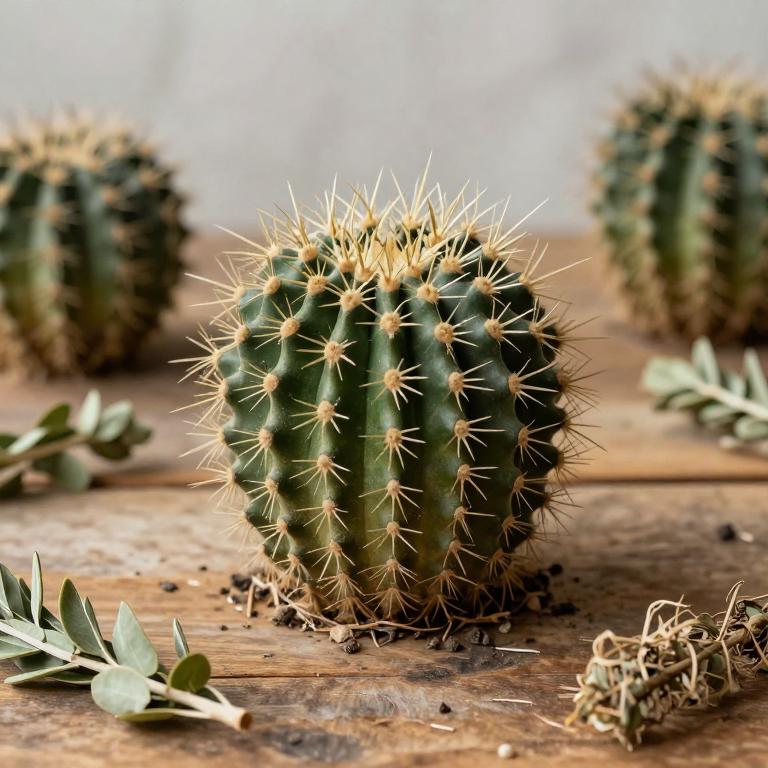
Mammillaria spinosissima is a fascinating cactus species known for its dense clusters of protective spines and resilient nature. Beyond its aesthetic appeal in desert landscapes, this plant has become a subject of significant scientific interest. Recent studies have begun to explore the complex chemical profile housed within its tissues. Specifically, researchers are investigating the plant's potential antioxidant activity and how these compounds combat oxidative stress. Understanding these biological properties could eventually lead to new insights in nutritional or medicinal applications.
- Synonyms
- Mammillaria Spinosissima Var. Pruinosa · Mammillaria Spinosissima Subsp. Tepoxtlana · 94 more
- Common names
- Not available
- Family
- Cactaceae
- Distribution
- Not available
- Plant Parts
- Not available
Classification
Common Names
Mammillaria spinosissima is a fascinating cactus species that is recognized by various names across different languages and regions. In Spanish-speaking areas, it is widely known by the common name Biznaga espinosa. Moving into different linguistic contexts, it is also referred to as mamilária najtŕnitejšia. Those searching for the plant in Cyrillic scripts will find it listed as Маммилярия колючейшая. These diverse names reflect the plant's widespread presence and its various cultural identities throughout the world.
Sources: Catalogue of Life (COL)
Synonyms
Mammillaria spinosissima is a fascinating species that has historically been identified through a variety of different botanical names. Throughout its taxonomic history, it has been referred to by several synonyms, including the names Cactus actinopleus and Cactus amabilis. Collectors and researchers may also encounter this plant under the labels Cactus atrosanguineus or Cactus auricomus. Additionally, the nomenclature includes the designation Cactus auroreus, reflecting the complex nature of its classification. Understanding these various synonyms is essential for anyone studying the diverse lineage of this specific cactus.
Sources: The World Checklist of Vascular Plants (WCVP)
Taxonomy
Mammillaria spinosissima belongs to the vast kingdom Plantae, marking its place among the diverse life forms on Earth. Within this biological classification, it is categorized under the class Equisetopsida. The plant further refines its identity as a member of the order Caryophyllales. It is more specifically grouped within the family Cactaceae, a group known for its unique desert adaptations. Finally, it is distinguished by its specific genus, Mammillaria, which characterizes its unique structural features.
| Rank | Classification |
|---|---|
| Kingdom | Plantae |
| Phylum | Streptophyta |
| Class | Equisetopsida |
| Subclass | Magnoliidae |
| Order | Caryophyllales |
| Family | Cactaceae |
| Genus | Mammillaria |
Sources: The World Checklist of Vascular Plants (WCVP)
Distribution
Geographic Regions
Mammillaria spinosissima is a resilient cactus species primarily found throughout the vast landscapes of Northern America. Its natural distribution is most concentrated within the diverse regions of Mexico. Specifically, this plant thrives across the central territories of the country. It can also be discovered spreading through the northeast of Mexico. Furthermore, the species maintains a significant presence throughout the southwestern reaches of the Mexican landscape.
Sources: The World Checklist of Vascular Plants (WCVP)
Identification
Morphology
Mammillaria spinosissima exhibits a distinctive shrub-like growth form that allows it to flourish in its natural habitat. As a self-supporting plant, it maintains a sturdy structure without the need for external assistance.
Sources: Global Inventory of Floras and Traits (GIFT)
Biological Activities
Compounds
Conditions
Mammillaria spinosissima exhibits a considerable level of antioxidant activity according to the phytochemical screening performed. This specific species was one of only three plants among the nine tested that demonstrated such significant properties. The presence of various phytochemicals, including sterols, triterpenes, flavonoids, and tannins, contributes to the chemical profile of this cactus. Researchers identified this antioxidant potential while evaluating the diverse chemical compositions of the genus Mammillaria. Consequently, the study highlights the functional importance of M. spinosissima regarding its medicinal and nutritional characteristics.