Least Mallow
Malva parviflora · Accepted scientific name
Scientific literature: Very Extensive (225 studies) · ★★★★★
Least Mallow, scientifically known as Malva parviflora, is a versatile annual herb belonging to the Malvaceae family. Widely distributed across temperate regions, this resilient plant is celebrated in traditional medicine for its soothing mucilaginous properties, offering therapeutic benefits for digestive health, skin inflammation, and various respiratory ailments.
- Family
- Malvaceae
- Native range
- Europe
- Parts used
- Leaf · Fruit
- Common names
- Alkali Mallow · Cheeseweed Mallow · 10 more
- Scientific synonyms
- Althaea Parviflora · Malva Rotundifolia Subsp. Parviflora
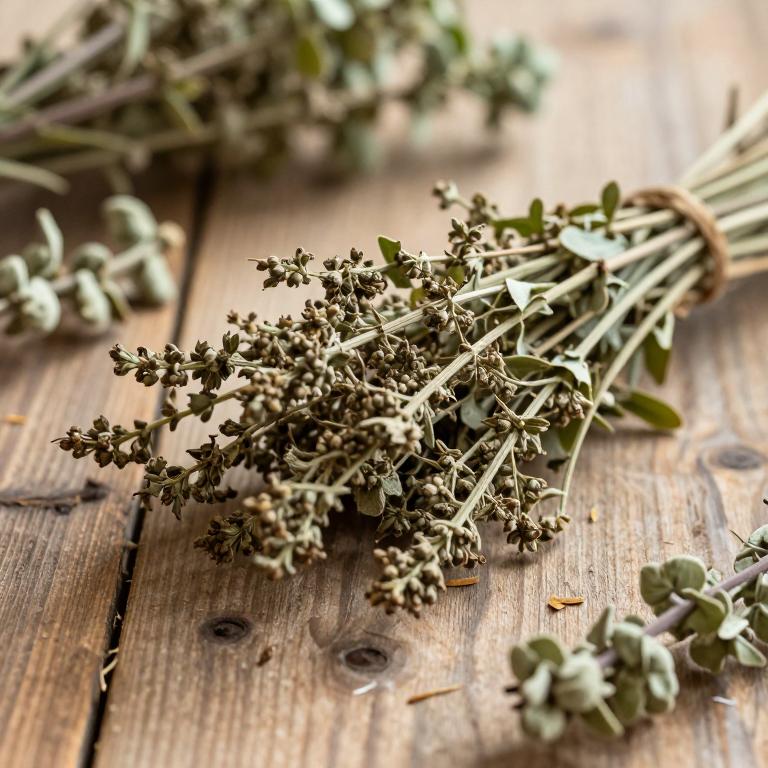
Names and Synonyms
Common Names
- alkali mallow
- cheeseweed mallow
- country mallow
- least mallow
- little mallow
- small-whorled mallow
- Egyptian mallow
- cheeseweed
- ring-leaf mallow
- small-flower mallow
- whorl-flower mallow
- whorled mallow
Scientific Names
Accepted name
Malva parvifloraSynonyms
- Althaea parviflora
- Malva rotundifolia subsp. parviflora
Regional and Traditional Names
Spanish:
- malva de Castilla
- malva de campo
- quesillo
- quesitos
German:
- kleinblütige Malve
- Kleinbluetige Malve
French:
- mauve à petites fleurs
- mauve parviflore
- mauve à petites fleurs
- mauve d'Egypte
- Mauve a petites fleurs
Sources: Wikidata, Catalogue of Life
Taxonomical Classification
This plant belongs to the kingdom Plantae within the phylum Streptophyta and is classified under the class Equisetopsida. As a member of the subclass Magnoliidae and the order Malvales, it is further organized into the family Malvaceae. Finally, it is identified by the genus Malva, specifically as the species Malva parviflora.
| Rank | Classification |
|---|---|
| Kingdom | Plantae |
| Phylum | Streptophyta |
| Class | Equisetopsida |
| Subclass | Magnoliidae |
| Order | Malvales |
| Family | Malvaceae |
| Genus | Malva |
Sources: The World Checklist of Vascular Plants (WCVP)
Distribution
This plant exhibits a broad presence across several distinct regions of the European continent. In Northern Europe, its range extends to include both Great Britain and Ireland. Moving toward the center of the continent, it can be found throughout Middle Europe in locations such as Belgium and Germany. Additionally, its distribution reaches into Southwestern Europe, specifically within the Baleares islands. These various locations demonstrate the plant's ability to inhabit diverse European landscapes.
| Region | Area |
|---|---|
| Northern Europe | Great Britain |
| Northern Europe | Ireland |
| Middle Europe | Belgium |
| Middle Europe | Germany |
| Southwestern Europe | Baleares |
| Southwestern Europe | Corse |
| Southwestern Europe | France |
| Southwestern Europe | Portugal |
| Southwestern Europe | Sardegna |
| Southwestern Europe | Spain |
Sources: The World Checklist of Vascular Plants (WCVP)
Botanical Identification
Ecology
The ecology of Malva parviflora is characterized by its remarkable adaptability to diverse environments, spanning a broad altitudinal gradient from sea level (0 m AMSL) up to elevations of 3500 m AMSL. This plant frequently colonizes disturbed and nutrient-rich environments, demonstrating a notable preference for habitats such as dumps, where it can thrive amidst anthropogenic disturbances. Its ability to persist across such a wide range of elevations and varied soil conditions highlights its status as a highly resilient opportunistic species.
- Elevational range max:
- 3500 m AMSL
- Elevational range min:
- 0 m AMSL
- Habitat :
- dump
Genetics
The genetics of Malva parviflora are characterized by a notable degree of chromosomal variability, which plays a significant role in its evolutionary adaptability and taxonomic classification. Within various populations and studies, the chromosome number has been observed to fluctuate, specifically documented at values of 40 and 44. This variation in the karyotype suggests a complex genomic structure that may be influenced by polyploidy or chromosomal rearrangements, common phenomena in the Malvaceae family. Such genetic plasticity likely contributes to the plant's ability to thrive in diverse ecological niches and varying environmental conditions.
- Chromosome number :
- 40, 44
Life history
The life history of Malva parviflora is characterized by an annual lifecycle, meaning it completes its entire developmental process from germination to seed production within a single growing season. As a therophyte, the plant survives unfavorable environmental conditions primarily through its seeds rather than through persistent vegetative structures, allowing it to rapidly colonize disturbed habitats. Its growth pattern is distinctly deciduous, shedding its foliage as the seasonal cycle concludes to facilitate the dispersal of its progeny. This life history strategy enables the species to thrive in transient environments, utilizing its ephemeral presence to maximize reproductive output before the onset of dormant periods.
- Deciduousness :
- deciduous
- Life form :
- therophyte
- Lifecycle :
- annual
Morphology
The morphology of Malva parviflora is characterized by its growth form as a non-woody herb and forb. It is a terrestrial plant that functions as an independent organism, rather than an epiphyte or a parasite. The plant is self-supporting, exhibiting an ascending shoot orientation. In terms of stature, it displays significant variability in size, with a plant height ranging from a minimum of 0.05 m to a maximum of 1.2 m, maintaining a mean height of approximately 0.75 m. The shoot length is similarly variable, with measurements ranging from a minimum of 10 cm to a maximum of 70 cm.
- Aquatic :
- terrestrial
- Climber :
- self-supporting
- Epiphyte :
- terrestrial
- Growth form :
- herb
- Growth form :
- forb
- Parasite :
- independent
- Plant height max:
- 1.2 m
- Plant height mean:
- 0.75 m
- Plant height min:
- 0.05 m
- Shoot length max:
- 70 cm
- Shoot length min:
- 10 cm
- Shoot orientation :
- ascending
- Woodiness :
- non-woody
Physiology
The physiology of Malva parviflora is characterized by a C3 photosynthetic pathway, which dictates its carbon fixation processes and metabolic efficiency. The plant exhibits a non-carnivorous nutritional strategy and does not possess the ability to function as a nitrogen fixer. Morphologically, its vegetative physiological capacity is driven by its leaf structure, which is distinctly lobed in form. These leaves vary significantly in size to optimize light interception, with lengths ranging from a minimum of 3 cm to a maximum of 10 cm. Similarly, leaf width demonstrates considerable variability, ranging from a minimum of 2 cm to a maximum of 10 cm, with a mean width typically observed at approximately 5 cm.
- Carnivory :
- non-carnivorous
- Leaf form :
- lobed
- Leaf length max:
- 10 cm
- Leaf length min:
- 3 cm
- Leaf width max:
- 10 cm
- Leaf width mean:
- 5 cm
- Leaf width min:
- 2 cm
- Nitrogen fixer :
- no
- Photosynthetic pathway :
- C3
Reproduction
The reproduction of Malva parviflora is primarily a sexual process, characterized by bisexual flowers that facilitate genetic diversity. The flowering period typically begins in April and concludes in July, though the timing can be variable across different seasons. These small, violet-colored flowers range in length from 0.25 cm to 0.5 cm. Pollination is achieved through biotic syndromes, specifically relying on insects to transfer pollen. While self-fertilization is noted as absent, the plant ensures reproductive success through its specialized floral traits. Following successful pollination, the plant develops a capsule fruit, which reaches a maximum width of 0.23 cm. The fruit is indehiscent, meaning it does not automatically open at maturity. Within these capsules, the plant produces a high volume of seeds, ranging from 101 to 1000 seeds per fruit. These seeds are quite small, with a maximum length of 1.8 mm and a mean mass of approximately 0.0033914285 g (ranging from a minimum of 0.0013 g to a maximum of 0.0082 g). Dispersal of the seeds is managed through an unspecialized syndrome, though it also exhibits anthropochorous traits, meaning human activity plays a significant role in the spread of the species. Asexual reproduction is absent in this plant.
- Dehiscence :
- indehiscent
- Dispersal syndrome :
- unspecialized
- Dispersal syndrome :
- anthropochorous
- Flower colour :
- violet
- Flower length max:
- 0.5 cm
- Flower length min:
- 0.25 cm
- Flowering time :
- Apr
- Flowering time :
- Jul
- Fruit type :
- capsule
- Fruit width max:
- 0.23 cm
- Pollination syndrome :
- insect
- Pollination syndrome :
- biotic
- Reproduction asexual :
- absent
- Reproduction sexual :
- bisexual
- Seed length max:
- 1.8 mm
- Seed mass max:
- 0.0082 g
- Seed mass mean:
- 0.0033914285 g
- Seed mass min:
- 0.0013 g
- Seeds_per_fruit :
- 101-1000
- Self fertilization :
- absent
Sources: Global Inventory of Floras and Traits (GIFT)
Plant Parts
Malva parviflora has 2 reported plant parts identified across 3 scientific publications and several other databases that are studied for medicinal purposes. The most consistently reported plant part include leaf, fruit.
| Plant part | Supporting sources | Consensus |
|---|---|---|
| Leaf | 2 supporting sources | ★☆☆☆☆ |
| Fruit | 1 supporting sources | ★☆☆☆☆ |
Leaf
- Food & function
- Archives of Razi Institute
Fruit
- Asian Pacific journal of tropical biomedicine
Chemicals
Malva parviflora has 33 reported phytochemicals identified across 3 scientific publications and several other databases. The most consistently reported chemicals include -carotene, Ash, CALCIUM, CINNAMIC ACID, FAT.
| Chemical | Supporting sources | Consensus |
|---|---|---|
| -carotene | 1 supporting sources | ★☆☆☆☆ |
| Ash | 1 supporting sources | ★☆☆☆☆ |
| CALCIUM | 1 supporting sources | ★☆☆☆☆ |
| CINNAMIC ACID | 1 supporting sources | ★☆☆☆☆ |
| FAT | 1 supporting sources | ★☆☆☆☆ |
| Flavonoid | 1 supporting sources | ★☆☆☆☆ |
| Flavonoids | 1 supporting sources | ★☆☆☆☆ |
| GLUTAMIC ACID | 1 supporting sources | ★☆☆☆☆ |
| IRON | 1 supporting sources | ★☆☆☆☆ |
| MALVALIC ACID | 1 supporting sources | ★☆☆☆☆ |
-carotene
- Dr. Duke
Ash
- Dr. Duke
CALCIUM
- Dr. Duke
CINNAMIC ACID
- Scientific reports
FAT
- Dr. Duke
Flavonoid
- Scientific reports
Flavonoids
- Heliyon
GLUTAMIC ACID
- Scientific reports
IRON
- Dr. Duke
MALVALIC ACID
- Dr. Duke
Activities
Malva parviflora has 177 reported activities identified across 3 scientific publications and several other databases. The most consistently reported activities include Antioxidant, Acidulant, Aldose-Reductase-Inhibitor, Allergenic, Analgesic.
| Activity | Supporting sources | Consensus |
|---|---|---|
| Antioxidant | 3 supporting sources | ★★☆☆☆ |
| Acidulant | 1 supporting sources | ★☆☆☆☆ |
| Aldose-Reductase-Inhibitor | 1 supporting sources | ★☆☆☆☆ |
| Allergenic | 1 supporting sources | ★☆☆☆☆ |
| Analgesic | 1 supporting sources | ★☆☆☆☆ |
| Angiotensin-Receptor-Blocker | 1 supporting sources | ★☆☆☆☆ |
| AntiAGE | 1 supporting sources | ★☆☆☆☆ |
| AntiCFS | 1 supporting sources | ★☆☆☆☆ |
| AntiCTS | 1 supporting sources | ★☆☆☆☆ |
| AntiCrohn's | 1 supporting sources | ★☆☆☆☆ |
Antioxidant
- Dr. Duke
- Heliyon
- Pharmaceutical biology
Acidulant
- Dr. Duke
Aldose-Reductase-Inhibitor
- Dr. Duke
Allergenic
- Dr. Duke
Analgesic
- Dr. Duke
Angiotensin-Receptor-Blocker
- Dr. Duke
AntiAGE
- Dr. Duke
AntiCFS
- Dr. Duke
AntiCTS
- Dr. Duke
AntiCrohn's
- Dr. Duke
Conditions
Malva parviflora has 8 reported investigations on conditions identified across 3 scientific publications and several other databases. The most consistently reported conditions include Mycobacterium avium, Mycobacterium tuberculosis, aspergillus flavus, insulin resistance, mastitis.
| Condition | Supporting sources | Consensus |
|---|---|---|
| Mycobacterium avium | 1 supporting sources | ★☆☆☆☆ |
| Mycobacterium tuberculosis | 1 supporting sources | ★☆☆☆☆ |
| Aspergillus flavus | 1 supporting sources | ★☆☆☆☆ |
| Insulin resistance | 1 supporting sources | ★☆☆☆☆ |
| Mastitis | 1 supporting sources | ★☆☆☆☆ |
| Oxidative stress | 1 supporting sources | ★☆☆☆☆ |
| Retained placenta | 1 supporting sources | ★☆☆☆☆ |
| Wound | 1 supporting sources | ★☆☆☆☆ |
Mycobacterium avium
- Phytotherapy research : PTR
Mycobacterium tuberculosis
- Phytotherapy research : PTR
Aspergillus flavus
- Heliyon
Insulin resistance
- Food & function
Mastitis
- Asian Pacific journal of tropical biomedicine
Oxidative stress
- Food & function
Retained placenta
- Evidence-based complementary and alternative medicine : eCAM
Wound
- Asian Pacific journal of tropical biomedicine
Preparations
Malva parviflora has 7 reported preparations identified across 3 scientific publications and several other databases. The most consistently reported preparations include Hexane extracts, Hydroalcoholic extracts, benzene, chloroform, metabolic extracts.
| Preparation | Supporting sources | Consensus |
|---|---|---|
| Hexane extracts | 1 supporting sources | ★☆☆☆☆ |
| Hydroalcoholic extracts | 1 supporting sources | ★☆☆☆☆ |
| Benzene | 1 supporting sources | ★☆☆☆☆ |
| Chloroform | 1 supporting sources | ★☆☆☆☆ |
| Metabolic extracts | 1 supporting sources | ★☆☆☆☆ |
| Methanol | 1 supporting sources | ★☆☆☆☆ |
| Methanol extract | 1 supporting sources | ★☆☆☆☆ |
Hexane extracts
- Phytotherapy research : PTR
Hydroalcoholic extracts
- Journal of ethnopharmacology
Benzene
- Journal of traditional Chinese medicine = Chung i tsa chih ying wen pan
Chloroform
- Journal of traditional Chinese medicine = Chung i tsa chih ying wen pan
Metabolic extracts
- Saudi journal of biological sciences
Methanol
- Journal of traditional Chinese medicine = Chung i tsa chih ying wen pan
Methanol extract
- Phytotherapy research : PTR