toringa crab apple
Malus toringo · Accepted scientific name
Scientific literature: Very Sparse (20 studies) · ★☆☆☆☆
Toringa crab apple, scientifically known as Malus toringo, is a resilient deciduous tree prized for its ornamental beauty and medicinal potential. Native to East Asia, it features fragrant white blossoms and edible fruit. Historically used in traditional practices, its various components offer unique therapeutic properties in herbal medicine.
- Family
- Rosaceae
- Native range
- Europe
- Parts used
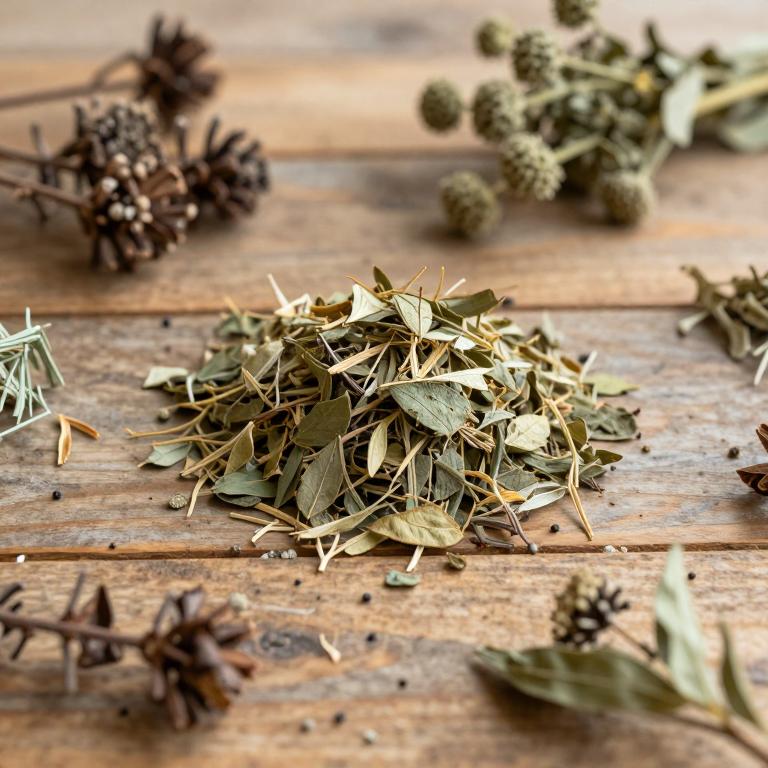
- Leaf
- Common names
- Toringa Crab Apple · Toringo Crab
- Scientific synonyms
- Pyrus Esquirolii · Pyrus Mengo · 38 more
Names and Synonyms
Common Names
- toringa crab apple
- toringo crab
Scientific Names
Accepted name
Malus toringoSynonyms
- Pyrus esquirolii
- Pyrus mengo
- Crataegus cavaleriei
- Crataegus taquetii
- Pyrus rivularis var. toringo
- Malus baccata subsp. toringo
- Malus hupehensis
- Pyrus riversii
- Malus microcarpa toringo
- Pyrus sieboldii f. latifolia
- Malus toringo var. sargentii
- Pyrus sieboldii var. integrifolia
- Malus toringo subvar. sargentii
- Sorbus toringo
- Malus sieboldii var. arborescens
- Malus sieboldii f. ascendens
- Malus toringo subsp. sargentii
- Pyrus sieboldii f. tomentosa
- Photinia rubrolutea
- Pyrus toringo
- Pyrus toringo var. incisa
- Pyrus toringo var. integrifolia
- Malus sphaerocarpa
- Malus sieboldii incisa
- Malus sieboldii var. koringo
- Malus sieboldii megarantha
- Malus sieboldii sargentii
- Malus sieboldii var. sargentii
- Malus sieboldii var. toringo
- Malus sieboldii vulgaris
- Malus rivularis toringo
- Malus sargentii
- Malus toringo var. integrifolia
- Pyrus subcrataegifolia
- Malus toringo var. incisa
- Pyrus sphaerocarpa
- Malus toringo f. koringo
- Pyrus sieboldii var. arborescens
- Malus toringo var. rosea
- Pyrus sieboldii var. incisa
Regional and Traditional Names
German:
- Siebolds Apfel
- Toringo-Apfel
Sources: Wikidata, Catalogue of Life
Taxonomical Classification
This plant belongs to the kingdom Plantae and is classified under the phylum Streptophyta within the class Equisetopsida. Following its placement in the subclass Magnoliidae and order Rosales, it is a member of the Rosaceae family. Finally, its specific taxonomic identity is defined by the genus Malus.
| Rank | Classification |
|---|---|
| Kingdom | Plantae |
| Phylum | Streptophyta |
| Class | Equisetopsida |
| Subclass | Magnoliidae |
| Order | Rosales |
| Family | Rosaceae |
| Genus | Malus |
Sources: The World Checklist of Vascular Plants (WCVP)
Distribution
This plant exhibits a diverse geographical range that spans across multiple regions of the Eurasian continent. In Middle Europe, its presence can be found within the borders of Germany. Moving toward Eastern Europe, the species is distributed throughout the Baltic States and Ukraine. Its range also extends significantly into the Russian Far East, specifically on the island of Sakhalin. Finally, the plant is located in the southern reaches of Asia within China South-Central.
| Region | Area |
|---|---|
| Middle Europe | Germany |
| Eastern Europe | Baltic States |
| Eastern Europe | Ukraine |
| Russian Far East | Sakhalin |
| China | China South-Central |
| China | Manchuria |
| China | China North-Central |
| China | China Southeast |
| Eastern Asia | Korea |
| Eastern Canada | Ontario |
Sources: The World Checklist of Vascular Plants (WCVP)
Botanical Identification
Ecology
The ecology of Malus toringo is defined by its preference for forest habitats, where it thrives within established woodland ecosystems. This species exhibits a broad altitudinal distribution, allowing it to occupy diverse ecological niches across varying vertical gradients. It is found at elevations ranging from a minimum of 150 m AMSL to a maximum of 2000 m AMSL, with its presence most characteristically centered around a mean elevation of 1075 m AMSL.
- Elevational range max:
- 2000 m AMSL
- Elevational range mean:
- 1075 m AMSL
- Elevational range min:
- 150 m AMSL
- Habitat :
- forest
Life history
The life history of Malus torquino is characterized by its status as a perennial organism, allowing it to persist through multiple growing seasons and establish long-term presence in its habitat. In terms of its structural growth strategy, the species is classified as a phanerophyte, specifically exhibiting traits of a phanerophyte that ensure its reproductive buds and vegetative structures are held well above the ground level. This phanerophyte life form enables the plant to withstand various environmental pressures by maintaining its primary biomass in an elevated position, facilitating continuous development over its multi-year lifecycle.
- Life form :
- phanerophyte
- Lifecycle :
- perennial
Morphology
The morphology of Malus toringo is characterized by a woody growth form, specifically classified as a shrub. It functions as an independent organism, neither acting as a parasite nor an epiphyte, as it maintains a terrestrial existence. The plant is self-supporting rather than being a climber or vine, and it reaches a height ranging from a minimum of 2 m to a maximum of 6 m, with a mean plant height of approximately 3.5 m.
- Aquatic :
- terrestrial
- Climber :
- self-supporting
- Epiphyte :
- terrestrial
- Growth form :
- shrub
- Parasite :
- independent
- Plant height max:
- 6 m
- Plant height mean:
- 3.5 m
- Plant height min:
- 2 m
- Woodiness :
- woody
Physiology
The physiology of Malus toringo is characterized by a C3 photosynthetic pathway, which dictates its metabolic efficiency and carbon fixation processes. The plant's vegetative growth and energy production are supported by leaf morphology that exhibits significant dimensional variability. The leaves possess a length that ranges from a minimum of 3 cm to a maximum of 7.5 cm, with a calculated mean leaf length of 5.25 cm. Complementing these longitudinal dimensions, the leaf width fluctuates between a minimum of 2 cm and a maximum of 4 cm, providing the necessary surface area for light interception and gas exchange essential to its C3 metabolic function.
- Leaf length max:
- 7.5 cm
- Leaf length mean:
- 5.25 cm
- Leaf length min:
- 3 cm
- Leaf width max:
- 4 cm
- Leaf width min:
- 2 cm
- Photosynthetic pathway :
- C3
Reproduction
The reproduction of Malus toringo is characterized by a flowering and fruiting process involving specific morphological dimensions. The reproductive cycle begins with flowers that typically range in length from a minimum of 2 cm to a maximum of 3 cm. Following pollination, the plant produces fleshy fruits that vary in size; the fruit length generally ranges from a minimum of 0.6 cm to a maximum of 0.8 cm (with a mean length of 0.7 cm), while the fruit width spans from 0.6 cm to 0.8 cm (with a mean width of 0.7 cm). Within these fleshy fruits, the seeds serve as the primary dispersal units, exhibiting a mean seed mass of approximately 0.0077975 g, with individual seeds weighing as little as 0.0028 g and up to 0.01761 g. The seed volume is remarkably consistent, maintaining a mean, minimum, and maximum value of 6.8 mm³.
- Flower length max:
- 3 cm
- Flower length min:
- 2 cm
- Fruit dryness :
- fleshy
- Fruit length max:
- 0.8 cm
- Fruit length mean:
- 0.7 cm
- Fruit length min:
- 0.6 cm
- Fruit width max:
- 0.8 cm
- Fruit width mean:
- 0.7 cm
- Fruit width min:
- 0.6 cm
- Seed mass max:
- 0.01761 g
- Seed mass mean:
- 0.0077975 g
- Seed mass min:
- 0.0028 g
- Seed volume max:
- 6.8 mm³
Sources: Global Inventory of Floras and Traits (GIFT)
Plant Parts
Malus toringo has 1 reported plant parts identified across 3 scientific publications and several other databases that are studied for medicinal purposes. The most consistently reported plant part include leaf.
| Plant part | Supporting sources | Consensus |
|---|---|---|
| Leaf | 3 supporting sources | ★★☆☆☆ |
Leaf
- Food & function
- Molecules (Basel, Switzerland)
- Journal of food biochemistry
Chemicals
Malus toringo has 12 reported phytochemicals identified across 3 scientific publications and several other databases. The most consistently reported chemicals include 3-Hydroxyphloridzin, 3-O-Coumaroylquinic acid, ARA, FUC, GAL.
| Chemical | Supporting sources | Consensus |
|---|---|---|
| 3-Hydroxyphloridzin | 1 supporting sources | ★☆☆☆☆ |
| 3-O-Coumaroylquinic acid | 1 supporting sources | ★☆☆☆☆ |
| ARA | 1 supporting sources | ★☆☆☆☆ |
| FUC | 1 supporting sources | ★☆☆☆☆ |
| GAL | 1 supporting sources | ★☆☆☆☆ |
| GALA | 1 supporting sources | ★☆☆☆☆ |
| GLCa | 1 supporting sources | ★☆☆☆☆ |
| MAN | 1 supporting sources | ★☆☆☆☆ |
| Phlorizin | 1 supporting sources | ★☆☆☆☆ |
| Rha | 1 supporting sources | ★☆☆☆☆ |
3-Hydroxyphloridzin
- Food & function
3-O-Coumaroylquinic acid
- Food & function
ARA
- Molecules (Basel, Switzerland)
FUC
- Molecules (Basel, Switzerland)
GAL
- Molecules (Basel, Switzerland)
GALA
- Molecules (Basel, Switzerland)
GLCa
- Molecules (Basel, Switzerland)
MAN
- Molecules (Basel, Switzerland)
Phlorizin
- Food & function
Rha
- Molecules (Basel, Switzerland)
Activities
Malus toringo has 3 reported activities identified across 3 scientific publications and several other databases. The most consistently reported activities include Antihyperglycemic, Hypoglycemic, Antioxidant.
| Activity | Supporting sources | Consensus |
|---|---|---|
| Antihyperglycemic | 2 supporting sources | ★☆☆☆☆ |
| Hypoglycemic | 2 supporting sources | ★☆☆☆☆ |
| Antioxidant | 1 supporting sources | ★☆☆☆☆ |
Antihyperglycemic
- Molecules (Basel, Switzerland)
- Food & function
Hypoglycemic
- Molecules (Basel, Switzerland)
- Phytochemistry
Antioxidant
- Molecules (Basel, Switzerland)
Preparations
Malus toringo has 2 reported preparations identified across 3 scientific publications and several other databases. The most consistently reported preparations include leaves, tea leaves.
| Preparation | Supporting sources | Consensus |
|---|---|---|
| Leaves | 2 supporting sources | ★☆☆☆☆ |
| Tea leaves | 1 supporting sources | ★☆☆☆☆ |
Leaves
- Food & function
- Molecules (Basel, Switzerland)
Tea leaves
- Journal of food biochemistry