magnolia tree
Magnolia · Accepted scientific name
Scientific literature: Very Sparse (31 studies) · ★☆☆☆☆
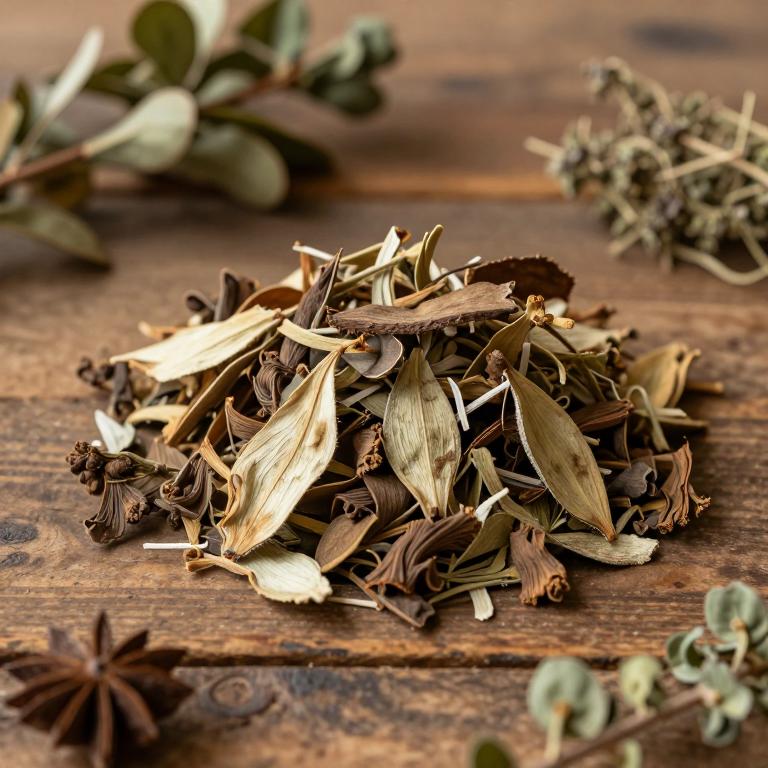
Magnolia tree, scientifically known as Magnolia, is a versatile medicinal plant revered for centuries. Its aromatic flowers and bark contain bioactive compounds like magnolol and honokiol. These properties offer potent antioxidant, anti-inflammatory, and sedative effects, making it a valuable natural remedy for managing anxiety, sleep disorders, and digestive issues.
- Family
- Magnoliaceae
- Native range
- Europe
- Parts used
- Flower · Fruit
- Common names
- Michelia · Tulip Magnolia
- Scientific synonyms
- Oyama · Sinomanglietia · 31 more
Names and Synonyms
Common Names
- Michelia
- Tulip Magnolia
Scientific Names
Accepted name
MagnoliaSynonyms
- Oyama
- Sinomanglietia
- Yulania
- Pachylarnax
- Elmerrillia
- Micheliopsis
- Dugandiodendron
- Champaca
- Aromadendron
- Buergeria
- Alcimandra
- Liriopsis
- Paramichelia
- Lirianthe
- Lassonia
- Kobus
- Parakmeria
- Kmeria
- Paramanglietia
- Manglietia
- Manglietiastrum
- Guillimia
- Gwillimia
- Svenhedinia
- Tulipastrum
- Tsoongiodendron
- Woonyoungia
- Santanderia
- Sampacca
- Talauma
- Houpoea
- Paramagnolia
- Metamagnolia
Regional and Traditional Names
Spanish:
- Champaca
- Magnolias
- Sampacca
- Lirianthe
- Woonyoungia
- Tulipastrum
- Yulania
- Parakmeria
- Svenhedinia
- Sphenocarpus
- Magnolio
- Paramanglietia
- Gwillimia
- Micheliopsis
- Tsoongiodendron
- Manglietiastrum
- Magnolias
German:
- Magnolien
- Magnolienholz
- Magnolie
- magnoliaceae
- Magnolien
French:
- magnolier
- Magnolias
Sources: Wikidata, Catalogue of Life
Taxonomical Classification
This plant belongs to the kingdom Plantae within the phylum Streptophyta and the class Equisetopsida. It is further classified under the subclass Magnoliidae and the order Magnoliales, falling into the family Magnoliaceae. Ultimately, its taxonomic identity is defined by the genus Magnolia.
| Rank | Classification |
|---|---|
| Kingdom | Plantae |
| Phylum | Streptophyta |
| Class | Equisetopsida |
| Subclass | Magnoliidae |
| Order | Magnoliales |
| Family | Magnoliaceae |
| Genus | Magnolia |
Sources: The World Checklist of Vascular Plants (WCVP)
Distribution
This plant exhibits a remarkably diverse geographical distribution across several distinct regions of the world. In Europe, its presence can be identified within the Mediterranean landscapes of Italy. Moving toward the Western Indian Ocean, species of Magnolia are found inhabiting the islands of Mauritius and Réunion. The plant also extends its range into the Russian Far East, specifically around the Kuril Islands. Finally, a significant portion of its habitat is located within the South-Central regions of China.
| Region | Area |
|---|---|
| Southeastern Europe | Italy |
| Western Indian Ocean | Mauritius |
| Western Indian Ocean | Réunion |
| Russian Far East | Kuril Is. |
| China | China South-Central |
| China | Hainan |
| China | Manchuria |
| China | China North-Central |
| China | China Southeast |
| China | Tibet |
Sources: The World Checklist of Vascular Plants (WCVP)
Plant Parts
Magnolia has 6 reported plant parts identified across 7 scientific publications and several other databases that are studied for medicinal purposes. The most consistently reported plant part include flower, fruit, leaf, root, seed.
| Plant part | Supporting sources | Consensus |
|---|---|---|
| Flower | 2 supporting sources | ★☆☆☆☆ |
| Fruit | 1 supporting sources | ★☆☆☆☆ |
| Leaf | 1 supporting sources | ★☆☆☆☆ |
| Root | 1 supporting sources | ★☆☆☆☆ |
| Seed | 1 supporting sources | ★☆☆☆☆ |
| Stem | 1 supporting sources | ★☆☆☆☆ |
Flower
- Plants (Basel, Switzerland)
- Molecules (Basel, Switzerland)
Fruit
- Chemistry & biodiversity
Leaf
- Plants (Basel, Switzerland)
Root
- Molecules (Basel, Switzerland)
Seed
- Biological & pharmaceutical bulletin
Stem
- Molecules (Basel, Switzerland)
Chemicals
Magnolia has 5 reported phytochemicals identified across 7 scientific publications and several other databases. The most consistently reported chemicals include Honokiol, Magnolol, linoleic acid, oleic acid, palmitic acid.
| Chemical | Supporting sources | Consensus |
|---|---|---|
| Honokiol | 3 supporting sources | ★★☆☆☆ |
| Magnolol | 1 supporting sources | ★☆☆☆☆ |
| linoleic acid | 1 supporting sources | ★☆☆☆☆ |
| oleic acid | 1 supporting sources | ★☆☆☆☆ |
| palmitic acid | 1 supporting sources | ★☆☆☆☆ |
Honokiol
- Liver international : official journal of the International Association for the Study of the Liver
- Molecules (Basel, Switzerland)
- Chemico-biological interactions
Magnolol
- Molecules (Basel, Switzerland)
linoleic acid
- Biological & pharmaceutical bulletin
oleic acid
- Biological & pharmaceutical bulletin
palmitic acid
- Biological & pharmaceutical bulletin
Activities
Magnolia has 5 reported activities identified across 7 scientific publications and several other databases. The most consistently reported activities include Anticancer, Antiviral, Anticonvulsant, Antioxidant, Anxiolytic.
| Activity | Supporting sources | Consensus |
|---|---|---|
| Anticancer | 2 supporting sources | ★☆☆☆☆ |
| Antiviral | 2 supporting sources | ★☆☆☆☆ |
| Anticonvulsant | 1 supporting sources | ★☆☆☆☆ |
| Antioxidant | 1 supporting sources | ★☆☆☆☆ |
| Anxiolytic | 1 supporting sources | ★☆☆☆☆ |
Anticancer
- Chemico-biological interactions
- International journal of molecular sciences
Antiviral
- Zeitschrift fur Naturforschung. C, Journal of biosciences
- Liver international : official journal of the International Association for the Study of the Liver
Anticonvulsant
- Zeitschrift fur Naturforschung. C, Journal of biosciences
Antioxidant
- International journal of molecular sciences
Anxiolytic
- Molecules (Basel, Switzerland)
Conditions
Magnolia has 1 reported investigations on conditions identified across 7 scientific publications and several other databases. The most consistently reported conditions include anxiety.
| Condition | Supporting sources | Consensus |
|---|---|---|
| Anxiety | 1 supporting sources | ★☆☆☆☆ |
Anxiety
- Molecules (Basel, Switzerland)
Preparations
Magnolia has 7 reported preparations identified across 7 scientific publications and several other databases. The most consistently reported preparations include Honokiol, bark extracts, bark preparations, preparations, tea infusions.
| Preparation | Supporting sources | Consensus |
|---|---|---|
| Honokiol | 1 supporting sources | ★☆☆☆☆ |
| Bark extracts | 1 supporting sources | ★☆☆☆☆ |
| Bark preparations | 1 supporting sources | ★☆☆☆☆ |
| Preparations | 1 supporting sources | ★☆☆☆☆ |
| Tea infusions | 1 supporting sources | ★☆☆☆☆ |
| Water extract | 1 supporting sources | ★☆☆☆☆ |
| Water extracts | 1 supporting sources | ★☆☆☆☆ |
Honokiol
- Liver international : official journal of the International Association for the Study of the Liver
Bark extracts
- Molecules (Basel, Switzerland)
Bark preparations
- Molecules (Basel, Switzerland)
Preparations
- Molecules (Basel, Switzerland)
Tea infusions
- Chemistry & biodiversity
Water extract
- Phytotherapy research : PTR
Water extracts
- Phytotherapy research : PTR