Magnolia sirindhorniae
Magnolia sirindhorniae · Accepted scientific name
Scientific literature: Very Sparse (8 studies) · ★☆☆☆☆
, scientifically known as Magnolia sirindhorniae, is a rare and significant medicinal plant native to Southeast Asia. Renowned for its unique phytochemical profile, this species offers immense therapeutic potential. Research focuses on its bioactive compounds, which may provide antioxidant and anti-inflammatory benefits, making it a vital subject for ethnobotanical study.
- Family
- Magnoliaceae
- Native range
- Asia-Tropical
- Parts used
- Not available
- Common names
- Not available
- Scientific synonyms
- Michelia Sirindhorniae
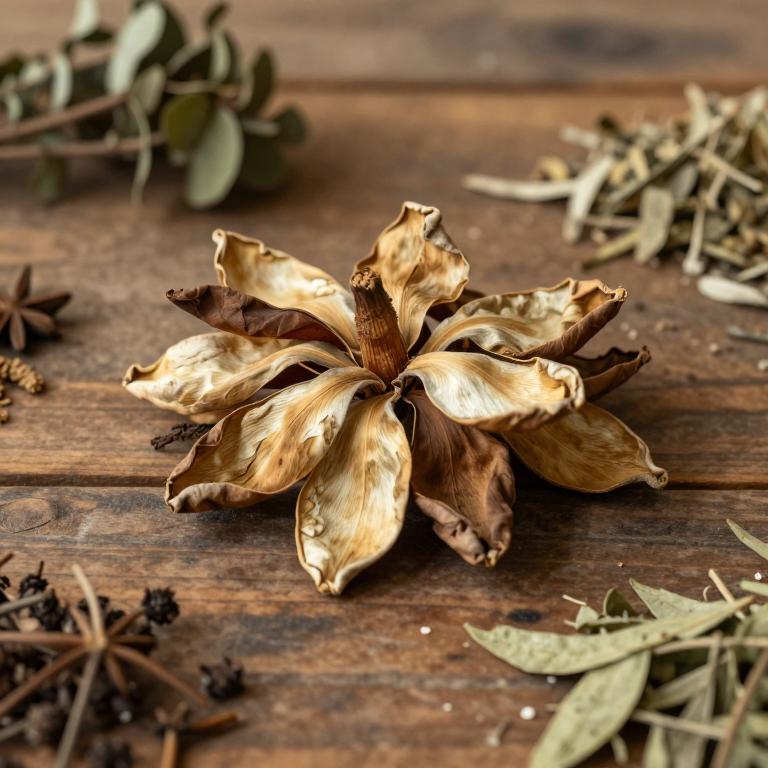
Names and Synonyms
Scientific Names
Accepted name
Magnolia sirindhorniaeSynonyms
- Michelia sirindhorniae
Regional and Traditional Names
French:
- Michelia sirindhorniae
Sources: Wikidata, Catalogue of Life
Taxonomical Classification
This plant belongs to the kingdom Plantae and the phylum Streptophyta. Within the class Equisetopsida and subclass Magnoliidae, it is classified under the order Magnoliales and the family Magnoliaceae. Finally, it is identified by the genus Magnolia.
| Rank | Classification |
|---|---|
| Kingdom | Plantae |
| Phylum | Streptophyta |
| Class | Equisetopsida |
| Subclass | Magnoliidae |
| Order | Magnoliales |
| Family | Magnoliaceae |
| Genus | Magnolia |
Sources: The World Checklist of Vascular Plants (WCVP)
Distribution
This plant is a rare medicinal species primarily found within the Indo-China region. Its specific geographical distribution is limited to the tropical landscapes of Thailand. Within this territory, it thrives in particular forest ecosystems that support its growth. Because its range is so localized, the species is considered a significant part of Thailand's unique biodiversity. Understanding this narrow habitat is essential for the continued conservation of the species.
| Region | Area |
|---|---|
| Indo-China | Thailand |
Sources: The World Checklist of Vascular Plants (WCVP)
Botanical Identification
Life history
The life history of Magnolia sirindhorniae is characterized by its classification as a phanerophyte, a growth form where the perennating buds are located high above the ground on woody stems. Within this botanical framework, it is specifically identified by both its nanophanerophyte and phanerophyte traits, indicating a life cycle centered around a stable, woody perennial structure that allows it to persist through varying seasonal conditions. As a phanerophyte, the plant invests significant energy into the development of permanent above-ground biomass, ensuring that its reproductive and vegetative buds are protected from ground-level disturbances and herbivory. This life history strategy supports a long-lived perennial existence, typical of the Magnoliaceae family, where the plant maintains a consistent presence in its ecological niche through sustained woody growth and seasonal cycles of flowering and foliage development.
- Life form :
- phanerophyte
Morphology
The morphology of Magnolia sirindhorniae is characterized by its structural development as a woody plant, possessing a firm and lignified framework. It functions as a terrestrial organism, growing directly in the soil rather than living as an epiphyte. In terms of its growth habit, the species is classified as a self-supporting climber, meaning it maintains its own structural integrity without the necessity of external hosts. Furthermore, it is an independent organism, exhibiting no parasitic tendencies toward other plants.
- Climber :
- self-supporting
- Epiphyte :
- terrestrial
- Parasite :
- independent
- Woodiness :
- woody
Sources: Global Inventory of Floras and Traits (GIFT)
Chemicals
Magnolia sirindhorniae has 2 reported phytochemicals identified across 0 scientific publications and several other databases. The most consistently reported chemicals include Linalool, Volatile oil.
| Chemical | Supporting sources | Consensus |
|---|---|---|
| Linalool | 1 supporting sources | ★☆☆☆☆ |
| Volatile oil | 1 supporting sources | ★☆☆☆☆ |
Linalool
- Chemistry & biodiversity
Volatile oil
- Chemistry & biodiversity
Activities
Magnolia sirindhorniae has 2 reported activities identified across 0 scientific publications and several other databases. The most consistently reported activities include Antimicrobial, Antioxidant.
| Activity | Supporting sources | Consensus |
|---|---|---|
| Antimicrobial | 1 supporting sources | ★☆☆☆☆ |
| Antioxidant | 1 supporting sources | ★☆☆☆☆ |
Antimicrobial
- Chemistry & biodiversity
Antioxidant
- Chemistry & biodiversity
Conditions
Magnolia sirindhorniae has 2 reported investigations on conditions identified across 0 scientific publications and several other databases. The most consistently reported conditions include Klebsiella pneumoniae, Staphylococcus aureus.
| Condition | Supporting sources | Consensus |
|---|---|---|
| Klebsiella pneumoniae | 1 supporting sources | ★☆☆☆☆ |
| Staphylococcus aureus | 1 supporting sources | ★☆☆☆☆ |
Klebsiella pneumoniae
- Chemistry & biodiversity
Staphylococcus aureus
- Chemistry & biodiversity