Japanese Big Leaf Magnolia
Magnolia obovata · Accepted scientific name
Scientific literature: Sparse (70 studies) · ★★☆☆☆
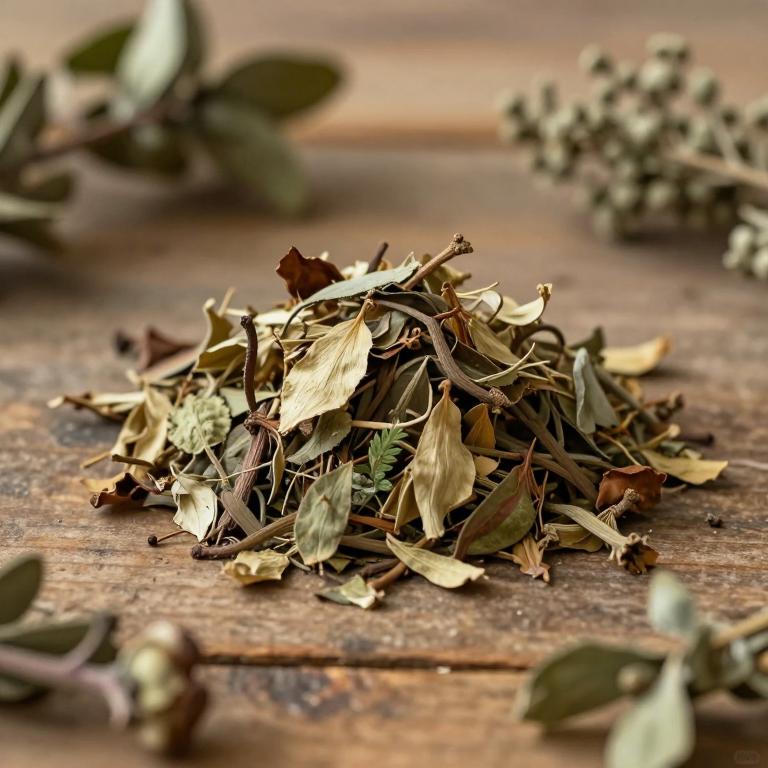
Japanese Big Leaf Magnolia, scientifically known as Magnolia obovata, is a striking deciduous shrub or small tree prized for its massive, creamy-white blossoms. Native to North America, this resilient plant offers lush, glossy foliage and significant medicinal potential, traditionally utilized in various cultures for its diverse therapeutic properties.
Names and Synonyms
Common Names
- Japanese Big Leaf Magnolia
- Japanese Whitebark Magnolia
- Whiteleaf Japanese Magnolia
Scientific Names
Accepted name
Magnolia obovataSynonyms
- Houpoea obovata
- Magnolia honogi
- Magnolia hypoleuca
- Magnolia hypoleuca var. concolor
- Yulania japonica var. obovata
Regional and Traditional Names
Spanish:
- Magnolia hypoleuca var. concolor
- Magnolia japonesa de hojas grandes
- Magnolia glauca
- Houpoea obovata
- Magnolia hypoleuca
- Yulania japonica var. obovata
- Magnolia honogi
- Magnolia hoonoki
- Magnolia hirsuta
German:
- Honoki-Magnolie
Sources: Wikidata, Catalogue of Life
Taxonomical Classification
This plant belongs to the kingdom Plantae and is classified under the phylum Streptophyta and class Equisetopsida. Within the subclass Magnoliidae and order Magnoliales, it is a member of the family Magnoliaceae. Finally, it is specifically categorized under the genus Magnolia.
| Rank | Classification |
|---|---|
| Kingdom | Plantae |
| Phylum | Streptophyta |
| Class | Equisetopsida |
| Subclass | Magnoliidae |
| Order | Magnoliales |
| Family | Magnoliaceae |
| Genus | Magnolia |
Sources: The World Checklist of Vascular Plants (WCVP)
Distribution
This plant exhibits a specific geographical range across parts of Eastern Asia. It can be found growing within the natural landscapes of Japan. Additionally, its distribution extends into the Russian Far East. Within this region, the species is notably present on the Kuril Islands. These specific locations define the known habitat for Magnolia obovata.
| Region | Area |
|---|---|
| Russian Far East | Kuril Is. |
| Eastern Asia | Japan |
Sources: The World Checklist of Vascular Plants (WCVP)
Botanical Identification
Ecology
The ecology of Magnolia obovatata is characterized by its preference for moist, well-drained soils within temperate deciduous forest ecosystems, where it typically thrives in the understory or canopy margins. While it occurs naturally in riparian zones and bottomland forests, its distribution is frequently found in managed environments, including botanical gardens, arboretums, and ornamental landscapes where soil moisture and nutrient levels are carefully regulated. In these settings, the plant relies on stable microclimates and consistent hydration to support its growth. Its ecological role involves contributing to the forest structure and providing seasonal resources for various pollinators, particularly beetles and bees, which are drawn to its large, fragrant blooms.
- Habitat :
- managed
Life history
The life history of Magnolia obovata is characterized by its status as a perennial organism, ensuring its presence in the ecosystem across multiple growing seasons. As a phanerophyte, its reproductive buds are elevated well above the ground level, a structural adaptation that allows it to thrive in its natural forest habitats. This phanerophyte life form, categorized under both its primary growth habit and its structural classification, enables the species to maintain a stable, long-lived presence within its environment, developing into a robust woody structure that persists through various seasonal cycles.
- Life form :
- phanerophyte
- Lifecycle :
- perennial
Morphology
The morphology of Magnolia obovata is characterized by its growth form as a robust, woody tree. It is a self-supporting species that functions as an independent organism, neither acting as a parasite nor an epiphyte, maintaining a terrestrial existence. In terms of stature, the plant exhibits significant vertical development, with a height that typically reaches a mean of 15 m, though it can range from a minimum of 15 m to a maximum of 30 m.
- Aquatic :
- terrestrial
- Climber :
- self-supporting
- Epiphyte :
- terrestrial
- Growth form :
- tree
- Parasite :
- independent
- Plant height max:
- 30 m
- Plant height mean:
- 15 m
- Woodiness :
- woody
Physiology
The physiology of Magnolia obovatata is characterized by a metabolic framework governed by the C3 photosynthetic pathway, which involves the direct fixation of atmospheric carbon dioxide into three-carbon organic compounds during the Calvin cycle. This carbon fixation occurs within the mesophyll cells, where the enzyme RuBisCO facilitates the carboxylation of ribulose-1,5-bisphosphate. As a temperate deciduous species, its physiological processes are closely synchronized with seasonal temperature fluctuations and photoperiodism, regulating transpiration rates and stomatal conductance to maintain water potential during active growing seasons. The plant utilizes its C3 metabolism to optimize energy production under moderate light and moisture conditions, though it must manage the inherent risk of photorespiration when environmental stressors like high temperatures or drought induce stomatal closure. Furthermore, its physiological efficiency is supported by complex hormonal signaling that manages nutrient uptake and the seasonal transition between vegetative growth and dormancy.
- Photosynthetic pathway :
- C3
Reproduction
Reproduction in Magnolia obovata involves the production of specialized seeds characterized by distinct physical dimensions and properties. The seeds produced by this species exhibit a consistent seed volume, which is measured at exactly 300 mm³ for both the minimum and maximum values, resulting in a mean seed volume of 300 mm³. In terms of mass, the seeds show slight variability, with a minimum mass of 0.21277 g and a maximum mass of 0.36 g, contributing to an overall mean seed mass of 0.27259 g. Furthermore, the reproductive process culminates in the development of fruit that is characterized by a dry texture.
- Fruit dryness :
- dry
- Seed mass max:
- 0.36 g
- Seed mass mean:
- 0.27259 g
- Seed mass min:
- 0.21277 g
- Seed volume max:
- 300 mm³
Sources: Global Inventory of Floras and Traits (GIFT)
Plant Parts
Magnolia obovata has 3 reported plant parts identified across 4 scientific publications and several other databases that are studied for medicinal purposes. The most consistently reported plant part include stem, fruit, leaf.
| Plant part | Supporting sources | Consensus |
|---|---|---|
| Stem | 2 supporting sources | ★☆☆☆☆ |
| Fruit | 1 supporting sources | ★☆☆☆☆ |
| Leaf | 1 supporting sources | ★☆☆☆☆ |
Stem
- Hua xi yi ke da xue xue bao = Journal of West China University of Medical Sciences = Huaxi yike daxue xuebao
- Chemical & pharmaceutical bulletin
Fruit
- Planta medica
Leaf
- Behavioural brain research
Chemicals
Magnolia obovata has 14 reported phytochemicals identified across 4 scientific publications and several other databases. The most consistently reported chemicals include Honokiol, Magnolol, Obovatol, 4 -Methoxymagnaldehyde B, 5'-allyl-2'-hydroxyphenyl-4-methoxy-3-cinnamic aldehyde.
| Chemical | Supporting sources | Consensus |
|---|---|---|
| Honokiol | 8 supporting sources | ★★★★☆ |
| Magnolol | 7 supporting sources | ★★★★☆ |
| Obovatol | 2 supporting sources | ★☆☆☆☆ |
| 4 -Methoxymagnaldehyde B | 1 supporting sources | ★☆☆☆☆ |
| 5'-allyl-2'-hydroxyphenyl-4-methoxy-3-cinnamic aldehyde | 1 supporting sources | ★☆☆☆☆ |
| 9-Methoxyobovatol | 1 supporting sources | ★☆☆☆☆ |
| Coumanolignan | 1 supporting sources | ★☆☆☆☆ |
| HNK | 1 supporting sources | ★☆☆☆☆ |
| Isomagnolol | 1 supporting sources | ★☆☆☆☆ |
| Obovatal | 1 supporting sources | ★☆☆☆☆ |
Honokiol
- Dr. Duke
- Plants (Basel, Switzerland)
- Archives of pharmacal research
- Journal of natural products
- Phytotherapy research : PTR
View 3 additional sources
- The international journal of biochemistry & cell biology
- Planta medica
- iScience
Magnolol
- Dr. Duke
- Plants (Basel, Switzerland)
- Archives of pharmacal research
- Phytotherapy research : PTR
- The international journal of biochemistry & cell biology
View 2 additional sources
- Planta medica
- International journal of oncology
Obovatol
- Plants (Basel, Switzerland)
- Planta medica
4 -Methoxymagnaldehyde B
- Chemical & pharmaceutical bulletin
5'-allyl-2'-hydroxyphenyl-4-methoxy-3-cinnamic aldehyde
- Chemical & pharmaceutical bulletin
9-Methoxyobovatol
- Planta medica
Coumanolignan
- Chemical & pharmaceutical bulletin
HNK
- iScience
Isomagnolol
- Planta medica
Obovatal
- Planta medica
Activities
Magnolia obovata has 22 reported activities identified across 4 scientific publications and several other databases. The most consistently reported activities include Antiacetyltransferase, Antiaggregant, Antibacterial, Anticancer, Anticariogenic.
| Activity | Supporting sources | Consensus |
|---|---|---|
| Antiacetyltransferase | 1 supporting sources | ★☆☆☆☆ |
| Antiaggregant | 1 supporting sources | ★☆☆☆☆ |
| Antibacterial | 1 supporting sources | ★☆☆☆☆ |
| Anticancer | 1 supporting sources | ★☆☆☆☆ |
| Anticariogenic | 1 supporting sources | ★☆☆☆☆ |
| Anticonvulsant | 1 supporting sources | ★☆☆☆☆ |
| Antiemetic | 1 supporting sources | ★☆☆☆☆ |
| Antileukemic | 1 supporting sources | ★☆☆☆☆ |
| Antioxidant | 1 supporting sources | ★☆☆☆☆ |
| Antiradicular | 1 supporting sources | ★☆☆☆☆ |
Antiacetyltransferase
- Dr. Duke
Antiaggregant
- Dr. Duke
Antibacterial
- Dr. Duke
Anticancer
- International journal of oncology
Anticariogenic
- Dr. Duke
Anticonvulsant
- Dr. Duke
Antiemetic
- Dr. Duke
Antileukemic
- Dr. Duke
Antioxidant
- Dr. Duke
Antiradicular
- Dr. Duke
Conditions
Magnolia obovata has 11 reported investigations on conditions identified across 4 scientific publications and several other databases. The most consistently reported conditions include Staphylococcus aureus, acute promyelocytic leukemia, angiogenesis, anxiety, anxiety disorder.
| Condition | Supporting sources | Consensus |
|---|---|---|
| Staphylococcus aureus | 1 supporting sources | ★☆☆☆☆ |
| Acute promyelocytic leukemia | 1 supporting sources | ★☆☆☆☆ |
| Angiogenesis | 1 supporting sources | ★☆☆☆☆ |
| Anxiety | 1 supporting sources | ★☆☆☆☆ |
| Anxiety disorder | 1 supporting sources | ★☆☆☆☆ |
| Brain metastases | 1 supporting sources | ★☆☆☆☆ |
| Cancer | 1 supporting sources | ★☆☆☆☆ |
| Inflammation | 1 supporting sources | ★☆☆☆☆ |
| Lung cancer | 1 supporting sources | ★☆☆☆☆ |
| Neuroinflammation | 1 supporting sources | ★☆☆☆☆ |
Staphylococcus aureus
- Plants (Basel, Switzerland)
Acute promyelocytic leukemia
- The international journal of biochemistry & cell biology
Angiogenesis
- International journal of oncology
Anxiety
- International journal of molecular sciences
Anxiety disorder
- Behavioural brain research
Brain metastases
- iScience
Cancer
- International journal of oncology
Inflammation
- International journal of oncology
Lung cancer
- iScience
Neuroinflammation
- Behavioural brain research
Preparations
Magnolia obovata has 4 reported preparations identified across 4 scientific publications and several other databases. The most consistently reported preparations include essential oil, extracts, methanol extract of the bark, stem bark.
| Preparation | Supporting sources | Consensus |
|---|---|---|
| Essential oil | 1 supporting sources | ★☆☆☆☆ |
| Extracts | 1 supporting sources | ★☆☆☆☆ |
| Methanol extract of the bark | 1 supporting sources | ★☆☆☆☆ |
| Stem bark | 1 supporting sources | ★☆☆☆☆ |
Essential oil
- Hua xi yi ke da xue xue bao = Journal of West China University of Medical Sciences = Huaxi yike daxue xuebao
Extracts
- Archives of pharmacal research
Methanol extract of the bark
- Journal of natural products
Stem bark
- Chemical & pharmaceutical bulletin