kobushi magnolia
Magnolia kobus · Accepted scientific name
Scientific literature: Very Extensive (519 studies) · ★★★★★
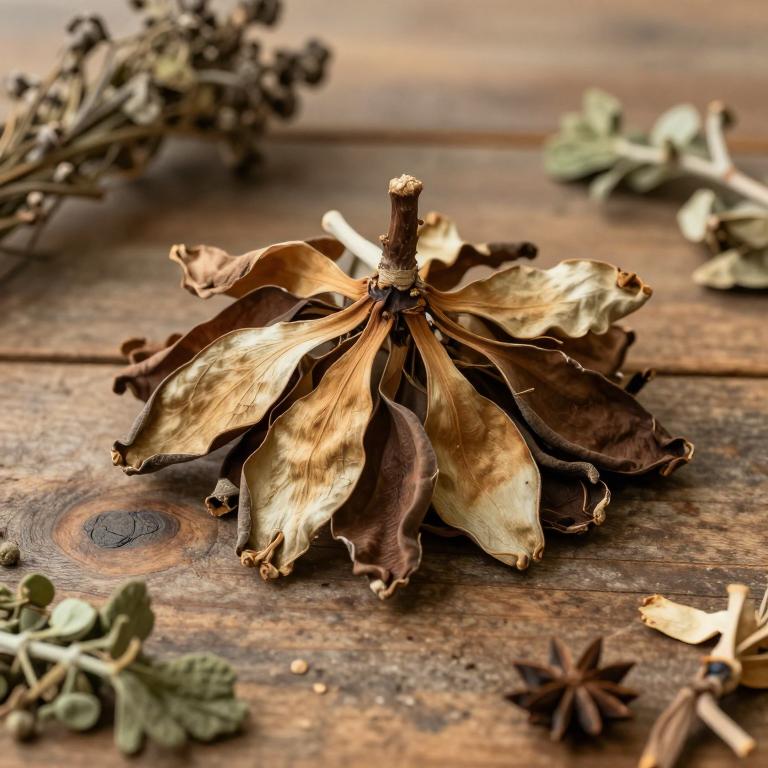
Kobushi magnolia, scientifically known as Magnolia kobus, is a deciduous flowering tree native to Japan and Korea. Renowned for its elegant, creamy-white blossoms that appear in early spring, this ornamental species is prized in landscaping. Beyond its beauty, it holds traditional significance in various East Asian botanical practices.
- Family
- Magnoliaceae
- Native range
- Asia-Temperate
- Parts used
- Flower
- Common names
- Kobushi Magnolia · Northern Japanese Magnolia
- Scientific synonyms
- Magnolia Kobus F. Horisontalidivaricata · Buergeria Obovata · 6 more
Names and Synonyms
Common Names
- kobushi magnolia
- northern Japanese magnolia
Scientific Names
Accepted name
Magnolia kobusSynonyms
- Magnolia kobus f. horisontalidivaricata
- Buergeria obovata
- Magnolia kobus var. borealis
- Magnolia kobushii
- Michelia gracilis
- Magnolia pseudokobus
- Magnolia borealis
- Yulania kobus
Regional and Traditional Names
Spanish:
- Magnolia del Norte del Japón
- Buergeria obovata
- Yulania kobus
- Michelia gracilis
- Magnolia thurberi
- Magnolia pseudokobus
- Magnolia praecocossima
- Magnolia del Norte del Japon
- Magnolia borealis
- Magnolia kobushii
- Talauma obovata
- Magnolia del norte del Japón
German:
- Kobushi-Magnolie
- Baummagnolie
- Kobushi-Magnolie
French:
- Magnolia de Kobé
- Magnolia kobushi
- Magnolia de Kobé
- magnolia de Kobus
- magnolia petit-poing
- Magnolia de Kobé
Sources: Wikidata, Catalogue of Life
Taxonomical Classification
This plant belongs to the kingdom Plantae within the phylum Streptophyta and is classified under the class Equisetopsida. It is further organized into the subclass Magnoliidae and the order Magnoliales, falling under the family Magnoliaceae. Finally, its specific taxonomic placement is within the genus Magnolia.
| Rank | Classification |
|---|---|
| Kingdom | Plantae |
| Phylum | Streptophyta |
| Class | Equisetopsida |
| Subclass | Magnoliidae |
| Order | Magnoliales |
| Family | Magnoliaceae |
| Genus | Magnolia |
Sources: The World Checklist of Vascular Plants (WCVP)
Distribution
This plant is naturally indigenous to various regions within Eastern Asia, including Japan and Korea. Beyond its native range, it has successfully established itself in parts of North America. Specifically, it can be found growing in the province of Ontario in Eastern Canada. Its distribution also extends into the Northeastern United States, particularly within the states of New York and Pennsylvania. Consequently, the geographical footprint of Magnolia kobus spans across both Eastern Asian and North American landscapes.
| Region | Area |
|---|---|
| Eastern Asia | Japan |
| Eastern Asia | Korea |
| Eastern Canada | Ontario |
| Northeastern U.S.A. | New York |
| Northeastern U.S.A. | Pennsylvania |
Sources: The World Checklist of Vascular Plants (WCVP)
Botanical Identification
Life history
The life history of Magnolia kobus is characterized by its status as a perennial organism, allowing it to persist through multiple growing seasons and establish a stable presence in its natural habitat. In terms of its structural growth strategy, the plant is classified as a phanerophyte, as it maintains its buds well above the ground level during unfavorable seasons, typically on woody branches. Furthermore, within specific ecological niche classifications, it can be described as a nanophanerophyte, reflecting its stature and the positioning of its reproductive and vegetative buds. This combination of a long-lived perennial lifecycle and a phanerophyte life form enables the species to undergo seasonal cycles of flowering and leaf senescence while ensuring its survival through woody persistence.
- Life form :
- nanophanerophyte
- Life form :
- phanerophyte
- Lifecycle :
- perennial
Morphology
The morphology of Magnolia kobus is characterized by its growth form as a woody tree, which can also exhibit a shrub-like habit depending on environmental conditions. It is a self-supporting plant that does not function as a climber, liana, or vine, and it operates as an independent organism rather than a parasite. The species is strictly terrestrial, lacking any aquatic, semiaquatic, or epiphytic tendencies. In terms of stature, it is a substantial plant with a height typically ranging from a minimum of 8 meters to a maximum of 15 meters.
- Aquatic :
- terrestrial
- Climber :
- self-supporting
- Epiphyte :
- terrestrial
- Growth form :
- tree
- Growth form :
- shrub
- Parasite :
- independent
- Plant height max:
- 15 m
- Plant height min:
- 8 m
- Woodiness :
- woody
Physiology
The physiology of Magnolia kobus is characterized by its efficient carbon fixation processes and specialized metabolic adaptations typical of temperate deciduous woody species. As a member of the Magnoliaceae family, its primary metabolic driver is the C3 photosynthetic pathway, a mechanism in which carbon dioxide is fixed directly into a three-carbon compound during the Calvin cycle. This photosynthetic strategy allows the plant to maximize biomass production under the moist, temperate forest conditions in which it typically thrives, though it necessitates careful regulation of transpiration to prevent water loss. The plant's physiological processes are closely tied to seasonal rhythms, involving complex hormonal signaling that regulates bud dormancy during winter and rapid leaf expansion during the spring. Furthermore, its metabolic profile includes the synthesis of various bioactive secondary metabolites, which serve both defensive roles against herbivory and physiological roles in environmental stress adaptation.
- Photosynthetic pathway :
- C3
Reproduction
The reproduction of Magnolia kobus involves the development of specialized fruit structures that transition through distinct states, characterized by a fruit dryness profile that can be described as both fleshy and dry. Within these fruits, the seeds exhibit specific morphological and physical properties essential for dispersal and germination. The seed mass is notably variable, ranging from a minimum of 0.1087 g to a maximum of 0.345 g, with an overall mean seed mass of approximately 0.1882833335 g. In terms of spatial dimensions, the seed volume is highly consistent, maintaining a recorded volume of 200 mm³, which serves as both the minimum, maximum, and mean volume for the species.
- Fruit dryness :
- fleshy
- Seed mass max:
- 0.345 g
- Seed mass mean:
- 0.1882833335 g
- Seed mass min:
- 0.1087 g
- Seed volume max:
- 200 mm³
Sources: Global Inventory of Floras and Traits (GIFT)
Plant Parts
Magnolia kobus has 1 reported plant parts identified across 1 scientific publications and several other databases that are studied for medicinal purposes. The most consistently reported plant part include flower.
| Plant part | Supporting sources | Consensus |
|---|---|---|
| Flower | 1 supporting sources | ★☆☆☆☆ |
Flower
- Chemical & pharmaceutical bulletin
Chemicals
Magnolia kobus has 36 reported phytochemicals identified across 1 scientific publications and several other databases. The most consistently reported chemicals include Magnosalin, Magnoshinin, Syringin, 16-Hentriacontanone, 16-hentriacontanol.
| Chemical | Supporting sources | Consensus |
|---|---|---|
| Magnosalin | 3 supporting sources | ★★☆☆☆ |
| Magnoshinin | 2 supporting sources | ★☆☆☆☆ |
| Syringin | 2 supporting sources | ★☆☆☆☆ |
| 16-Hentriacontanone | 1 supporting sources | ★☆☆☆☆ |
| 16-hentriacontanol | 1 supporting sources | ★☆☆☆☆ |
| ALPHA-PINENE | 1 supporting sources | ★☆☆☆☆ |
| ANETHOLE | 1 supporting sources | ★☆☆☆☆ |
| ARSENIC | 1 supporting sources | ★☆☆☆☆ |
| BETA-SITOSTEROL | 1 supporting sources | ★☆☆☆☆ |
| CALCIUM | 1 supporting sources | ★☆☆☆☆ |
Magnosalin
- Dr. Duke
- Japanese journal of pharmacology
- International archives of allergy and applied immunology
Magnoshinin
- Japanese journal of pharmacology
- International archives of allergy and applied immunology
Syringin
- Dr. Duke
- Chemical & pharmaceutical bulletin
16-Hentriacontanone
- Dr. Duke
16-hentriacontanol
- Dr. Duke
ALPHA-PINENE
- Dr. Duke
ANETHOLE
- Dr. Duke
ARSENIC
- Dr. Duke
BETA-SITOSTEROL
- Dr. Duke
CALCIUM
- Dr. Duke
Activities
Magnolia kobus has 471 reported activities identified across 1 scientific publications and several other databases. The most consistently reported activities include 11B-HSD-Inhibitor, 5-Alpha-Reductase-Inhibitor, 5-HT-Inhibitor, 5-Lipoxygenase-Inhibitor, ACE-Inhibitor.
| Activity | Supporting sources | Consensus |
|---|---|---|
| 11B-HSD-Inhibitor | 1 supporting sources | ★☆☆☆☆ |
| 5-Alpha-Reductase-Inhibitor | 1 supporting sources | ★☆☆☆☆ |
| 5-HT-Inhibitor | 1 supporting sources | ★☆☆☆☆ |
| 5-Lipoxygenase-Inhibitor | 1 supporting sources | ★☆☆☆☆ |
| ACE-Inhibitor | 1 supporting sources | ★☆☆☆☆ |
| ATPase-Inhibitor | 1 supporting sources | ★☆☆☆☆ |
| Acaricide | 1 supporting sources | ★☆☆☆☆ |
| Adaptogenic | 1 supporting sources | ★☆☆☆☆ |
| Aldehyde-Oxidase-Inhibitor | 1 supporting sources | ★☆☆☆☆ |
| Aldose-Reductase-Inhibitor | 1 supporting sources | ★☆☆☆☆ |
11B-HSD-Inhibitor
- Dr. Duke
5-Alpha-Reductase-Inhibitor
- Dr. Duke
5-HT-Inhibitor
- Dr. Duke
5-Lipoxygenase-Inhibitor
- Dr. Duke
ACE-Inhibitor
- Dr. Duke
ATPase-Inhibitor
- Dr. Duke
Acaricide
- Dr. Duke
Adaptogenic
- Dr. Duke
Aldehyde-Oxidase-Inhibitor
- Dr. Duke
Aldose-Reductase-Inhibitor
- Dr. Duke
Conditions
Magnolia kobus has 5 reported investigations on conditions identified across 1 scientific publications and several other databases. The most consistently reported conditions include Chronic kidney disease, angiogenesis, headaches, inflammation, toothaches.
| Condition | Supporting sources | Consensus |
|---|---|---|
| Chronic kidney disease | 1 supporting sources | ★☆☆☆☆ |
| Angiogenesis | 1 supporting sources | ★☆☆☆☆ |
| Headaches | 1 supporting sources | ★☆☆☆☆ |
| Inflammation | 1 supporting sources | ★☆☆☆☆ |
| Toothaches | 1 supporting sources | ★☆☆☆☆ |
Chronic kidney disease
- Frontiers in pharmacology
Angiogenesis
- Agents and actions. Supplements
Headaches
- Chemical & pharmaceutical bulletin
Inflammation
- Frontiers in pharmacology
Toothaches
- Chemical & pharmaceutical bulletin
Preparations
Magnolia kobus has 1 reported preparations identified across 1 scientific publications and several other databases. The most consistently reported preparations include methanol (MeOH) extract.
| Preparation | Supporting sources | Consensus |
|---|---|---|
| Methanol (meoh) extract | 1 supporting sources | ★☆☆☆☆ |
Methanol (meoh) extract
- Chemical & pharmaceutical bulletin