Magnolia duclouxii
Magnolia duclouxii · Accepted scientific name
Scientific literature: Very Sparse (3 studies) · ★☆☆☆☆
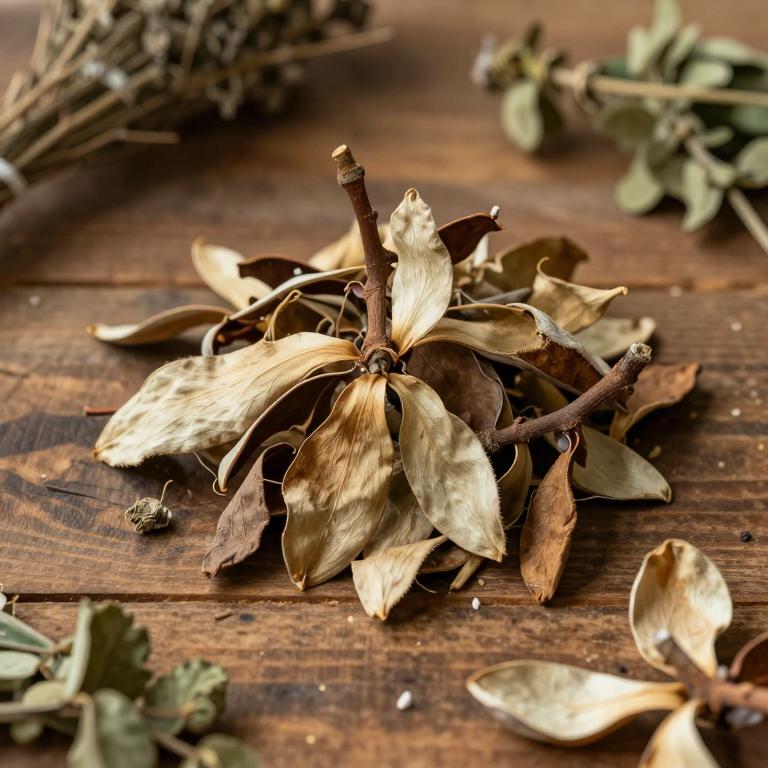
Magnolia duclouxii, scientifically known as Magnolia duclouxii, is a distinctive medicinal plant valued for its unique therapeutic properties. Renowned for its aromatic foliage and blossoms, it is frequently utilized in traditional herbal practices to support wellness, offering natural compounds that contribute to holistic health and botanical healing traditions.
- Family
- Magnoliaceae
- Native range
- Asia-Temperate
- Parts used
- Not available
- Common names
- Not available
- Scientific synonyms
- Manglietia Duclouxii
Names and Synonyms
Scientific Names
Accepted name
Magnolia duclouxiiSynonyms
- Manglietia duclouxii
Sources: Wikidata, Catalogue of Life
Taxonomical Classification
This plant belongs to the kingdom Plantae and is classified under the phylum Streptophyta within the class Equisetopsida. As a member of the subclass Magnoliidae and the order Magnoliales, it is further organized into the family Magnoliaceae. Ultimately, Magnolia duclouxii is identified by its specific genus, Magnolia.
| Rank | Classification |
|---|---|
| Kingdom | Plantae |
| Phylum | Streptophyta |
| Class | Equisetopsida |
| Subclass | Magnoliidae |
| Order | Magnoliales |
| Family | Magnoliaceae |
| Genus | Magnolia |
Sources: The World Checklist of Vascular Plants (WCVP)
Distribution
This plant is primarily distributed across specific regions of East and Southeast Asia. In China, its presence is noted within the South-Central territories. It is also found throughout the Southeast regions of China. Furthermore, its natural habitat extends into the Indo-China peninsula. Specifically, the species can be located within the country of Vietnam.
| Region | Area |
|---|---|
| China | China South-Central |
| China | China Southeast |
| Indo-China | Vietnam |
Sources: The World Checklist of Vascular Plants (WCVP)
Botanical Identification
Ecology
The ecology of Magnolia duclouxii is characterized by its specific distribution within montane environments, where it occupies a distinct altitudinal niche. This species is primarily found in high-altitude habitats, with its presence documented across an elevational range that begins at a minimum of 1350 m AMSL. It thrives most consistently at a mean elevation of 1675 m AMSL, suggesting an adaptation to the specific temperature and moisture regimes found in mid-to-upper montane forest zones. The upper limit of its ecological distribution reaches a maximum of 2000 m AMSL, defining the vertical boundaries of its specialized habitat within the mountain landscape.
- Elevational range max:
- 2000 m AMSL
- Elevational range mean:
- 1675 m AMSL
- Elevational range min:
- 1350 m AMSL
Life history
The life history of Magnolia duclouxii is characterized by its status as a perennial organism, ensuring its presence in the ecosystem through multiple growing seasons. As a plant that maintains its photosynthetic organs well above the ground, its life form is classified as a phanerophyte, specifically categorized under both the phanerophyte and nanophanerophyte structural frameworks. This growth strategy allows the species to establish a stable, long-lived presence, utilizing its perennial nature to survive seasonal fluctuations and its phanerophyte life form to dominate its specific ecological niche.
- Life form :
- phanerophyte
- Lifecycle :
- perennial
Morphology
The morphology of Magnolia duclouxii is characterized by its stature as a woody tree, typically reaching an average height of approximately 6 m. It exhibits a self-supporting growth habit, functioning as an independent organism rather than a parasite or an epiphyte, and is strictly terrestrial in its ecological placement.
- Climber :
- self-supporting
- Epiphyte :
- terrestrial
- Growth form :
- tree
- Parasite :
- independent
- Plant height mean:
- 6 m
- Woodiness :
- woody
Physiology
The physiology of Magnolia duclouxii is characterized by distinct morphological dimensions of its foliage, which play a critical role in its photosynthetic capacity and transpiration rates. The leaves exhibit a structured variation in size, with a mean leaf length of 10.5 cm, ranging from a minimum of 8 cm to a maximum of 13 cm. This longitudinal growth is complemented by a specific width profile, where the leaf width maintains a mean of 3.25 cm, fluctuating between a minimum of 2.5 cm and a maximum of 4 cm. These precise measurements in leaf area and dimensions suggest a regulated physiological mechanism for light interception and gas exchange, ensuring the plant maintains efficient metabolic processes within its specific ecological niche.
- Leaf length max:
- 13 cm
- Leaf length mean:
- 10.5 cm
- Leaf length min:
- 8 cm
- Leaf width max:
- 4 cm
- Leaf width mean:
- 3.25 cm
- Leaf width min:
- 2.5 cm
Reproduction
The reproduction of Magnolia duclouxii culminates in the development of distinct aggregate fruits that serve as the primary vehicle for seed dispersal. These fruits exhibit measurable morphological variations in size, with documented fruit lengths ranging from a minimum of 5 cm to a maximum of 6 cm. On average, the fruit length settles at a mean value of 5.5 cm, reflecting the characteristic dimensions of the species' reproductive structures. As these fruits mature, they play a critical role in the plant's life cycle by protecting the developing seeds until they are ready for release into the environment.
- Fruit length max:
- 6 cm
- Fruit length mean:
- 5.5 cm
- Fruit length min:
- 5 cm
Sources: Global Inventory of Floras and Traits (GIFT)
Chemicals
Magnolia duclouxii has 3 reported phytochemicals identified across 0 scientific publications and several other databases. The most consistently reported chemicals include Honokiol, Magnolol, Salicifoline.
| Chemical | Supporting sources | Consensus |
|---|---|---|
| Honokiol | 1 supporting sources | ★☆☆☆☆ |
| Magnolol | 1 supporting sources | ★☆☆☆☆ |
| Salicifoline | 1 supporting sources | ★☆☆☆☆ |
Honokiol
- Yao xue xue bao = Acta pharmaceutica Sinica
Magnolol
- Yao xue xue bao = Acta pharmaceutica Sinica
Salicifoline
- Yao xue xue bao = Acta pharmaceutica Sinica