Magnolia biondii
Magnolia biondii · Accepted scientific name
Scientific literature: Very Extensive (327 studies) · ★★★★★
, scientifically known as Magnolia biondii, is a rare medicinal plant cherished for its profound therapeutic properties. Native to specific tropical regions, this species is highly valued in traditional healing practices. Its unique bioactive compounds offer significant potential in modern pharmacology, particularly for addressing various inflammatory and restorative health needs.
- Family
- Magnoliaceae
- Native range
- Asia-Temperate
- Parts used
- Flower
- Common names
- Not available
- Scientific synonyms
- Magnolia Funiushanensis · Yulania Biondii · 16 more
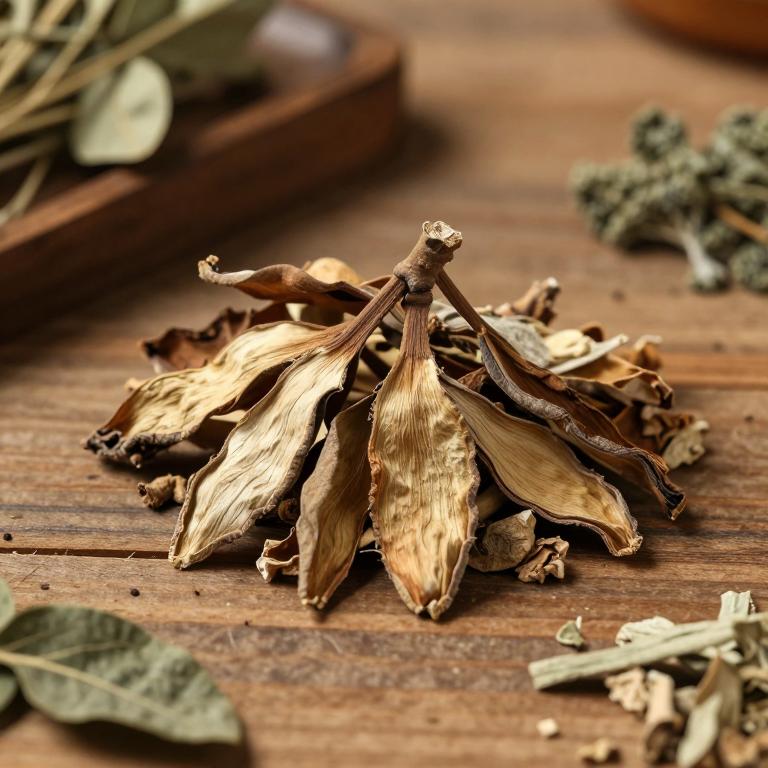
Names and Synonyms
Scientific Names
Accepted name
Magnolia biondiiSynonyms
- Magnolia funiushanensis
- Yulania biondii
- Yulania biondii var. purpurascens
- Magnolia biondii var. flava
- Magnolia biondii var. ovata
- Magnolia biondii var. planities
- Magnolia biondii f. purpurascens
- Magnolia biondii var. latitepala
- Magnolia aulacosperma
- Magnolia conspicua var. fargesii
- Magnolia denudata var. fargesii
- Magnolia fargesii
- Magnolia funiushanensis var. purpurea
- Magnolia biondii var. axilliflora
- Magnolia biondii var. multalabastra
- Yulania biondii var. angustitepala
- Yulania × pilocarpa var. ellipticifolia
- Magnolia × pilocarpa var. ellipticifolia
Regional and Traditional Names
French:
- Magnolia aulacosperma
- Magnolia axilliflora
Sources: Wikidata, Catalogue of Life
Taxonomical Classification
This plant belongs to the kingdom Plantae and the phylum Streptophyta, falling under the class Equisetopsida and subclass Magnoliidae. Within the order Magnoliales and family Magnoliaceae, it is classified under the genus Magnolia. Specifically, its taxonomic designation is Magnolia biondii.
| Rank | Classification |
|---|---|
| Kingdom | Plantae |
| Phylum | Streptophyta |
| Class | Equisetopsida |
| Subclass | Magnoliidae |
| Order | Magnoliales |
| Family | Magnoliaceae |
| Genus | Magnolia |
Sources: The World Checklist of Vascular Plants (WCVP)
Distribution
This plant, known as Magnolia biondii, exhibits a specific presence across various regions of China. Its geographical range is primarily concentrated within the South-Central part of the country. Additionally, the species can be found extending into the North-Central areas of China. The distribution also includes significant populations located throughout China Southeast. These three distinct zones define the natural habitat where this medicinal species thrives.
| Region | Area |
|---|---|
| China | China South-Central |
| China | China North-Central |
| China | China Southeast |
Sources: The World Checklist of Vascular Plants (WCVP)
Botanical Identification
Life history
The life history of Magnolia biondii is characterized by its classification as a phanerophyte, a growth form where the perennating buds are located high above the ground on woody branches. Within the specific nuances of its ecological strategy, it functions as both a phanerophyte and a nanophanerophyte, indicating a life cycle defined by the development of perennial woody structures that allow it to persist through varying seasonal conditions. As a woody perennial, its life history involves a continuous cycle of vegetative growth and reproductive maturation, relying on its elevated bud placement to survive environmental stresses, ensuring its long-term presence within its native habitat.
- Life form :
- phanerophyte
Morphology
The morphology of Magnolia biondii is characterized by its woody growth habit, exhibiting a sturdy and lignified structure. As a terrestrial species, it does not function as an epiphyte, maintaining its presence within the soil substrate rather than growing upon other plants. The plant is categorized as an independent organism, meaning it lacks parasitic tendencies and functions without reliance on a host for nutrients. Furthermore, its climbing nature is defined as self-supporting, allowing it to maintain its structural integrity and upright or spreading posture without the necessity of external supports.
- Climber :
- self-supporting
- Epiphyte :
- terrestrial
- Parasite :
- independent
- Woodiness :
- woody
Sources: Global Inventory of Floras and Traits (GIFT)
Plant Parts
Magnolia biondii has 1 reported plant parts identified across 4 scientific publications and several other databases that are studied for medicinal purposes. The most consistently reported plant part include flower.
| Plant part | Supporting sources | Consensus |
|---|---|---|
| Flower | 4 supporting sources | ★★☆☆☆ |
Flower
- Biological & pharmaceutical bulletin
- Mediators of inflammation
- Journal of natural products
- Archives of pharmacal research
Chemicals
Magnolia biondii has 37 reported phytochemicals identified across 4 scientific publications and several other databases. The most consistently reported chemicals include 1,8-Cineole, ALPHA-PINENE, Eudesmin, Fargesin, Magnolin.
| Chemical | Supporting sources | Consensus |
|---|---|---|
| 1,8-Cineole | 2 supporting sources | ★☆☆☆☆ |
| ALPHA-PINENE | 2 supporting sources | ★☆☆☆☆ |
| Eudesmin | 2 supporting sources | ★☆☆☆☆ |
| Fargesin | 2 supporting sources | ★☆☆☆☆ |
| Magnolin | 2 supporting sources | ★☆☆☆☆ |
| Volatile oil | 2 supporting sources | ★☆☆☆☆ |
| ARSENIC | 1 supporting sources | ★☆☆☆☆ |
| Astragalin | 1 supporting sources | ★☆☆☆☆ |
| BETA-PINENE | 1 supporting sources | ★☆☆☆☆ |
| CALCIUM | 1 supporting sources | ★☆☆☆☆ |
1,8-Cineole
- Scientific reports
- Zhong yao cai = Zhongyaocai = Journal of Chinese medicinal materials
ALPHA-PINENE
- Dr. Duke
- Zhong yao cai = Zhongyaocai = Journal of Chinese medicinal materials
Eudesmin
- Dr. Duke
- Archives of pharmacal research
Fargesin
- Dr. Duke
- Recent advances in inflammation & allergy drug discovery
Magnolin
- Dr. Duke
- Archives of pharmacal research
Volatile oil
- Zhong yao cai = Zhongyaocai = Journal of Chinese medicinal materials
- Scientific reports
ARSENIC
- Dr. Duke
Astragalin
- Biological & pharmaceutical bulletin
BETA-PINENE
- Zhong yao cai = Zhongyaocai = Journal of Chinese medicinal materials
CALCIUM
- Dr. Duke
Activities
Magnolia biondii has 267 reported activities identified across 4 scientific publications and several other databases. The most consistently reported activities include Antibacterial, Antidepressant, Antidiabetic, Antifeedant, Antihypertensive.
| Activity | Supporting sources | Consensus |
|---|---|---|
| Antibacterial | 2 supporting sources | ★☆☆☆☆ |
| Antidepressant | 2 supporting sources | ★☆☆☆☆ |
| Antidiabetic | 2 supporting sources | ★☆☆☆☆ |
| Antifeedant | 2 supporting sources | ★☆☆☆☆ |
| Antihypertensive | 2 supporting sources | ★☆☆☆☆ |
| Antioxidant | 2 supporting sources | ★☆☆☆☆ |
| ACE-Inhibitor | 1 supporting sources | ★☆☆☆☆ |
| AChE-Inhibitor | 1 supporting sources | ★☆☆☆☆ |
| Acaricide | 1 supporting sources | ★☆☆☆☆ |
| Allelochemic | 1 supporting sources | ★☆☆☆☆ |
Antibacterial
- Dr. Duke
- Scientific reports
Antidepressant
- Dr. Duke
- Zhongguo Zhong yao za zhi = Zhongguo zhongyao zazhi = China journal of Chinese materia medica
Antidiabetic
- Dr. Duke
- Yao xue xue bao = Acta pharmaceutica Sinica
Antifeedant
- Dr. Duke
- Recent advances in inflammation & allergy drug discovery
Antihypertensive
- Dr. Duke
- Recent advances in inflammation & allergy drug discovery
Antioxidant
- Dr. Duke
- Scientific reports
ACE-Inhibitor
- Dr. Duke
AChE-Inhibitor
- Dr. Duke
Acaricide
- Dr. Duke
Allelochemic
- Dr. Duke
Conditions
Magnolia biondii has 5 reported investigations on conditions identified across 4 scientific publications and several other databases. The most consistently reported conditions include allergic rhinitis, antidepressant, rhinitis, sepsis, sinusitis.
| Condition | Supporting sources | Consensus |
|---|---|---|
| Allergic rhinitis | 1 supporting sources | ★☆☆☆☆ |
| Antidepressant | 1 supporting sources | ★☆☆☆☆ |
| Rhinitis | 1 supporting sources | ★☆☆☆☆ |
| Sepsis | 1 supporting sources | ★☆☆☆☆ |
| Sinusitis | 1 supporting sources | ★☆☆☆☆ |
Allergic rhinitis
- Scientific reports
Antidepressant
- Zhongguo Zhong yao za zhi = Zhongguo zhongyao zazhi = China journal of Chinese materia medica
Rhinitis
- Mediators of inflammation
Sepsis
- Mediators of inflammation
Sinusitis
- Mediators of inflammation
Preparations
Magnolia biondii has 5 reported preparations identified across 4 scientific publications and several other databases. The most consistently reported preparations include flower buds, dried tissues, essential oil, essential oils, shin-i.
| Preparation | Supporting sources | Consensus |
|---|---|---|
| Flower buds | 2 supporting sources | ★☆☆☆☆ |
| Dried tissues | 1 supporting sources | ★☆☆☆☆ |
| Essential oil | 1 supporting sources | ★☆☆☆☆ |
| Essential oils | 1 supporting sources | ★☆☆☆☆ |
| Shin-i | 1 supporting sources | ★☆☆☆☆ |
Flower buds
- Journal of natural products
- Archives of pharmacal research
Dried tissues
- Journal of complementary & integrative medicine
Essential oil
- Zhong yao cai = Zhongyaocai = Journal of Chinese medicinal materials
Essential oils
- Zhongguo Zhong yao za zhi = Zhongguo zhongyao zazhi = China journal of Chinese materia medica
Shin-i
- Journal of natural products