Horse gram
Macrotyloma uniflorum · Accepted scientific name
Scientific literature: Very Sparse (45 studies) · ★☆☆☆☆
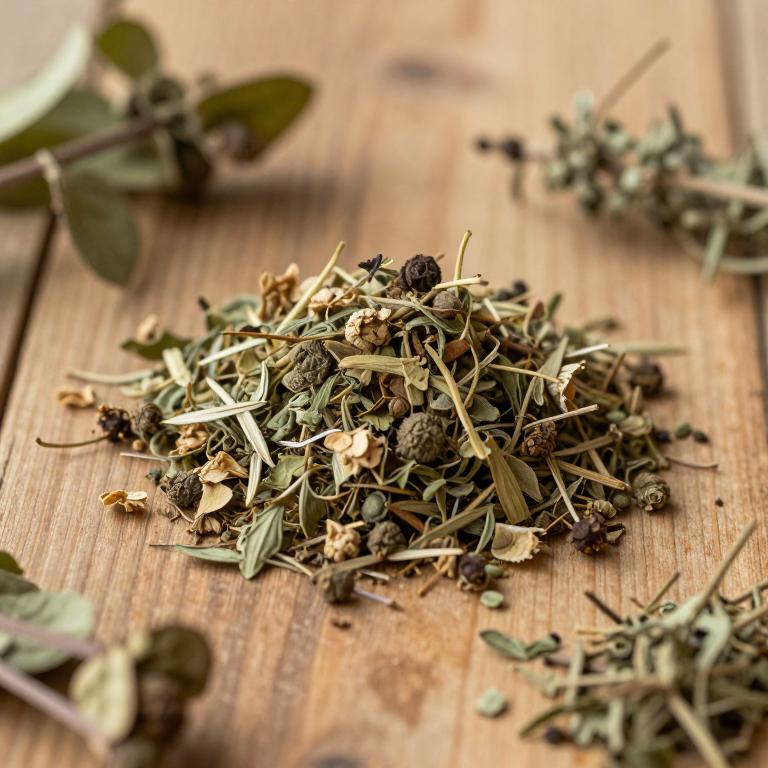
Horse gram, scientifically known as Macrotyloma uniflorum, is a resilient legume highly valued in traditional Ayurvedic medicine. Renowned for its nutritional density, it serves as a potent therapeutic agent for managing diabetes, kidney stones, and respiratory ailments. This versatile plant offers significant bioactive properties, supporting overall holistic wellness.
Names and Synonyms
Common Names
- Horse gram
- Madras gram
- horse gram
Scientific Names
Accepted name
Macrotyloma uniflorumSynonyms
- Kerstingiella uniflora
- Glycine uniflora
- Dolichos uniflorus
Regional and Traditional Names
Spanish:
- frijol verde
German:
- Pferdebohne
- Pferdebohne
French:
- dolic biflore
Sources: Wikidata, Catalogue of Life
Taxonomical Classification
This plant belongs to the kingdom Plantae within the phylum Streptophyta and is classified under the class Equisetopsida and subclass Magnoliidae. It is further categorized under the order Fabales and the family Fabaceae. Finally, it is identified by the genus Macrotyloma, specifically as the species Macrotylomma uniflorum.
| Rank | Classification |
|---|---|
| Kingdom | Plantae |
| Phylum | Streptophyta |
| Class | Equisetopsida |
| Subclass | Magnoliidae |
| Order | Fabales |
| Family | Fabaceae |
| Genus | Macrotyloma |
Sources: The World Checklist of Vascular Plants (WCVP)
Distribution
This plant exhibits a diverse geographical distribution across several regions of the African continent. In West Tropical Africa, its presence is documented in both Guinea and Senegal. Moving toward the center of the continent, it can be found within West-Central Tropical Africa. Specifically, its range extends to Cameroon and the Democratic Republic of the Congo. Additionally, the species is recorded in the West-Central Tropical African region of Rwanda.
| Region | Area |
|---|---|
| West Tropical Africa | Guinea |
| West Tropical Africa | Senegal |
| West-Central Tropical Africa | Cameroon |
| West-Central Tropical Africa | Rwanda |
| West-Central Tropical Africa | DR Congo |
| Northeast Tropical Africa | Ethiopia |
| Northeast Tropical Africa | Somalia |
| Northeast Tropical Africa | Sudan-South Sudan |
| East Tropical Africa | Kenya |
| East Tropical Africa | Tanzania |
Sources: The World Checklist of Vascular Plants (WCVP)
Botanical Identification
Ecology
The ecology of Macrotylomum uniflorum is characterized by its adaptation to specific altitudinal gradients and distinct vegetation types. It primarily thrives within grassland savanna habitats, where it integrates into the open landscape of these ecosystems. The plant occupies a defined vertical niche, with its distribution ranging from an elevation of 600 m AMSL to a maximum of 1460 m AMSL.
- Elevational range max:
- 1460 m AMSL
- Elevational range min:
- 600 m AMSL
- Habitat :
- grassland savanna
Life history
The life history of Macrotyloma uniflorum is characterized by a variable lifecycle that can manifest as an annual, biennial, or perennial, depending on the environmental conditions and specific cultivation practices. As a legume, its development begins with the germination of seeds, leading to the growth of a climbing or bushy herbaceous plant that utilizes tendrils for structural support. Throughout its life cycle, the plant undergoes distinct vegetative and reproductive phases, progressing from seedling establishment to the production of inflorescences. The reproductive stage involves the flowering and subsequent development of pods containing small, nutritious seeds, which serve as the primary mechanism for dispersal and the continuation of the species. The ability of the plant to exhibit a perennial nature allows it to persist across multiple growing seasons in favorable habitats, while its capacity to act as an annual or biennial ensures rapid colonization and adaptation to varying climatic cycles.
- Lifecycle :
- perennial
Morphology
The morphology of Macrotyloma uniflorum is characterized by its growth form as a non-woody herb. It functions as a terrestrial plant and exhibits a climbing habit, specifically acting as a vine that can also be self-supporting. As an independent organism, it does not exhibit parasitic or epiphytic behavior, maintaining a strictly terrestrial existence. The plant typically reaches a height ranging from a minimum of 0.6 m to a maximum of 1 m, with an average plant height of approximately 0.75 m.
- Aquatic :
- terrestrial
- Climber :
- vine
- Climber :
- self-supporting
- Epiphyte :
- terrestrial
- Growth form :
- herb
- Parasite :
- independent
- Plant height max:
- 1 m
- Plant height mean:
- 0.75 m
- Plant height min:
- 0.6 m
- Woodiness :
- non-woody
Physiology
The physiology of Macrotyloma uniflorum is characterized by a C3 photosynthetic pathway, which dictates its carbon fixation process through the enzyme Rubisco under standard environmental conditions. As a member of the Fabaceae family, the plant exhibits a highly efficient nitrogen metabolism facilitated by its role as a nitrogen fixer; it establishes a symbiotic relationship with rhizobial bacteria within its root nodules to convert atmospheric nitrogen into bioavailable forms, thereby enhancing soil fertility and supporting its own protein synthesis.
- Nitrogen fixer :
- yes
- Photosynthetic pathway :
- C3
Reproduction
The reproduction of Macrotylomum uniflorum is characterized by a biotic pollination syndrome, primarily driven by insect vectors to facilitate fertilization. This reproductive process is supported by the presence of self-fertilization, ensuring seed production even in varying environmental conditions. The resulting seeds exhibit highly consistent physical properties, with a recorded seed mass mean, maximum, and minimum all measured at 0.0306 g.
- Pollination syndrome :
- insect
- Pollination syndrome :
- biotic
- Seed mass mean:
- 0.0306 g
- Self fertilization :
- present
Sources: Global Inventory of Floras and Traits (GIFT)
Plant Parts
Macrotyloma uniflorum has 1 reported plant parts identified across 1 scientific publications and several other databases that are studied for medicinal purposes. The most consistently reported plant part include seed.
| Plant part | Supporting sources | Consensus |
|---|---|---|
| Seed | 1 supporting sources | ★☆☆☆☆ |
Seed
- Journal of molecular biology
Chemicals
Macrotyloma uniflorum has 15 reported phytochemicals identified across 1 scientific publications and several other databases. The most consistently reported chemicals include CHLOROPHYLL, Epicatechin, FAT, Flavonoids, IRON.
| Chemical | Supporting sources | Consensus |
|---|---|---|
| CHLOROPHYLL | 1 supporting sources | ★☆☆☆☆ |
| Epicatechin | 1 supporting sources | ★☆☆☆☆ |
| FAT | 1 supporting sources | ★☆☆☆☆ |
| Flavonoids | 1 supporting sources | ★☆☆☆☆ |
| IRON | 1 supporting sources | ★☆☆☆☆ |
| MOLYBDENUM | 1 supporting sources | ★☆☆☆☆ |
| Malondialdehyde | 1 supporting sources | ★☆☆☆☆ |
| Stachyose | 1 supporting sources | ★☆☆☆☆ |
| Tannins | 1 supporting sources | ★☆☆☆☆ |
| Trypsin inhibitor | 1 supporting sources | ★☆☆☆☆ |
CHLOROPHYLL
- Applied biochemistry and biotechnology
Epicatechin
- Combinatorial chemistry & high throughput screening
FAT
- Journal of food science
Flavonoids
- Journal of food science
IRON
- Critical reviews in food science and nutrition
MOLYBDENUM
- Critical reviews in food science and nutrition
Malondialdehyde
- Applied biochemistry and biotechnology
Stachyose
- Journal of chromatography. A
Tannins
- Journal of food science
Trypsin inhibitor
- Critical reviews in food science and nutrition
Activities
Macrotyloma uniflorum has 11 reported activities identified across 1 scientific publications and several other databases. The most consistently reported activities include Antioxidant, Analgesic, Anticarcinogenic, Antidiabetic, Antihyperglycemic.
| Activity | Supporting sources | Consensus |
|---|---|---|
| Antioxidant | 2 supporting sources | ★☆☆☆☆ |
| Analgesic | 1 supporting sources | ★☆☆☆☆ |
| Anticarcinogenic | 1 supporting sources | ★☆☆☆☆ |
| Antidiabetic | 1 supporting sources | ★☆☆☆☆ |
| Antihyperglycemic | 1 supporting sources | ★☆☆☆☆ |
| Antihypertensive | 1 supporting sources | ★☆☆☆☆ |
| Antimicrobial | 1 supporting sources | ★☆☆☆☆ |
| Cardioprotective | 1 supporting sources | ★☆☆☆☆ |
| Diuretic | 1 supporting sources | ★☆☆☆☆ |
| Hemagglutinin | 1 supporting sources | ★☆☆☆☆ |
Antioxidant
- Pakistan journal of pharmaceutical sciences
- Journal of food science
Analgesic
- Pakistan journal of pharmaceutical sciences
Anticarcinogenic
- Journal of food science
Antidiabetic
- Journal of food science
Antihyperglycemic
- Pakistan journal of pharmaceutical sciences
Antihypertensive
- Pakistan journal of pharmaceutical sciences
Antimicrobial
- Journal of food science
Cardioprotective
- Journal of food biochemistry
Diuretic
- Pakistan journal of pharmaceutical sciences
Hemagglutinin
- Critical reviews in food science and nutrition
Conditions
Macrotyloma uniflorum has 15 reported investigations on conditions identified across 1 scientific publications and several other databases. The most consistently reported conditions include Inflammation, Pain, analgesic, antihyperglycemic, antihypertensive.
| Condition | Supporting sources | Consensus |
|---|---|---|
| Inflammation | 1 supporting sources | ★☆☆☆☆ |
| Pain | 1 supporting sources | ★☆☆☆☆ |
| Analgesic | 1 supporting sources | ★☆☆☆☆ |
| Antihyperglycemic | 1 supporting sources | ★☆☆☆☆ |
| Antihypertensive | 1 supporting sources | ★☆☆☆☆ |
| Antioxidant | 1 supporting sources | ★☆☆☆☆ |
| Asthma | 1 supporting sources | ★☆☆☆☆ |
| Bronchitis | 1 supporting sources | ★☆☆☆☆ |
| Chromosomal aberration | 1 supporting sources | ★☆☆☆☆ |
| Diuretic | 1 supporting sources | ★☆☆☆☆ |
Inflammation
- Combinatorial chemistry & high throughput screening
Pain
- Combinatorial chemistry & high throughput screening
Analgesic
- Pakistan journal of pharmaceutical sciences
Antihyperglycemic
- Pakistan journal of pharmaceutical sciences
Antihypertensive
- Pakistan journal of pharmaceutical sciences
Antioxidant
- Pakistan journal of pharmaceutical sciences
Asthma
- Journal of food science
Bronchitis
- Journal of food science
Chromosomal aberration
- Plant physiology and biochemistry : PPB
Diuretic
- Pakistan journal of pharmaceutical sciences
Preparations
Macrotyloma uniflorum has 1 reported preparations identified across 1 scientific publications and several other databases. The most consistently reported preparations include fixed oil.
| Preparation | Supporting sources | Consensus |
|---|---|---|
| Fixed oil | 1 supporting sources | ★☆☆☆☆ |
Fixed oil
- Pakistan journal of pharmaceutical sciences