Common mahang
Macaranga triloba · Accepted scientific name
Scientific literature: Very Sparse (11 studies) · ★☆☆☆☆
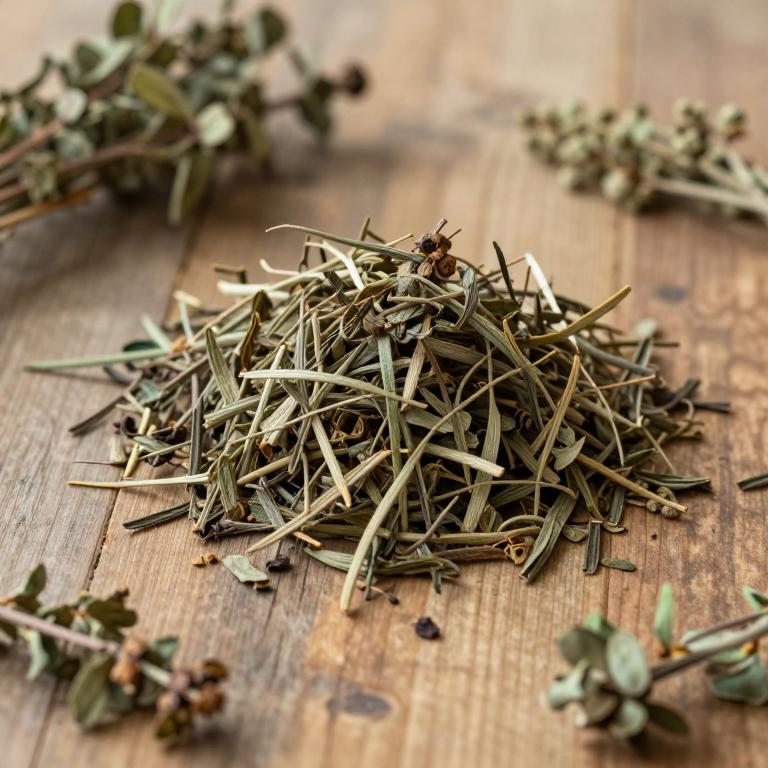
Common mahang, scientifically known as Macaranga triloba, is a versatile medicinal plant widely utilized in traditional herbal medicine. Found primarily in tropical regions, this shrub is celebrated for its potent bioactive compounds. It is frequently employed to treat various ailments, including inflammation, skin disorders, and digestive issues, offering significant therapeutic potential.
- Family
- Euphorbiaceae
- Native range
- Asia-Tropical
- Parts used
- Leaf
- Common names
- Common Mahang
- Scientific synonyms
- Pachystemon Trilobus · Macaranga Cornuta · 4 more
Names and Synonyms
Common Names
- Common mahang
Scientific Names
Accepted name
Macaranga trilobaSynonyms
- Pachystemon trilobus
- Macaranga cornuta
- Tanarius cornutus
- Macaranga quadricornis
- Ricinus trilobus
- Tanarius trilobus
Sources: Wikidata, Catalogue of Life
Taxonomical Classification
This plant belongs to the kingdom Plantae and the phylum Streptophyta, falling under the class Equisetopsida and subclass Magnoliidae. It is further classified within the order Malpighiales and the family Euphorbiaceae. Specifically, the species Macaranga triloba is a member of the genus Macaranga.
| Rank | Classification |
|---|---|
| Kingdom | Plantae |
| Phylum | Streptophyta |
| Class | Equisetopsida |
| Subclass | Magnoliidae |
| Order | Malpighiales |
| Family | Euphorbiaceae |
| Genus | Macaranga |
Sources: The World Checklist of Vascular Plants (WCVP)
Distribution
This plant exhibits a wide geographical distribution across several key regions in Southeast Asia. Within the Indo-China region, it can be found growing in Cambodia, Myanmar, and Thailand. Its presence in the Indo-China zone also extends to the Nicobar Islands. Furthermore, the species is distributed within the Malesia region, specifically occurring on the island of Borneo. Together, these locations highlight the plant's diverse habitat across diverse tropical territories.
| Region | Area |
|---|---|
| Indo-China | Cambodia |
| Indo-China | Myanmar |
| Indo-China | Nicobar Is. |
| Indo-China | Thailand |
| Malesia | Borneo |
| Malesia | Jawa |
| Malesia | Malaya |
| Malesia | Philippines |
| Malesia | Sulawesi |
| Malesia | Sumatera |
Sources: The World Checklist of Vascular Plants (WCVP)
Botanical Identification
Life history
The life history of Macaranga triloba is characterized by its classification as a phanerophyte, a life form where the perennating buds are located high above the ground on aerial shoots. Within this classification, it specifically exhibits traits consistent with both phanerophyte and nanophanerophyte growth strategies, indicating a perennial existence where its vital organs are protected on woody stems or branches. This life form allows the plant to persist through varying environmental conditions by maintaining its regenerative capacity in elevated, structurally supported tissues. As a perennial woody species, its developmental cycle involves the establishment of these aerial buds, which facilitate continuous growth and survival across successive growing seasons, distinguishing it from shorter-lived life forms like therophytes or hemicryptophytes.
- Life form :
- phanerophyte
Morphology
The morphology of Macaranga triloba is characterized by its robust growth form as a woody tree, reaching a maximum plant height of approximately 12 m. It functions as an independent organism, maintaining a non-parasitic life strategy, and is classified as a terrestrial plant rather than an aquatic or semiaquatic species. While it lacks the climbing habits of a liana or vine, the plant is strictly self-supporting in its structural development and does not exhibit epiphytic tendencies, remaining firmly terrestrial throughout its life cycle.
- Aquatic :
- terrestrial
- Climber :
- self-supporting
- Epiphyte :
- terrestrial
- Growth form :
- tree
- Parasite :
- independent
- Plant height max:
- 12 m
- Woodiness :
- woody
Physiology
The physiology of Macaranga triloba is characterized by a C3 photosynthetic pathway, which dictates its metabolic processes and carbon fixation strategies. Morphologically, its vegetative structures reflect specialized adaptations for light interception and gas exchange, featuring large leaves with a mean length of 36.3 cm and a mean width of 33.9 cm. These expansive leaf surfaces are supported by a relatively delicate structural composition, evidenced by a mean leaf thickness of 0.013 mm, which facilitates efficient photosynthetic activity within its ecological niche.
- Leaf length mean:
- 36.3 cm
- Leaf thickness mean:
- 0.013 mm
- Leaf width mean:
- 33.9 cm
- Photosynthetic pathway :
- C3
Reproduction
The reproduction of Macaranga triloba is characterized by the production of highly uniform, minute seeds that facilitate its dispersal and establishment. These seeds exhibit a consistent mass, with a mean, minimum, and maximum value all recorded at 0.015 g, indicating a very stable seed weight within the population. In terms of physical dimensions, the seeds are exceptionally small, featuring a mean length of 0.4 mm. Their structural morphology is further defined by a maximum width of 0.4 mm and a maximum height of 0.3 mm, contributing to their delicate and diminutive profile.
- Seed height max:
- 0.3 mm
- Seed length mean:
- 0.4 mm
- Seed mass mean:
- 0.015 g
- Seed width max:
- 0.4 mm
Sources: Global Inventory of Floras and Traits (GIFT)
Plant Parts
Macaranga triloba has 1 reported plant parts identified across 1 scientific publications and several other databases that are studied for medicinal purposes. The most consistently reported plant part include leaf.
| Plant part | Supporting sources | Consensus |
|---|---|---|
| Leaf | 1 supporting sources | ★☆☆☆☆ |
Leaf
- Phytochemistry
Chemicals
Macaranga triloba has 9 reported phytochemicals identified across 1 scientific publications and several other databases. The most consistently reported chemicals include 3,7,3',4'-tetramethylquercetin, 3,7-Dimethylquercetin, 3-epi-taraxerol, 3beta-hydroxy-24-ethylcholest-5-en-7-one, ABSCISIC ACID.
| Chemical | Supporting sources | Consensus |
|---|---|---|
| 3,7,3',4'-tetramethylquercetin | 1 supporting sources | ★☆☆☆☆ |
| 3,7-Dimethylquercetin | 1 supporting sources | ★☆☆☆☆ |
| 3-epi-taraxerol | 1 supporting sources | ★☆☆☆☆ |
| 3beta-hydroxy-24-ethylcholest-5-en-7-one | 1 supporting sources | ★☆☆☆☆ |
| ABSCISIC ACID | 1 supporting sources | ★☆☆☆☆ |
| LOLIOLIDE | 1 supporting sources | ★☆☆☆☆ |
| Taraxerol | 1 supporting sources | ★☆☆☆☆ |
| ferulic acid | 1 supporting sources | ★☆☆☆☆ |
| scopoletin | 1 supporting sources | ★☆☆☆☆ |
3,7,3',4'-tetramethylquercetin
- Phytochemistry
3,7-Dimethylquercetin
- Phytochemistry
3-epi-taraxerol
- Phytochemistry
3beta-hydroxy-24-ethylcholest-5-en-7-one
- Phytochemistry
ABSCISIC ACID
- Phytochemistry
LOLIOLIDE
- Phytochemistry
Taraxerol
- Phytochemistry
ferulic acid
- Phytochemistry
scopoletin
- Phytochemistry
Conditions
Macaranga triloba has 1 reported investigations on conditions identified across 1 scientific publications and several other databases. The most consistently reported conditions include cancer.
| Condition | Supporting sources | Consensus |
|---|---|---|
| Cancer | 1 supporting sources | ★☆☆☆☆ |
Cancer
- Phytochemistry
Preparations
Macaranga triloba has 1 reported preparations identified across 1 scientific publications and several other databases. The most consistently reported preparations include leaves.
| Preparation | Supporting sources | Consensus |
|---|---|---|
| Leaves | 1 supporting sources | ★☆☆☆☆ |
Leaves
- Phytochemistry