Macaranga sampsonii
Macaranga sampsonii · Accepted scientific name
Scientific literature: Very Sparse (27 studies) · ★☆☆☆☆
Macaranga sampsonii, scientifically known as Macaranga sampsonii, is a significant medicinal plant valued for its diverse therapeutic properties. Often utilized in traditional medicine, it serves as a natural remedy for various ailments. Exploring its phytochemical profile reveals its potential importance in modern pharmacology and holistic health treatments.
- Family
- Euphorbiaceae
- Native range
- Asia-Temperate
- Parts used
- Leaf
- Common names
- Not available
- Scientific synonyms
- Macaranga Hemsleyana · Mallotus Populifolius · 1 more
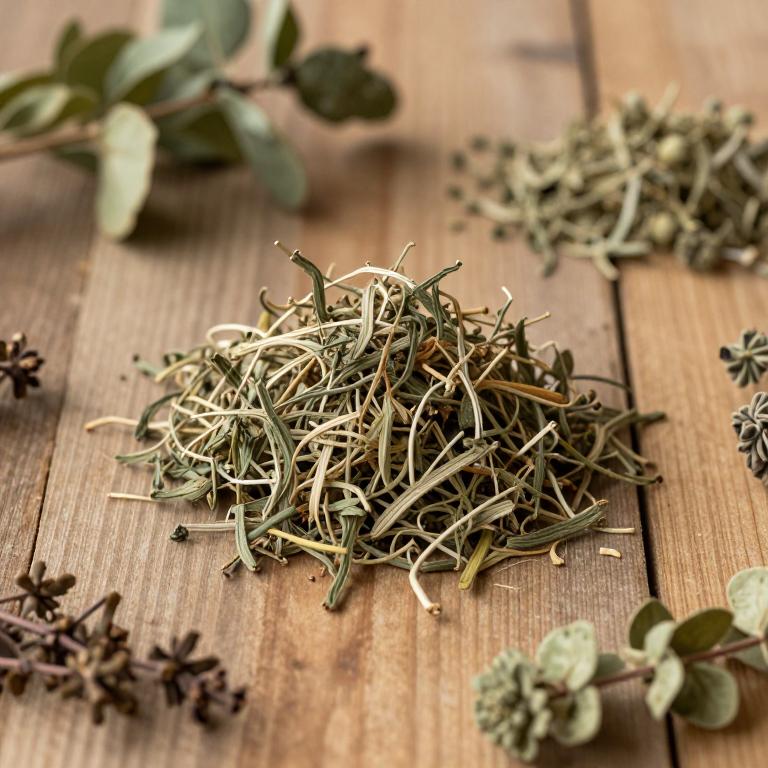
Names and Synonyms
Scientific Names
Accepted name
Macaranga sampsoniiSynonyms
- Macaranga hemsleyana
- Mallotus populifolius
- Macaranga balansae
Sources: Wikidata, Catalogue of Life
Taxonomical Classification
This plant, Macaranga sampsonii, belongs to the kingdom Plantae and the phylum Streptophyta. It is classified under the class Equisetopsida and subclass Magnoliidae within the order Malpighiales. Finally, it is a member of the family Euphorbiaceae and falls under the genus Macaranga.
| Rank | Classification |
|---|---|
| Kingdom | Plantae |
| Phylum | Streptophyta |
| Class | Equisetopsida |
| Subclass | Magnoliidae |
| Order | Malpighiales |
| Family | Euphorbiaceae |
| Genus | Macaranga |
Sources: The World Checklist of Vascular Plants (WCVP)
Distribution
This plant exhibits a specific geographical range across parts of East and Southeast Asia. Within the borders of China, it can be found inhabiting the South-Central regions. Additionally, the species is distributed throughout the Southeast portion of China. Its range extends further into the Indo-China peninsula as well. Specifically, the plant is documented to grow within the country of Vietnam.
| Region | Area |
|---|---|
| China | China South-Central |
| China | China Southeast |
| Indo-China | Vietnam |
Sources: The World Checklist of Vascular Plants (WCVP)
Botanical Identification
Ecology
The ecology of Macaranga sampsonii is closely tied to its specific altitudinal distribution within its native habitat. This species thrives within a defined elevational range, typically occurring at altitudes starting from a minimum of 200 m AMSL. The species reaches its maximum ecological limit at an elevation of 500 m AMSL, with a mean elevation of approximately 350 m AMSL characterizing its most frequent occurrence. This specific vertical distribution suggests that the plant is adapted to the particular temperature, humidity, and atmospheric conditions found within these low-to-mid altitude zones.
- Elevational range max:
- 500 m AMSL
- Elevational range mean:
- 350 m AMSL
- Elevational range min:
- 200 m AMSL
Life history
The life history of Macaranga sampsonii is characterized by its classification as a phanerophyte, a growth form where the perennating buds are located high above the ground on woody stems. Within this category, it specifically functions as a phanerophyte, utilizing its elevated structural architecture to navigate its ecological niche. This life strategy allows the plant to maintain its vital reproductive and vegetative buds well above the soil surface, protecting them from seasonal environmental fluctuations and herbivory. By adhering to this phanerophyte life form, the species ensures long-term survival through perennial woody structures, establishing a stable presence within its habitat.
- Life form :
- phanerophyte
Morphology
The morphology of Macaranga sampsonii is characterized by its growth form as a woody tree. As a self-supporting species, it does not function as a climber, liana, or vine, and it maintains an independent existence rather than acting as a parasite or an epiphyte. It is a terrestrial plant, lacking aquatic or semiaquatic adaptations. In terms of stature, the plant exhibits significant variation in height, with individuals typically ranging from a minimum of 2 m to a maximum of 7 m, resulting in an average plant height of approximately 4.5 m.
- Aquatic :
- terrestrial
- Climber :
- self-supporting
- Epiphyte :
- terrestrial
- Growth form :
- tree
- Parasite :
- independent
- Plant height max:
- 7 m
- Plant height mean:
- 4.5 m
- Plant height min:
- 2 m
- Woodiness :
- woody
Physiology
The physiology of Macaranga sampsonii is characterized by specific morphological and metabolic parameters that define its growth and structural integrity. The plant utilizes a C3 photosynthetic pathway, a fundamental metabolic process that dictates its carbon fixation strategy and environmental adaptation. Its leaf morphology exhibits significant variability, with a mean leaf length of 14.5 cm and a minimum length of 12 cm, reaching a maximum of 17 cm. The leaf width also shows a broad range, characterized by a mean width of 13 cm, a minimum of 11 cm, and a maximum of 15 cm. Structurally, the plant maintains its upright form through its stem tissue, which possesses a mean stem specific density (SSD) of 373 mg/cm³, providing the necessary mechanical support and resource transport efficiency for its physiological functions.
- Leaf length max:
- 17 cm
- Leaf length mean:
- 14.5 cm
- Leaf length min:
- 12 cm
- Leaf width max:
- 15 cm
- Leaf width mean:
- 13 cm
- Leaf width min:
- 11 cm
- Photosynthetic pathway :
- C3
- Stem specific density (SSD) mean:
- 373 mg/cm³
Reproduction
The reproduction of Macaranga sampsonii is characterized by the production of specialized fruit structures that exhibit highly consistent morphological dimensions. The fruits of this species maintain a uniform size profile, with a mean length of 0.5 cm, which also represents both the minimum and maximum recorded fruit length. In terms of lateral dimensions, the fruit width is equally consistent, maintaining a mean, minimum, and maximum value of 0.8 cm. This lack of variance in fruit measurements indicates a highly stable reproductive output, where each fruit typically measures 0.5 cm in length and 0.8 cm in width.
- Fruit length max:
- 0.5 cm
- Fruit width max:
- 0.8 cm
Sources: Global Inventory of Floras and Traits (GIFT)
Plant Parts
Macaranga sampsonii has 1 reported plant parts identified across 1 scientific publications and several other databases that are studied for medicinal purposes. The most consistently reported plant part include leaf.
| Plant part | Supporting sources | Consensus |
|---|---|---|
| Leaf | 1 supporting sources | ★☆☆☆☆ |
Leaf
- Chinese herbal medicines
Chemicals
Macaranga sampsonii has 22 reported phytochemicals identified across 1 scientific publications and several other databases. The most consistently reported chemicals include 1,4-Dihydro-4-oxo-3-pyridinecarbonitrile, 4-Methoxynicotinonitrile, Astilbin, BETA-SITOSTEROL, Canophyllol.
| Chemical | Supporting sources | Consensus |
|---|---|---|
| 1,4-Dihydro-4-oxo-3-pyridinecarbonitrile | 1 supporting sources | ★☆☆☆☆ |
| 4-Methoxynicotinonitrile | 1 supporting sources | ★☆☆☆☆ |
| Astilbin | 1 supporting sources | ★☆☆☆☆ |
| BETA-SITOSTEROL | 1 supporting sources | ★☆☆☆☆ |
| Canophyllol | 1 supporting sources | ★☆☆☆☆ |
| Isoastilbin | 1 supporting sources | ★☆☆☆☆ |
| Koaburside | 1 supporting sources | ★☆☆☆☆ |
| LOLIOLIDE | 1 supporting sources | ★☆☆☆☆ |
| Methyl 4-Methoxynicotinate | 1 supporting sources | ★☆☆☆☆ |
| Neoastilbin | 1 supporting sources | ★☆☆☆☆ |
1,4-Dihydro-4-oxo-3-pyridinecarbonitrile
- Chinese herbal medicines
4-Methoxynicotinonitrile
- Chinese herbal medicines
Astilbin
- Chinese herbal medicines
BETA-SITOSTEROL
- Zhong yao cai = Zhongyaocai = Journal of Chinese medicinal materials
Canophyllol
- Zhong yao cai = Zhongyaocai = Journal of Chinese medicinal materials
Isoastilbin
- Chinese herbal medicines
Koaburside
- Chinese herbal medicines
LOLIOLIDE
- Chinese herbal medicines
Methyl 4-Methoxynicotinate
- Chinese herbal medicines
Neoastilbin
- Chinese herbal medicines
Preparations
Macaranga sampsonii has 1 reported preparations identified across 1 scientific publications and several other databases. The most consistently reported preparations include leaves.
| Preparation | Supporting sources | Consensus |
|---|---|---|
| Leaves | 1 supporting sources | ★☆☆☆☆ |
Leaves
- Chinese herbal medicines