Macaranga peltata
Macaranga peltata · Accepted scientific name
Scientific literature: Very Sparse (4 studies) · ★☆☆☆☆
Macarangas peltata, scientifically known as Macarangas peltata, is a significant medicinal shrub native to tropical regions. Valued in traditional medicine, its leaves and roots possess diverse pharmacological properties, including anti-inflammatory and antimicrobial effects. Exploring its chemical constituents offers promising insights into developing new treatments for various infectious diseases.
- Family
- Euphorbiaceae
- Native range
- Asia-Tropical
- Parts used
- Leaf
- Common names
- Not available
- Scientific synonyms
- Tanarius Tomentosus · Osyris Peltata · 6 more
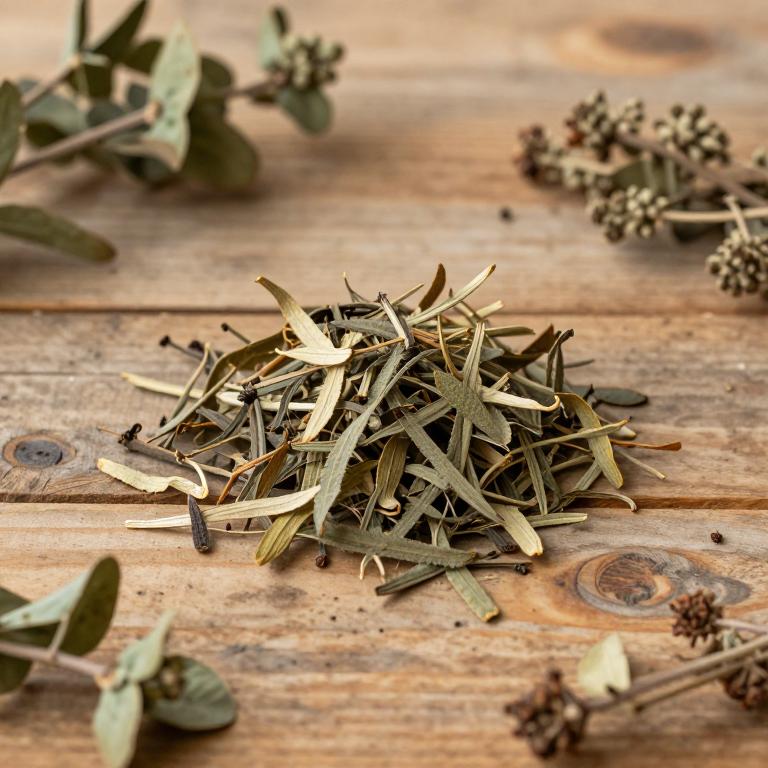
Names and Synonyms
Scientific Names
Accepted name
Macaranga peltataSynonyms
- Tanarius tomentosus
- Osyris peltata
- Tanarius flexuosus
- Macaranga tomentosa
- Tanarius peltatus
- Macaranga flexuosa
- Tanarius roxburghii
- Mappa peltata
Sources: Wikidata
Taxonomical Classification
This plant, known scientifically as Macaranga peltata, belongs to the kingdom Plantae and the phylum Streptophyta. Within the class Equisetopsida and subclass Magnoliidae, it is classified under the order Malpighiales. Finally, it is a member of the family Euphorbiaceae and the genus Macaranga.
| Rank | Classification |
|---|---|
| Kingdom | Plantae |
| Phylum | Streptophyta |
| Class | Equisetopsida |
| Subclass | Magnoliidae |
| Order | Malpighiales |
| Family | Euphorbiaceae |
| Genus | Macaranga |
Sources: The World Checklist of Vascular Plants (WCVP)
Distribution
This plant exhibits a broad presence across various regions within the Indian Subcontinent. It is widely documented in India and can also be found throughout the East Himalaya range. Furthermore, its distribution extends to the island nation of Sri Lanka and the country of Bangladesh. Beyond the mainland, the species is also located within the Andaman Islands. This diverse range highlights its significant presence throughout the Indo-China and South Asian landscapes.
| Region | Area |
|---|---|
| Indian Subcontinent | Bangladesh |
| Indian Subcontinent | East Himalaya |
| Indian Subcontinent | India |
| Indian Subcontinent | Sri Lanka |
| Indo-China | Andaman Is. |
| Indo-China | Myanmar |
| Indo-China | Nicobar Is. |
| Indo-China | Thailand |
Sources: The World Checklist of Vascular Plants (WCVP)
Botanical Identification
Life history
The life history of Macaranga peltata is characterized by its status as a perennial species, allowing it to persist in its ecosystem through multiple growing seasons. In terms of its structural growth strategy, the plant is classified as a phanerophyte, specifically exhibiting the traits of both a phanerophyte and a nanophanerophyte, which indicates that its perennating buds are elevated above the ground level on woody stems or branches.
- Life form :
- phanerophyte
- Lifecycle :
- perennial
Morphology
The morphology of Macaranga peltata is characterized by its growth form as a woody tree, exhibiting a self-supporting structure that allows it to thrive in its natural habitat. As an independent species, it does not function as a parasite or an epiphyte, maintaining a strictly terrestrial existence rather than an aquatic or semiaquatic lifestyle. The plant is distinguished by its robust, woody stems and a self-supporting habit, lacking the climbing characteristics of lianas or vines.
- Aquatic :
- terrestrial
- Climber :
- self-supporting
- Epiphyte :
- terrestrial
- Growth form :
- tree
- Parasite :
- independent
- Woodiness :
- woody
Physiology
The physiology of Macaranga peltata is characterized by a metabolic framework driven by a C3 photosynthetic pathway. In this process, carbon dioxide is initially fixed into a three-carbon compound, 3-phosphoglycerate, via the enzyme Ribulose-1,5-bisphosphate carboxylase/oxygenase (RuBisCO) during the Calvin cycle. This C3 pathway dictates the plant's water-use efficiency and gas exchange dynamics, as it relies on the direct fixation of atmospheric CO2 through stomata, making its metabolic rate sensitive to light intensity, temperature, and moisture availability. Consequently, the plant's growth patterns and energy assimilation are closely tied to its ability to manage photorespiration and maintain optimal transpiration rates within its specific environmental niche.
- Photosynthetic pathway :
- C3
Sources: Global Inventory of Floras and Traits (GIFT)
Plant Parts
Macaranga peltata has 1 reported plant parts identified across 1 scientific publications and several other databases that are studied for medicinal purposes. The most consistently reported plant part include leaf.
| Plant part | Supporting sources | Consensus |
|---|---|---|
| Leaf | 1 supporting sources | ★☆☆☆☆ |
Leaf
- Journal of pharmacy & bioallied sciences
Activities
Macaranga peltata has 2 reported activities identified across 1 scientific publications and several other databases. The most consistently reported activities include Cytotoxic, Genotoxic.
| Activity | Supporting sources | Consensus |
|---|---|---|
| Cytotoxic | 1 supporting sources | ★☆☆☆☆ |
| Genotoxic | 1 supporting sources | ★☆☆☆☆ |
Cytotoxic
- Journal of pharmacy & bioallied sciences
Genotoxic
- Journal of pharmacy & bioallied sciences
Preparations
Macaranga peltata has 1 reported preparations identified across 1 scientific publications and several other databases. The most consistently reported preparations include ethanolic extract.
| Preparation | Supporting sources | Consensus |
|---|---|---|
| Ethanolic extract | 1 supporting sources | ★☆☆☆☆ |
Ethanolic extract
- Journal of pharmacy & bioallied sciences