Macaranga monandra
Macaranga monandra · Accepted scientific name
Scientific literature: Very Sparse (15 studies) · ★☆☆☆☆
Macaranga monandra, scientifically known as Macaranga monandra, is a significant medicinal shrub native to tropical regions. Valued in traditional healing practices, this plant possesses diverse bioactive properties. Researchers study its phytochemical composition to explore potential therapeutic applications, particularly for its antioxidant and anti-inflammatory effects in managing various ailments.
- Family
- Euphorbiaceae
- Native range
- Africa
- Parts used
- Fruit
- Common names
- Not available
- Scientific synonyms
- Tanarius Monandrus · Maesopsis Stuhlmannii · 1 more
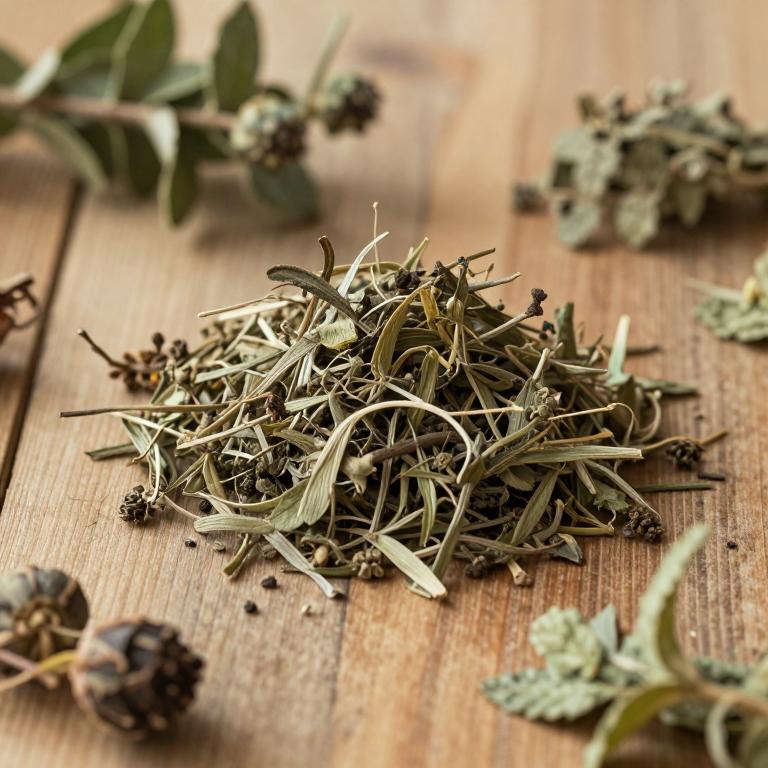
Names and Synonyms
Scientific Names
Accepted name
Macaranga monandraSynonyms
- Tanarius monandrus
- Maesopsis stuhlmannii
- Macaranga zenkeri
Sources: Wikidata
Taxonomical Classification
This plant, Macaranga monandra, belongs to the kingdom Plantae and the phylum Streptophyta. Within the class Equisetopsida and subclass Magnoliidae, it is classified under the order Malpighiales. Finally, it is a member of the family Euphorbiaceae and falls under the genus Macaranga.
| Rank | Classification |
|---|---|
| Kingdom | Plantae |
| Phylum | Streptophyta |
| Class | Equisetopsida |
| Subclass | Magnoliidae |
| Order | Malpighiales |
| Family | Euphorbiaceae |
| Genus | Macaranga |
Sources: The World Checklist of Vascular Plants (WCVP)
Distribution
This plant exhibits a specific geographical distribution across several regions of the African continent. In West Tropical Africa, its presence is documented within the borders of Nigeria. Moving into West-Central Tropical Africa, the species can be found in Burundi. The plant's range continues through the Central African Republic and Cameroon. Finally, its distribution extends into the Congo, completing its documented presence in these tropical zones.
| Region | Area |
|---|---|
| West Tropical Africa | Nigeria |
| West-Central Tropical Africa | Burundi |
| West-Central Tropical Africa | Central African Republic |
| West-Central Tropical Africa | Cameroon |
| West-Central Tropical Africa | Congo |
| West-Central Tropical Africa | Equatorial Guinea |
| West-Central Tropical Africa | Gabon |
| West-Central Tropical Africa | Gulf of Guinea Is. |
| West-Central Tropical Africa | DR Congo |
| East Tropical Africa | Tanzania |
Sources: The World Checklist of Vascular Plants (WCVP)
Botanical Identification
Life history
The life history of Macaranga monandra is characterized by its status as a perennial species, allowing it to persist in its environment over multiple growing seasons. As a phanerophyte, the plant maintains its photosynthetic organs on elevated woody stems, specifically categorized within the phanerophyte life forms that protect the buds above the ground level. This species exhibits an evergreen deciduousness pattern, meaning it retains its foliage throughout the year rather than shedding it seasonally.
- Deciduousness :
- evergreen
- Life form :
- phanerophyte
- Lifecycle :
- perennial
Morphology
The morphology of Macaranga monandra is characterized by a robust, woody growth form, specifically manifesting as a tree. This species is a terrestrial plant that functions as an independent organism, meaning it does not exhibit parasitic behavior. In terms of its physical stature, it reaches a significant height, with recorded measurements indicating a mean plant height of approximately 17.5 m, while specific maximum height values have been documented at 15.24 m. Unlike climbing vines or lianas, this plant is self-supporting in its structural development and does not function as an epiphyte, maintaining a strictly terrestrial life habit.
- Aquatic :
- terrestrial
- Climber :
- self-supporting
- Epiphyte :
- terrestrial
- Growth form :
- tree
- Parasite :
- independent
- Plant height max:
- 15.24018532 m
- Plant height mean:
- 17.5 m
- Woodiness :
- woody
Physiology
The physiology of Macaranga monandra is characterized by its metabolic processes and nutrient acquisition strategies, which are essential for its growth in tropical ecosystems. Regarding its nutrient cycling capabilities, the plant does not function as a nitrogen fixer; it lacks the symbiotic relationship with nitrogen-fixing bacteria, such as Rhizobium or Frankia, required to convert atmospheric nitrogen into ammonia. Instead, it relies on the uptake of available nitrates and ammonium from the soil through its root system to support its protein synthesis and enzymatic functions. Its physiological processes are geared toward rapid biomass production, often utilizing efficient photosynthetic pathways to capitalize on light availability in disturbed or forest-edge habitats. This metabolic drive is supported by a robust water transport system and a transpiration rate that facilitates the movement of essential minerals from the rhizosphere to the foliage, ensuring sustained cellular respiration and growth.
- Nitrogen fixer :
- no
Reproduction
The reproduction of Macaranga monandra is characterized by a highly flexible phenological pattern and specific pollination requirements. The fruiting cycle of this species is notably variable, with the fruiting period potentially spanning across any month of the year, including January, February, March, April, May, June, July, August, September, October, November, and December. Because the fruiting start and end times are both classified as variable, the plant does not adhere to a strict seasonal window for seed production, allowing for opportunistic reproduction throughout the year. Furthermore, the reproductive process is dependent on external agents for genetic exchange, as self-fertilization is strictly absent in this species.
- Fruiting time :
- variable
- Self fertilization :
- absent
Sources: Global Inventory of Floras and Traits (GIFT)
Plant Parts
Macaranga monandra has 1 reported plant parts identified across 1 scientific publications and several other databases that are studied for medicinal purposes. The most consistently reported plant part include fruit.
| Plant part | Supporting sources | Consensus |
|---|---|---|
| Fruit | 1 supporting sources | ★☆☆☆☆ |
Fruit
- Chemistry & biodiversity
Chemicals
Macaranga monandra has 10 reported phytochemicals identified across 1 scientific publications and several other databases. The most consistently reported chemicals include 3,3',4-tri-o-methylellagic acid, Coumarins, Daucosterol, F2, F3.
| Chemical | Supporting sources | Consensus |
|---|---|---|
| 3,3',4-tri-o-methylellagic acid | 1 supporting sources | ★☆☆☆☆ |
| Coumarins | 1 supporting sources | ★☆☆☆☆ |
| Daucosterol | 1 supporting sources | ★☆☆☆☆ |
| F2 | 1 supporting sources | ★☆☆☆☆ |
| F3 | 1 supporting sources | ★☆☆☆☆ |
| Flavonoids | 1 supporting sources | ★☆☆☆☆ |
| Lecanoric acid | 1 supporting sources | ★☆☆☆☆ |
| OLEANOLIC ACID | 1 supporting sources | ★☆☆☆☆ |
| Phenols | 1 supporting sources | ★☆☆☆☆ |
| Terpenes | 1 supporting sources | ★☆☆☆☆ |
3,3',4-tri-o-methylellagic acid
- Chemistry & biodiversity
Coumarins
- Journal of ethnopharmacology
Daucosterol
- Chemistry & biodiversity
F2
- Journal of ethnopharmacology
F3
- Journal of ethnopharmacology
Flavonoids
- Journal of ethnopharmacology
Lecanoric acid
- Journal of ethnopharmacology
OLEANOLIC ACID
- Chemistry & biodiversity
Phenols
- Journal of ethnopharmacology
Terpenes
- Journal of ethnopharmacology
Activities
Macaranga monandra has 1 reported activities identified across 1 scientific publications and several other databases. The most consistently reported activities include Antimalarial.
| Activity | Supporting sources | Consensus |
|---|---|---|
| Antimalarial | 1 supporting sources | ★☆☆☆☆ |
Antimalarial
- Journal of ethnopharmacology
Conditions
Macaranga monandra has 2 reported investigations on conditions identified across 1 scientific publications and several other databases. The most consistently reported conditions include malaria, oxidative stress.
| Condition | Supporting sources | Consensus |
|---|---|---|
| Malaria | 1 supporting sources | ★☆☆☆☆ |
| Oxidative stress | 1 supporting sources | ★☆☆☆☆ |
Malaria
- Journal of ethnopharmacology
Oxidative stress
- Chemistry & biodiversity
Preparations
Macaranga monandra has 2 reported preparations identified across 1 scientific publications and several other databases. The most consistently reported preparations include bark fractions F2 and F3, methanol extract.
| Preparation | Supporting sources | Consensus |
|---|---|---|
| Bark fractions f2 and f3 | 1 supporting sources | ★☆☆☆☆ |
| Methanol extract | 1 supporting sources | ★☆☆☆☆ |
Bark fractions f2 and f3
- Journal of ethnopharmacology
Methanol extract
- Chemistry & biodiversity