Pengua
Macaranga mappa · Accepted scientific name
Scientific literature: Very Sparse (4 studies) · ★☆☆☆☆
Pengua, scientifically known as Macaranga mappa, is a significant medicinal shrub native to tropical regions. Renowned for its diverse therapeutic properties, it is frequently utilized in traditional medicine to treat various ailments. This plant holds immense pharmacological potential, offering valuable insights into natural treatments for skin and inflammatory conditions.
- Family
- Euphorbiaceae
- Native range
- Asia-Tropical
- Parts used
- Leaf
- Common names
- Pengua
- Scientific synonyms
- Alchornea Mappa · Tanarius Mappa · 3 more
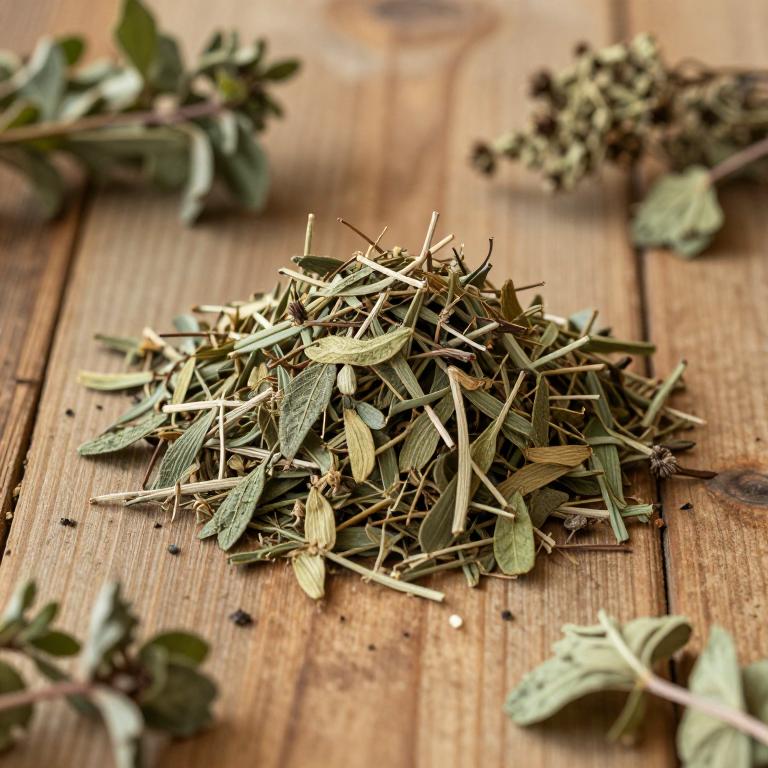
Names and Synonyms
Common Names
- Pengua
Scientific Names
Accepted name
Macaranga mappaSynonyms
- Alchornea mappa
- Tanarius mappa
- Acalypha mappa
- Ricinus mappa
- Mappa moluccana
Sources: Wikidata, Catalogue of Life
Taxonomical Classification
This plant belongs to the kingdom Plantae and is classified under the phylum Streptophyta and the class Equisetopsida. Within the subclass Magnoliidae, it is organized into the order Malpighiales and the family Euphorbiaceae. Finally, it is identified by the genus Macaranga, specifically as the species Macaranga mappa.
| Rank | Classification |
|---|---|
| Kingdom | Plantae |
| Phylum | Streptophyta |
| Class | Equisetopsida |
| Subclass | Magnoliidae |
| Order | Malpighiales |
| Family | Euphorbiaceae |
| Genus | Macaranga |
Sources: The World Checklist of Vascular Plants (WCVP)
Distribution
This plant exhibits a wide geographical range across several distinct tropical regions. Within the Malesia botanical zone, it can be found specifically in the Maluku islands. Its distribution also extends to the island of Sulawesi, further establishing its presence in Southeast Asia. Beyond the Indo-Pacific region, the species has reached the North-Central Pacific. Notably, it is also documented as growing in the remote archipelago of Hawaii.
| Region | Area |
|---|---|
| Malesia | Maluku |
| Malesia | Sulawesi |
| North-Central Pacific | Hawaii |
Sources: The World Checklist of Vascular Plants (WCVP)
Botanical Identification
Life history
The life history of Macaranga mappa is characterized by its status as a perennial species, allowing it to establish a long-term presence within its ecosystem. As a perennial plant, it does not follow the rapid, single-season cycle of annuals or the two-year cycle of biennials, but instead undergoes continuous growth and development over multiple years. This longevity enables the plant to develop a robust structural framework, contributing to its role in forest dynamics. Its lifecycle involves consistent vegetative growth and periodic reproductive phases, which are essential for its survival and the eventual dispersal of its progeny within its natural habitat.
- Lifecycle :
- perennial
Morphology
The morphology of Macaranga mappa is characterized by its growth form as a woody tree that maintains an independent life cycle, functioning as a non-parasitic organism. It is a terrestrial species, lacking aquatic or epiphytic tendencies, and grows as a self-supporting structure rather than a climber, liana, or vine. This tree typically reaches a plant height ranging from a minimum of 5 meters to a maximum of 10 meters.
- Aquatic :
- terrestrial
- Climber :
- self-supporting
- Epiphyte :
- terrestrial
- Growth form :
- tree
- Parasite :
- independent
- Plant height max:
- 10 m
- Plant height min:
- 5 m
- Woodiness :
- woody
Physiology
The physiology of Macaranga mappa is characterized by its specific carbon fixation strategy and substantial vegetative dimensions. As a plant utilizing the C3 photosynthetic pathway, it undergoes carbon fixation through the Calvin cycle, which is typical for many tropical woody species growing in shaded or understory environments. The morphological expression of its photosynthetic apparatus is highly evident in its large, expansive foliage, where leaf length exhibits significant variability depending on environmental conditions and light availability. The leaves typically range in length from a minimum of 60 cm to a maximum of 100 cm, providing a broad surface area optimized for light interception and gas exchange within its native ecological niche.
- Leaf length max:
- 100 cm
- Leaf length min:
- 60 cm
- Photosynthetic pathway :
- C3
Reproduction
The reproduction of Macaranga mappa is characterized by the production of specific fruit structures that facilitate seed dispersal. The plant produces fruits classified as a capsule, which are notably dehiscence-type, meaning they split open at maturity to release their contents. These capsules are relatively small in size, with a fruit length that ranges from a minimum of 0.8 cm to a maximum of 1 cm.
- Dehiscence :
- dehiscent
- Fruit length max:
- 1 cm
- Fruit length min:
- 0.8 cm
- Fruit type :
- capsule
Sources: Global Inventory of Floras and Traits (GIFT)
Plant Parts
Macaranga mappa has 1 reported plant parts identified across 1 scientific publications and several other databases that are studied for medicinal purposes. The most consistently reported plant part include leaf.
| Plant part | Supporting sources | Consensus |
|---|---|---|
| Leaf | 1 supporting sources | ★☆☆☆☆ |
Leaf
- Journal of natural products
Chemicals
Macaranga mappa has 1 reported phytochemicals identified across 1 scientific publications and several other databases. The most consistently reported chemicals include mappain.
| Chemical | Supporting sources | Consensus |
|---|---|---|
| mappain | 1 supporting sources | ★☆☆☆☆ |
mappain
- Journal of natural products
Activities
Macaranga mappa has 1 reported activities identified across 1 scientific publications and several other databases. The most consistently reported activities include Cytotoxic.
| Activity | Supporting sources | Consensus |
|---|---|---|
| Cytotoxic | 1 supporting sources | ★☆☆☆☆ |
Cytotoxic
- Journal of natural products
Conditions
Macaranga mappa has 1 reported investigations on conditions identified across 1 scientific publications and several other databases. The most consistently reported conditions include ovarian cancer.
| Condition | Supporting sources | Consensus |
|---|---|---|
| Ovarian cancer | 1 supporting sources | ★☆☆☆☆ |
Ovarian cancer
- Journal of natural products