Macaranga indica
Macaranga indica · Accepted scientific name
Scientific literature: Very Sparse (8 studies) · ★☆☆☆☆
Macaranga indica, scientifically known as Macaranga indica, is a versatile medicinal shrub native to Southeast Asia. Renowned for its bioactive properties, this plant is frequently utilized in traditional medicine to treat skin ailments, inflammation, and respiratory issues. Its unique phytochemical profile offers significant potential for modern pharmacological research.
- Family
- Euphorbiaceae
- Native range
- Asia-Temperate
- Parts used
- Leaf
- Common names
- Not available
- Scientific synonyms
- Trevia Hernandiifolia · Tanarius Indicus · 1 more
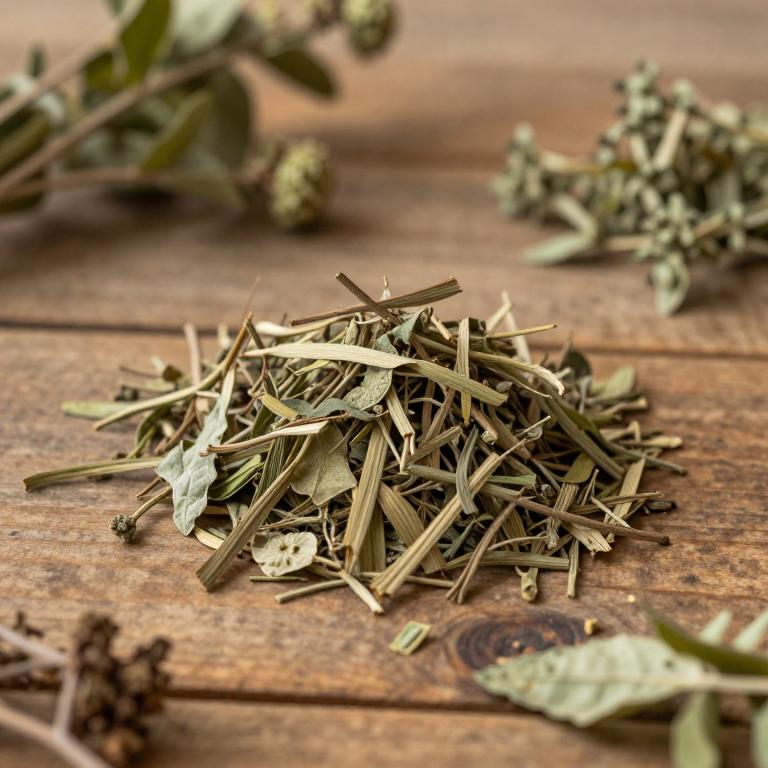
Names and Synonyms
Scientific Names
Accepted name
Macaranga indicaSynonyms
- Trevia hernandiifolia
- Tanarius indicus
- Macaranga adenantha
Sources: Wikidata, Catalogue of Life
Taxonomical Classification
This plant belongs to the kingdom Plantae and is classified under the phylum Streptophyta and class Equisetopsida. Within the subclass Magnoliidae, it falls under the order Malpighiales and the family Euphorbiaceae. Finally, its specific taxonomic identification is placed within the genus Macaranga.
| Rank | Classification |
|---|---|
| Kingdom | Plantae |
| Phylum | Streptophyta |
| Class | Equisetopsida |
| Subclass | Magnoliidae |
| Order | Malpighiales |
| Family | Euphorbiaceae |
| Genus | Macaranga |
Sources: The World Checklist of Vascular Plants (WCVP)
Distribution
This plant exhibits a broad geographical distribution across parts of Asia, stretching from the Indian subcontinent to East Asia. Within the Indian subcontinent, it can be found growing in the regions of Assam and Bangladesh. Its presence extends into China, where it is documented in the South-Central and Southeast areas. Additionally, the species is found in the high-altitude regions of Tibet. Together, these locations highlight the diverse habitats where Macaranga indica thrives.
| Region | Area |
|---|---|
| China | China South-Central |
| China | China Southeast |
| China | Tibet |
| Indian Subcontinent | Assam |
| Indian Subcontinent | Bangladesh |
| Indian Subcontinent | East Himalaya |
| Indian Subcontinent | India |
| Indian Subcontinent | Nepal |
| Indian Subcontinent | Sri Lanka |
| Indo-China | Andaman Is. |
Sources: The World Checklist of Vascular Plants (WCVP)
Botanical Identification
Ecology
The ecology of Macaranga indica is closely defined by its specific altitudinal distribution within montane ecosystems, where it occupies a distinct vertical niche. The species is primarily found in mid-to-high altitude tropical environments, with its elevational range spanning from a minimum of 1000 m AMSL to a maximum of 2100 m AMSL. On average, the plant thrives at a mean elevation of 1525 m AMSL, suggesting a preference for the cooler, more humid conditions characteristic of these middle-tier montane zones. This specialized elevational positioning dictates its interaction with local microclimates, soil moisture levels, and the surrounding forest canopy structure.
- Elevational range max:
- 2100 m AMSL
- Elevational range mean:
- 1525 m AMSL
- Elevational range min:
- 1000 m AMSL
Life history
The life history of Macaranga indica is characterized by its classification as a phanerophyte, a life form where the perennating buds are located well above the ground on aerial shoots. Specifically, within the various ecological growth strategies, it can be identified as both a phanerophyte and a nanophanerophyte, indicating that while it maintains woody structures above the soil surface, its stature typically remains relatively small compared to large forest trees. This growth habit allows the species to establish itself in forest clearings and disturbed habitats, where it utilizes its perennial nature to persist through seasonal changes by protecting its reproductive and vegetative buds on elevated branches.
- Life form :
- phanerophyte
Morphology
The morphology of Macaranga indica is characterized by its growth form as a woody tree that functions as an independent organism, neither acting as a parasite nor as an epiphyte, as it maintains a strictly terrestrial existence. This species exhibits significant variation in its stature, with plant heights ranging from a minimum of 10 m to a maximum of 25 m, maintaining an average height of approximately 17.5 m. In terms of its structural habit, the plant can exhibit characteristics of a self-supporting liana or vine, though it primarily develops as a robust, woody structure.
- Climber :
- self-supporting
- Epiphyte :
- terrestrial
- Growth form :
- tree
- Parasite :
- independent
- Plant height max:
- 25 m
- Plant height mean:
- 17.5 m
- Plant height min:
- 10 m
- Woodiness :
- woody
Physiology
The physiology of Macaranga indica is characterized by distinct morphological parameters and structural density that support its growth patterns. The foliage exhibits significant variability in size, with leaf lengths typically averaging 15.5 cm, though they can range from a minimum of 14 cm to a maximum of 17 cm. Similarly, the leaf width demonstrates a consistent breadth, maintaining a mean of 14 cm, with observed values spanning from a minimum of 13 cm to a maximum of 15 cm. In addition to its leaf dimensions, the plant's structural integrity is reflected in its stem specific density (SSD), which maintains a mean value of 373 mg/cm³.
- Leaf length max:
- 17 cm
- Leaf length mean:
- 15.5 cm
- Leaf length min:
- 14 cm
- Leaf width max:
- 15 cm
- Leaf width mean:
- 14 cm
- Leaf width min:
- 13 cm
- Stem specific density (SSD) mean:
- 373 mg/cm³
Reproduction
The reproduction of Macaranga indica is characterized by specific morphological traits of its reproductive structures, particularly regarding the development and dimensions of its seeds and fruits. The plant produces seeds with a highly consistent volume, where both the minimum and maximum recorded measurements, as well as the calculated mean seed volume, are precisely 6.3 mm³. The fruit characteristics exhibit a distinct physical state, described as being dry, though they can also present a fleshy texture depending on the stage of maturation or specific environmental conditions. These reproductive parameters, defined by a steady seed volume of 6.3 mm³ and a transition between dry and fleshy fruit states, play a critical role in the plant's dispersal and life cycle.
- Fruit dryness :
- dry
- Seed volume max:
- 6.3 mm³
Sources: Global Inventory of Floras and Traits (GIFT)
Plant Parts
Macaranga indica has 1 reported plant parts identified across 1 scientific publications and several other databases that are studied for medicinal purposes. The most consistently reported plant part include leaf.
| Plant part | Supporting sources | Consensus |
|---|---|---|
| Leaf | 1 supporting sources | ★☆☆☆☆ |
Leaf
- Fitoterapia
Chemicals
Macaranga indica has 5 reported phytochemicals identified across 1 scientific publications and several other databases. The most consistently reported chemicals include Cleomiscosin A, Cleomiscosin B, Daucosterol, Ellagic acid-4-O-beta-D-xylopyranoside, Vanillic acid.
| Chemical | Supporting sources | Consensus |
|---|---|---|
| Cleomiscosin A | 1 supporting sources | ★☆☆☆☆ |
| Cleomiscosin B | 1 supporting sources | ★☆☆☆☆ |
| Daucosterol | 1 supporting sources | ★☆☆☆☆ |
| Ellagic acid-4-O-beta-D-xylopyranoside | 1 supporting sources | ★☆☆☆☆ |
| Vanillic acid | 1 supporting sources | ★☆☆☆☆ |
Cleomiscosin A
- Zhongguo Zhong yao za zhi = Zhongguo zhongyao zazhi = China journal of Chinese materia medica
Cleomiscosin B
- Zhongguo Zhong yao za zhi = Zhongguo zhongyao zazhi = China journal of Chinese materia medica
Daucosterol
- Zhongguo Zhong yao za zhi = Zhongguo zhongyao zazhi = China journal of Chinese materia medica
Ellagic acid-4-O-beta-D-xylopyranoside
- Zhongguo Zhong yao za zhi = Zhongguo zhongyao zazhi = China journal of Chinese materia medica
Vanillic acid
- Zhongguo Zhong yao za zhi = Zhongguo zhongyao zazhi = China journal of Chinese materia medica
Preparations
Macaranga indica has 1 reported preparations identified across 1 scientific publications and several other databases. The most consistently reported preparations include isolicoflavonol.
| Preparation | Supporting sources | Consensus |
|---|---|---|
| Isolicoflavonol | 1 supporting sources | ★☆☆☆☆ |
Isolicoflavonol
- International immunopharmacology