Macaranga conifera
Macaranga conifera · Accepted scientific name
Scientific literature: Very Sparse (7 studies) · ★☆☆☆☆
Macarangas conifera, scientifically known as Macaranga conifera, is a notable medicinal plant native to tropical regions. Renowned for its diverse therapeutic properties, this species is frequently utilized in traditional healing practices to treat various ailments. Understanding its chemical composition offers vital insights into its potential pharmacological applications and benefits.
- Family
- Euphorbiaceae
- Native range
- Asia-Tropical
- Parts used
- Leaf
- Common names
- Not available
- Scientific synonyms
- Pachystemon Populifolius · Tanarius Conifer · 4 more
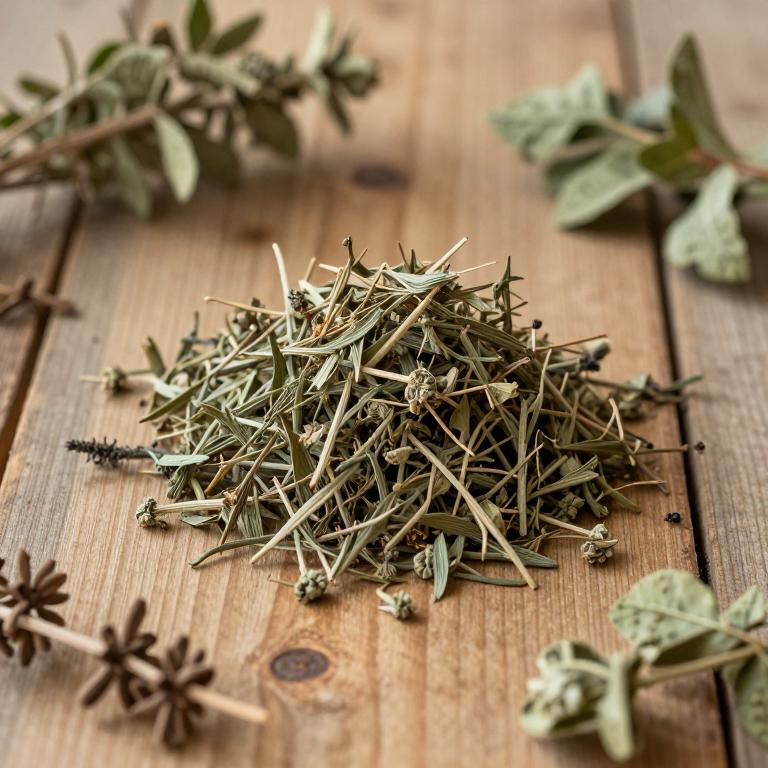
Names and Synonyms
Scientific Names
Accepted name
Macaranga coniferaSynonyms
- Pachystemon populifolius
- Tanarius conifer
- Macaranga populifolia
- Tanarius populifolius
- Mappa conifera
- Mappa populifolia
Sources: Wikidata
Taxonomical Classification
This plant, Macaranga conifera, belongs to the kingdom Plantae and the phylum Streptophyta. Within the class Equisetopsida and subclass Magnoliidae, it is classified under the order Malpighiales. Finally, it is a member of the family Euphorbiaceae and the genus Macaranga.
| Rank | Classification |
|---|---|
| Kingdom | Plantae |
| Phylum | Streptophyta |
| Class | Equisetopsida |
| Subclass | Magnoliidae |
| Order | Malpighiales |
| Family | Euphorbiaceae |
| Genus | Macaranga |
Sources: The World Checklist of Vascular Plants (WCVP)
Distribution
This plant is native to the diverse tropical regions of the Malesia botanical zone. Its natural range extends across the large island of Borneo, where it thrives in specific forest habitats. It is also documented to grow within the territories of Malaya, contributing to the region's rich biodiversity. Furthermore, the species can be found inhabiting the island of Sulawesi. Finally, its geographical distribution includes the lush landscapes of Sumatera.
| Region | Area |
|---|---|
| Malesia | Borneo |
| Malesia | Malaya |
| Malesia | Sulawesi |
| Malesia | Sumatera |
Sources: The World Checklist of Vascular Plants (WCVP)
Botanical Identification
Life history
The life history of Macaranga conifera is characterized by its classification as a phanerophyte, specifically exhibiting growth forms consistent with both phanerophyte and nanophanerophyte traits. As a phanerophyte, the plant maintains its perennating buds well above the ground level, allowing it to persist through unfavorable seasonal conditions by protecting its vital reproductive and vegetative tissues in elevated woody structures. Within this category, its development can lean toward the nanophanerophyte scale, indicating a compact yet woody growth habit where the buds are held at a relatively low height compared to larger forest trees, yet remain distinctly above the soil surface. This life strategy enables the species to establish a stable, perennial presence in its ecological niche, utilizing its elevated bud placement to ensure survival and continued seasonal regrowth.
- Life form :
- phanerophyte
Morphology
The morphology of Macaranga conifera is characterized by its robust growth form as a woody tree, reaching a maximum plant height of approximately 24 meters. It functions as an independent organism, lacking any parasitic tendencies, and is strictly terrestrial in its habitat, showing no aquatic or semiaquatic tendencies. Unlike climbing species such as lianas or vines, this plant is entirely self-supporting and does not exhibit obligatory or facultative climbing behaviors. Furthermore, it is not an epiphyte, maintaining a terrestrial existence rather than growing as a holoepiphyte, hemiepiphyte, or other epiphytic forms.
- Aquatic :
- terrestrial
- Climber :
- self-supporting
- Epiphyte :
- terrestrial
- Growth form :
- tree
- Parasite :
- independent
- Plant height max:
- 24 m
- Woodiness :
- woody
Physiology
The physiology of Macaranga coniifera is characterized by a C3 photosynthetic pathway, which governs its carbon fixation processes and metabolic efficiency. Its leaf morphology exhibits specific dimensional parameters, with an average leaf length of 14.5 cm and an average leaf width of 9.9 cm. Furthermore, the plant possesses a relatively thin leaf structure, maintaining an average leaf thickness of 0.016 mm.
- Leaf length mean:
- 14.5 cm
- Leaf thickness mean:
- 0.016 mm
- Leaf width mean:
- 9.9 cm
- Photosynthetic pathway :
- C3
Reproduction
The reproduction of Macaranga conifera is characterized by the production of extremely minute seeds that exhibit a uniform, near-spherical or granular morphology. Morphometric analysis of the reproductive units reveals that the seeds are remarkably small, with a mean seed length of 0.18 mm. This microscopic scale is consistent across all dimensions of the seed, as the maximum recorded seed height is 0.18 mm and the maximum seed width is also 0.18 mm. Such uniform, diminutive dimensions suggest a reproductive strategy optimized for high-volume dispersal, where the minimal physical footprint of the seeds allows for efficient movement through environmental vectors.
- Seed height max:
- 0.18 mm
- Seed length mean:
- 0.18 mm
- Seed width max:
- 0.18 mm
Sources: Global Inventory of Floras and Traits (GIFT)
Plant Parts
Macaranga conifera has 1 reported plant parts identified across 1 scientific publications and several other databases that are studied for medicinal purposes. The most consistently reported plant part include leaf.
| Plant part | Supporting sources | Consensus |
|---|---|---|
| Leaf | 1 supporting sources | ★☆☆☆☆ |
Leaf
- Phytochemistry
Chemicals
Macaranga conifera has 5 reported phytochemicals identified across 1 scientific publications and several other databases. The most consistently reported chemicals include Isolicoflavonol, Lonchocarpol A, Sophoraflavanone B, Tomentosanol D, lupinifolinol.
| Chemical | Supporting sources | Consensus |
|---|---|---|
| Isolicoflavonol | 1 supporting sources | ★☆☆☆☆ |
| Lonchocarpol A | 1 supporting sources | ★☆☆☆☆ |
| Sophoraflavanone B | 1 supporting sources | ★☆☆☆☆ |
| Tomentosanol D | 1 supporting sources | ★☆☆☆☆ |
| lupinifolinol | 1 supporting sources | ★☆☆☆☆ |
Isolicoflavonol
- Phytochemistry
Lonchocarpol A
- Phytochemistry
Sophoraflavanone B
- Phytochemistry
Tomentosanol D
- Phytochemistry
lupinifolinol
- Phytochemistry
Conditions
Macaranga conifera has 1 reported investigations on conditions identified across 1 scientific publications and several other databases. The most consistently reported conditions include cyclooxygenase-2.
| Condition | Supporting sources | Consensus |
|---|---|---|
| Cyclooxygenase-2 | 1 supporting sources | ★☆☆☆☆ |
Cyclooxygenase-2
- Phytochemistry
Preparations
Macaranga conifera has 1 reported preparations identified across 1 scientific publications and several other databases. The most consistently reported preparations include ethyl acetate-soluble extract.
| Preparation | Supporting sources | Consensus |
|---|---|---|
| Ethyl acetate-soluble extract | 1 supporting sources | ★☆☆☆☆ |
Ethyl acetate-soluble extract
- Phytochemistry