Macaranga barteri
Macaranga barteri · Accepted scientific name
Scientific literature: Very Sparse (14 studies) · ★☆☆☆☆
Macaranga barteri, scientifically known as Macaranga barteri, is a versatile medicinal plant native to tropical regions. Valued in traditional medicine, its leaves and bark possess significant bioactive properties. Often utilized for treating skin ailments and inflammatory conditions, this species offers promising therapeutic potential for modern pharmacological research and development.
- Family
- Euphorbiaceae
- Native range
- Africa
- Parts used
- Leaf
- Common names
- Not available
- Scientific synonyms
- Macaranga Rowlandii · Macaranga Lancifolia · 1 more
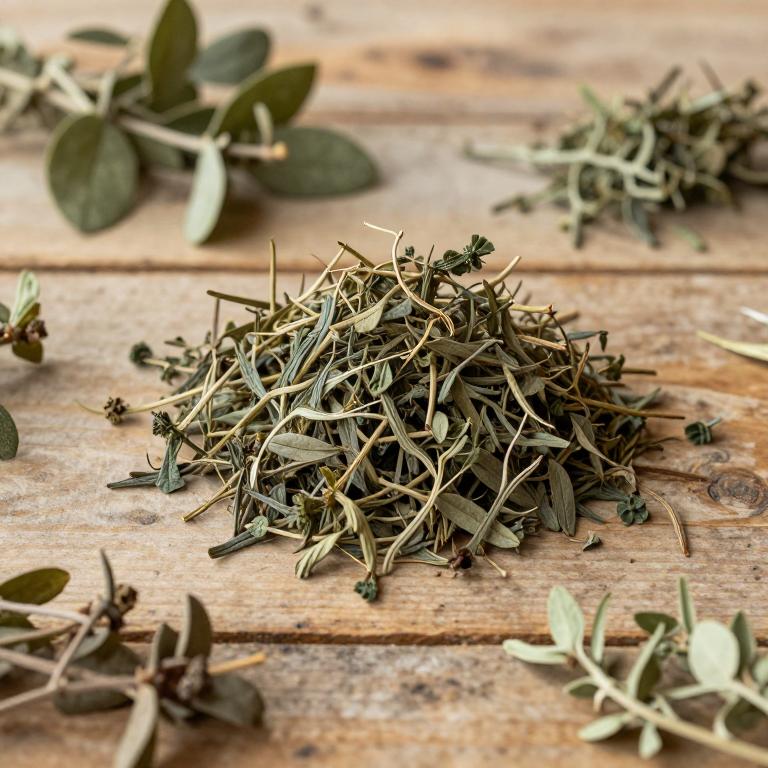
Names and Synonyms
Scientific Names
Accepted name
Macaranga barteriSynonyms
- Macaranga rowlandii
- Macaranga lancifolia
- Macaranga heudelotii var. nitida
Sources: Wikidata
Taxonomical Classification
This plant belongs to the kingdom Plantae and the phylum Streptophyta, falling under the class Equisetopsida and subclass Magnoliidae. Within the order Malpighiales, it is classified under the family Euphorbiaceae. Finally, it is identified by the genus Macaranga and the specific species name barteri.
| Rank | Classification |
|---|---|
| Kingdom | Plantae |
| Phylum | Streptophyta |
| Class | Equisetopsida |
| Subclass | Magnoliidae |
| Order | Malpighiales |
| Family | Euphorbiaceae |
| Genus | Macaranga |
Sources: The World Checklist of Vascular Plants (WCVP)
Distribution
This plant exhibits a specific distribution pattern across the West Tropical Africa region. It can be found growing naturally within the borders of Benin. Additionally, its range extends into the territories of Ghana and Guinea. The species is also documented to inhabit parts of the Ivory Coast. Finally, its geographical presence includes the nation of Liberia.
| Region | Area |
|---|---|
| West Tropical Africa | Benin |
| West Tropical Africa | Ghana |
| West Tropical Africa | Guinea |
| West Tropical Africa | Ivory Coast |
| West Tropical Africa | Liberia |
| West Tropical Africa | Nigeria |
| West Tropical Africa | Sierra Leone |
| West Tropical Africa | Togo |
| West-Central Tropical Africa | Central African Republic |
| West-Central Tropical Africa | Cameroon |
Sources: The World Checklist of Vascular Plants (WCVP)
Botanical Identification
Life history
The life history of Macaranga barterii is characterized by its classification as a phanerophyte, a growth form where the perennating buds are located high above the ground on woody stems. Within the spectrum of life forms, it specifically aligns with the traits of a phanerophyte and a nanophanerophyte, indicating a perennial existence where the regenerative structures are protected by the plant's elevated structural architecture. This life history strategy allows the plant to maintain its vegetative presence through various seasonal cycles, relying on its woody perennial nature to ensure survival and continued growth in its ecological niche.
- Life form :
- phanerophyte
Morphology
The morphology of Macaranga barterii is characterized by its growth form as a woody tree, which is capable of reaching significant dimensions in a natural habitat. It is a self-supporting plant that does not function as a climber, liana, or vine, and it maintains an independent life cycle without being a parasite or an epiphyte. As a terrestrial species, it grows in soil-based environments rather than aquatic or semiaquatic habitats. In terms of stature, the plant exhibits substantial height, with a documented maximum height of approximately 15.24 meters, while the mean plant height is recorded at 20 meters.
- Aquatic :
- terrestrial
- Climber :
- self-supporting
- Epiphyte :
- terrestrial
- Growth form :
- tree
- Parasite :
- independent
- Plant height max:
- 15.24018532 m
- Plant height mean:
- 20 m
- Woodiness :
- woody
Reproduction
The reproduction of Macaranga barterii is primarily characterized by its flowering cycle, which is subject to environmental variability. The flowering period for this species typically begins in May, though the specific onset can be variable depending on seasonal conditions. The peak blooming phase progresses through this period, with the flowering cycle generally reaching its conclusion in June. Because the timing can fluctuate, the reproductive window may shift across different months, but the specific sequence of May to June marks its primary flowering interval.
- Flowering time :
- May
- Flowering time :
- Jun
Sources: Global Inventory of Floras and Traits (GIFT)
Plant Parts
Macaranga barteri has 1 reported plant parts identified across 2 scientific publications and several other databases that are studied for medicinal purposes. The most consistently reported plant part include leaf.
| Plant part | Supporting sources | Consensus |
|---|---|---|
| Leaf | 2 supporting sources | ★☆☆☆☆ |
Leaf
- Virology journal
- Fitoterapia
Chemicals
Macaranga barteri has 10 reported phytochemicals identified across 2 scientific publications and several other databases. The most consistently reported chemicals include 8-Prenylkaempferol, Acteoside, Apigenin-4'-glucoside, Bastadin 11, Broussoflavonol F.
| Chemical | Supporting sources | Consensus |
|---|---|---|
| 8-Prenylkaempferol | 1 supporting sources | ★☆☆☆☆ |
| Acteoside | 1 supporting sources | ★☆☆☆☆ |
| Apigenin-4'-glucoside | 1 supporting sources | ★☆☆☆☆ |
| Bastadin 11 | 1 supporting sources | ★☆☆☆☆ |
| Broussoflavonol F | 1 supporting sources | ★☆☆☆☆ |
| Isomacarangin | 1 supporting sources | ★☆☆☆☆ |
| Tizoxanide | 1 supporting sources | ★☆☆☆☆ |
| Vedelianin | 1 supporting sources | ★☆☆☆☆ |
| mappain | 1 supporting sources | ★☆☆☆☆ |
| schweinfurthin G | 1 supporting sources | ★☆☆☆☆ |
8-Prenylkaempferol
- Fitoterapia
Acteoside
- BMC complementary and alternative medicine
Apigenin-4'-glucoside
- Journal of biomolecular structure & dynamics
Bastadin 11
- BMC complementary and alternative medicine
Broussoflavonol F
- Fitoterapia
Isomacarangin
- Fitoterapia
Tizoxanide
- Journal of biomolecular structure & dynamics
Vedelianin
- Fitoterapia
mappain
- Fitoterapia
schweinfurthin G
- Fitoterapia
Activities
Macaranga barteri has 1 reported activities identified across 2 scientific publications and several other databases. The most consistently reported activities include Cytotoxic.
| Activity | Supporting sources | Consensus |
|---|---|---|
| Cytotoxic | 1 supporting sources | ★☆☆☆☆ |
Cytotoxic
- Fitoterapia
Conditions
Macaranga barteri has 1 reported investigations on conditions identified across 2 scientific publications and several other databases. The most consistently reported conditions include SARS-CoV-2.
| Condition | Supporting sources | Consensus |
|---|---|---|
| Sars-cov-2 | 1 supporting sources | ★☆☆☆☆ |
Sars-cov-2
- Journal of biomolecular structure & dynamics
Preparations
Macaranga barteri has 2 reported preparations identified across 2 scientific publications and several other databases. The most consistently reported preparations include extracts, leaves.
| Preparation | Supporting sources | Consensus |
|---|---|---|
| Extracts | 2 supporting sources | ★☆☆☆☆ |
| Leaves | 1 supporting sources | ★☆☆☆☆ |
Extracts
- Virology journal
- BMC complementary and alternative medicine
Leaves
- Fitoterapia