Macadamia
Macadamia · Accepted scientific name
Scientific literature: Very Sparse (0 studies) · ★☆☆☆☆
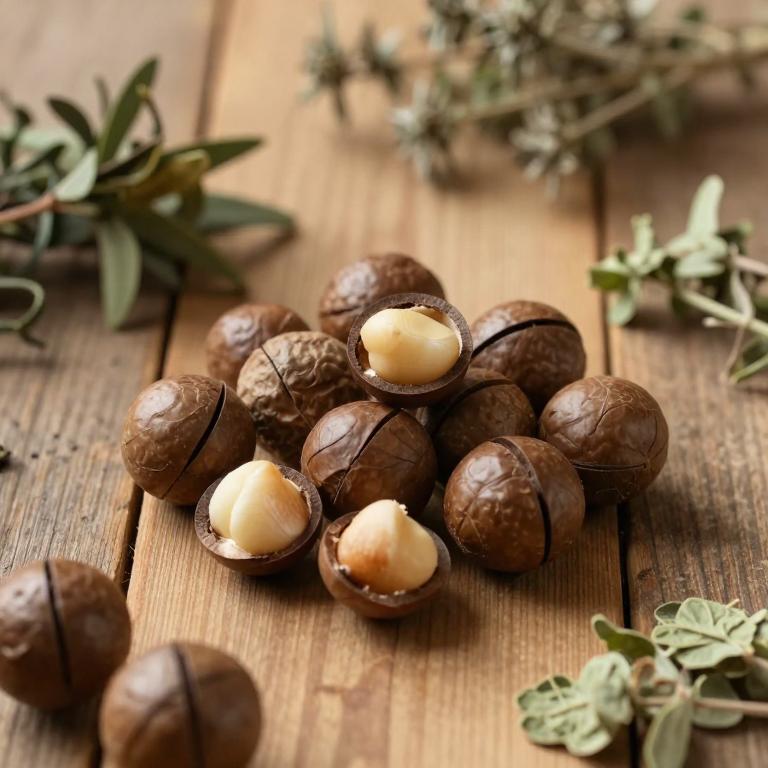
Macadamia plants are celebrated worldwide for producing some of the most delicious and creamy nuts available. These evergreen trees thrive in subtropical climates, offering lush foliage and a unique aesthetic to any landscape. While they are primarily grown for their high-value culinary output, the plants possess complex internal biological processes. Interestingly, certain varieties may contain specific compounds like dhurrin, which play a role in the plant's natural chemistry. Understanding these botanical nuances helps growers better manage their orchards for optimal health and production.
- Synonyms
- Not available
- Common names
- Not available
- Family
- Proteaceae
- Distribution
- Not available
- Plant Parts
- Not available
Classification
Common Names
Macadamia is a versatile plant recognized globally by many different monikers depending on the region. Most people are familiar with the widely used terms Macadamia Nuts or simply Macadamias. In certain linguistic contexts, you may encounter the name Makadamija or the Spanish term Nuez de Macadamia. Furthermore, in Italy, these delicious morsels are often referred to as Noci del Queensland. Regardless of which name is used, this nut remains a beloved staple in kitchens around the world.
Sources: Catalogue of Life (COL)
Taxonomy
Macadamia belongs to the vast kingdom Plantae, serving as a distinguished member of the natural world. Within this kingdom, it is classified under the class Equisetopsida. The plant further falls into the order Proteales, showcasing its specific evolutionary lineage. It is a prominent representative of the family Proteaceae, a group known for its unique botanical characteristics. Ultimately, this resilient species is defined by its specific genus, Macadamia.
| Rank | Classification |
|---|---|
| Kingdom | Plantae |
| Phylum | Streptophyta |
| Class | Equisetopsida |
| Subclass | Magnoliidae |
| Order | Proteales |
| Family | Proteaceae |
| Genus | Macadamia |
Sources: The World Checklist of Vascular Plants (WCVP)
Distribution
Geographic Regions
Macadamia plants exhibit a diverse geographical range that spans across two major continents. In Africa, they are widely distributed throughout Southern Africa, with significant presence in Mozambique and the KwaZulu-Natal region. They also thrive within the Northern Provinces, highlighting their adaptability to various African climates. Moving to Australasia, these plants have established a strong foothold across Australia. Specifically, they are commonly found growing in both New South Wales and Queensland.
Sources: The World Checklist of Vascular Plants (WCVP)
Identification
Biological Activities
Compounds
Macadamia plants are known to contain dhurrin, a naturally occurring phytochemical that serves as a critical defense mechanism. This cyanogenic glucoside acts as a powerful phytoanticipin, protecting the plant from various insect herbivores. When tissue disruption occurs during a herbivory event, dhurrin is catabolized to release hydrogen cyanide. This chemical release functions as a potent deterrent against pests, showcasing the plant's innate biological weaponry. Understanding this relationship offers promising opportunities to explore dhurrin as a potential natural substitute for synthetic pesticides.