loosestrife
Lysimachia · Accepted scientific name
Scientific literature: Very Sparse (9 studies) · ★☆☆☆☆
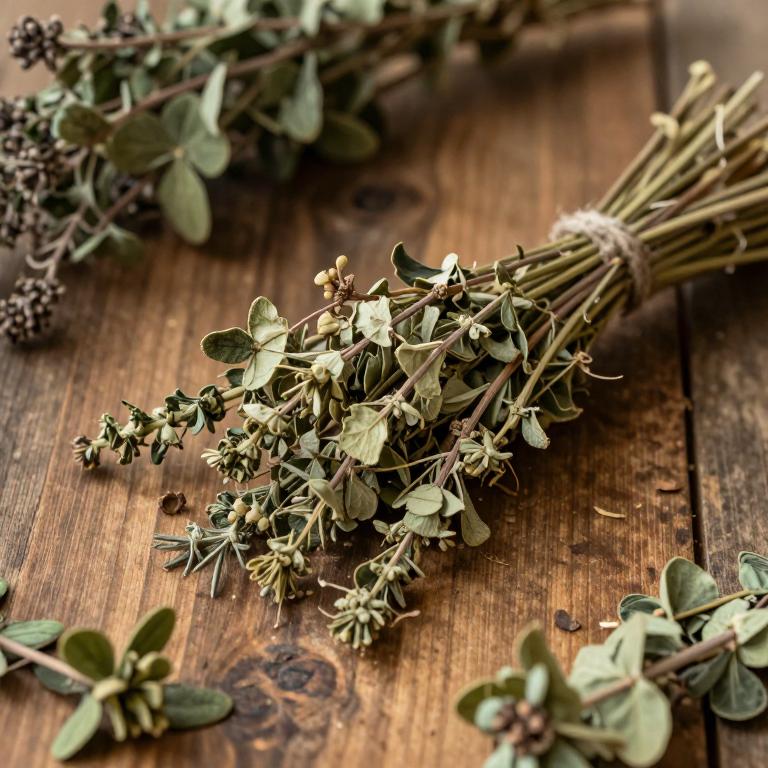
loosestrif, scientifically known as Lysimachia, is a versatile genus of flowering plants valued for both ornamental beauty and traditional medicinal uses. Often found in moist habitats, these resilient perennials offer diverse therapeutic properties, ranging from wound healing to digestive support, making them a fascinating subject in botanical studies.
Names and Synonyms
Common Names
- Loosestrifes
- Starflowers
- milkwort
- pimpernels
- Loosestrife
Scientific Names
Accepted name
LysimachiaSynonyms
- Pelletiera
- Ephemerum
- Micropyxis
- Lerouxia
- Dugezia
- Coxia
- Lysimachiopsis
- Thyrsanthus
- Bernardina
- Centunculus
- Naumburgia
- Anagallidastrum
- Trientalis
- Euparea
- Nummularia
- Asterolinon
- Apochoris
- Cerium
- Anagallis
- Alsinanthemum
- Glaux
- Manoelia
- Godinella
- Theopyxis
- Vroedea
- Orescia
- Nemorella
- Steironema
- Jirasekia
- Lysimachusa
- Lysis
- Lysimandra
- Lubinia
- Lysima
Regional and Traditional Names
Spanish:
- Steironema
- Apochoris
- Naumburgia
German:
- Gilbweiderich
- Gelbweiderich
- Felberich
- Naumburgia
- Gilbweiderich
French:
- lysimaque
- Lysimaque
- Lysimaque
Sources: Wikidata, Catalogue of Life
Taxonomical Classification
This plant belongs to the kingdom Plantae and the phylum Streptophyta, specifically falling under the class Equisetopsida and subclass Magnoliidae. Within the order Ericales, it is classified under the family Primulaceae. Its taxonomic designation concludes with the genus Lysimachia.
| Rank | Classification |
|---|---|
| Kingdom | Plantae |
| Phylum | Streptophyta |
| Class | Equisetopsida |
| Subclass | Magnoliidae |
| Order | Ericales |
| Family | Primulaceae |
| Genus | Lysimachia |
Sources: The World Checklist of Vascular Plants (WCVP)
Distribution
This plant exhibits a specific distribution pattern focused primarily within the northern regions of Europe. It can be found growing across various territories in Northern Europe, including Denmark and Finland. The species also extends its reach to the island of Iceland. Furthermore, its presence is noted in the Faroe Islands, locally known as Føroyaar. Finally, the geographical range of Lysimachia includes the lands of Great Britain.
| Region | Area |
|---|---|
| Northern Europe | Denmark |
| Northern Europe | Finland |
| Northern Europe | Føroyar |
| Northern Europe | Great Britain |
| Northern Europe | Iceland |
| Northern Europe | Ireland |
| Northern Europe | Norway |
| Northern Europe | Sweden |
| Middle Europe | Austria |
| Middle Europe | Belgium |
Sources: The World Checklist of Vascular Plants (WCVP)
Chemicals
Lysimachia has 2 reported phytochemicals identified across 0 scientific publications and several other databases. The most consistently reported chemicals include Flavonoids, Saponins.
| Chemical | Supporting sources | Consensus |
|---|---|---|
| Flavonoids | 1 supporting sources | ★☆☆☆☆ |
| Saponins | 1 supporting sources | ★☆☆☆☆ |
Flavonoids
- Zhongguo Zhong yao za zhi = Zhongguo zhongyao zazhi = China journal of Chinese materia medica
Saponins
- Zhongguo Zhong yao za zhi = Zhongguo zhongyao zazhi = China journal of Chinese materia medica
Activities
Lysimachia has 2 reported activities identified across 0 scientific publications and several other databases. The most consistently reported activities include Analgesic, Antioxidant.
| Activity | Supporting sources | Consensus |
|---|---|---|
| Analgesic | 1 supporting sources | ★☆☆☆☆ |
| Antioxidant | 1 supporting sources | ★☆☆☆☆ |
Analgesic
- Zhongguo Zhong yao za zhi = Zhongguo zhongyao zazhi = China journal of Chinese materia medica
Antioxidant
- Food chemistry: X
Conditions
Lysimachia has 5 reported investigations on conditions identified across 0 scientific publications and several other databases. The most consistently reported conditions include diarrhea, fever, foodborne diseases, heat, ulcers.
| Condition | Supporting sources | Consensus |
|---|---|---|
| Diarrhea | 1 supporting sources | ★☆☆☆☆ |
| Fever | 1 supporting sources | ★☆☆☆☆ |
| Foodborne diseases | 1 supporting sources | ★☆☆☆☆ |
| Heat | 1 supporting sources | ★☆☆☆☆ |
| Ulcers | 1 supporting sources | ★☆☆☆☆ |
Diarrhea
- Zhongguo Zhong yao za zhi = Zhongguo zhongyao zazhi = China journal of Chinese materia medica
Fever
- Zhongguo Zhong yao za zhi = Zhongguo zhongyao zazhi = China journal of Chinese materia medica
Foodborne diseases
- Food chemistry: X
Heat
- Food chemistry: X
Ulcers
- Zhongguo Zhong yao za zhi = Zhongguo zhongyao zazhi = China journal of Chinese materia medica