Lysimachia laxa
Lysimachia laxa · Accepted scientific name
Scientific literature: Very Sparse (2 studies) · ★☆☆☆☆
, scientifically known as Lysimachia laxa, is a perennial herb native to North America. Often found in moist, woodland habitats, this plant features delicate, yellowish flowers. While primarily valued for its aesthetic charm in natural landscapes, it holds historical interest in ethnobotany for its potential, yet understudied, medicinal properties.
- Family
- Primulaceae
- Native range
- Asia-Temperate
- Parts used
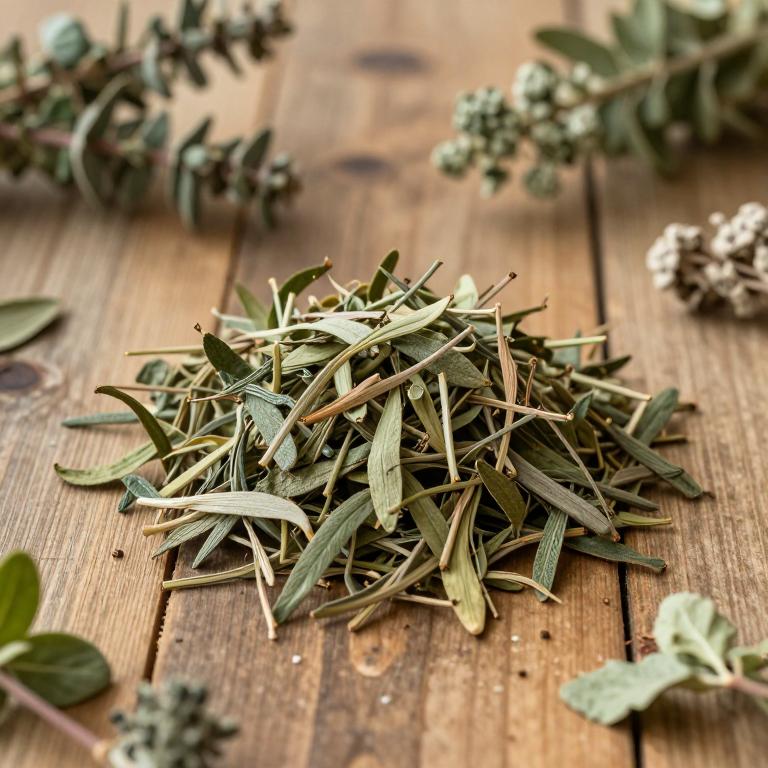
- Leaf
- Common names
- Not available
- Scientific synonyms
- Lysimachia Ramosa Var. Grandiflora · Lysimachia Alata · 3 more
Names and Synonyms
Scientific Names
Accepted name
Lysimachia laxaSynonyms
- Lysimachia ramosa var. grandiflora
- Lysimachia alata
- Lysimachia ramosa
- Lysimachia floribunda
- Lysimachia ramosa var. zeylanica
Sources: Wikidata
Taxonomical Classification
This plant belongs to the kingdom Plantae and is classified under the phylum Streptophyta and class Equisetopsida. Within the subclass Magnoliidae and order Ericales, it is a member of the family Primulaceae. Specifically, it is categorized under the genus Lysimachia.
| Rank | Classification |
|---|---|
| Kingdom | Plantae |
| Phylum | Streptophyta |
| Class | Equisetopsida |
| Subclass | Magnoliidae |
| Order | Ericales |
| Family | Primulaceae |
| Genus | Lysimachia |
Sources: The World Checklist of Vascular Plants (WCVP)
Distribution
This plant exhibits a broad geographical distribution across various parts of Asia. In China, it is specifically found throughout the South-Central regions. Its presence extends into the Indian Subcontinent, where it inhabits the state of Assam and the East Himalaya. Additionally, the species can be located within the mountainous terrain of Nepal. Finally, its range reaches further south to include the island of Sri Lanka.
| Region | Area |
|---|---|
| China | China South-Central |
| Indian Subcontinent | Assam |
| Indian Subcontinent | East Himalaya |
| Indian Subcontinent | Nepal |
| Indian Subcontinent | Sri Lanka |
| Indo-China | Myanmar |
| Indo-China | Thailand |
| Indo-China | Vietnam |
| Malesia | Jawa |
| Malesia | Lesser Sunda Is. |
Sources: The World Checklist of Vascular Plants (WCVP)
Botanical Identification
Ecology
The ecology of Lysimachia laxa is characterized by its distribution across specific altitudinal gradients, where it inhabits diverse montane environments. This species typically thrives within a broad elevational range, beginning at a minimum altitude of 1000 m AMSL and extending up to a maximum of 2700 m AMSL. Throughout its natural habitat, the plant maintains a mean elevation of approximately 1550 m AMSL, suggesting a preference for mid-to-high altitude ecological zones that provide its required climatic conditions.
- Elevational range max:
- 2700 m AMSL
- Elevational range mean:
- 1550 m AMSL
- Elevational range min:
- 1000 m AMSL
Morphology
The morphology of Lysimachia laxa is characterized by its growth form as a non-woody herb and forb. It functions as a terrestrial plant, maintaining a self-supporting structure without the need for climbing. In terms of stature, the plant typically reaches an average height of 0.4325 m, though individual specimens exhibit a height range between a minimum of 0.18 m and a maximum of 0.35 m.
- Climber :
- self-supporting
- Epiphyte :
- terrestrial
- Growth form :
- herb
- Plant height max:
- 0.35 m
- Plant height mean:
- 0.4325 m
- Plant height min:
- 0.18 m
- Woodiness :
- non-woody
Physiology
The physiology of Lysimachia laxa is closely characterized by its vegetative morphological adaptations, particularly regarding its foliar development and surface area optimization. The plant exhibits significant variability in leaf dimensions, which plays a crucial role in its photosynthetic capacity and transpiration regulation. The leaves demonstrate a substantial range in length, with a mean measurement of 6.375 cm, extending from a minimum of 3 cm to a maximum of 11 cm. This longitudinal plasticity is complemented by a diverse width profile, where leaf widths range from a minimum of 0.5 cm to a maximum of 2.8 cm, maintaining a mean width of 1.825 cm. Such variations in the leaf aspect ratio suggest a physiological capacity to adjust leaf morphology in response to environmental light availability and moisture levels, facilitating efficient gas exchange and resource acquisition within its natural habitat.
- Leaf length max:
- 11 cm
- Leaf length mean:
- 6.375 cm
- Leaf length min:
- 3 cm
- Leaf width max:
- 2.8 cm
- Leaf width mean:
- 1.825 cm
- Leaf width min:
- 0.5 cm
Reproduction
The reproduction of Lysimachia laxa is characterized by the development of specialized fruit structures that exhibit specific morphological dimensions. The fruit produced by this species is relatively small and compact, with a length that typically ranges from a minimum of 0.5 cm to a maximum of 0.6 cm, maintaining a mean length of approximately 0.5375 cm. Similarly, the width of the fruit shows a narrow variation, with a minimum measurement of 0.55 cm and a maximum width of 0.6 cm, resulting in a mean width of 0.575 cm. These precise dimensions indicate a consistent reproductive output, where the fruit maintains a nearly spherical or slightly rounded shape due to the minimal difference between its mean length and width.
- Fruit length max:
- 0.6 cm
- Fruit length mean:
- 0.5375 cm
- Fruit length min:
- 0.5 cm
- Fruit width max:
- 0.6 cm
- Fruit width mean:
- 0.575 cm
- Fruit width min:
- 0.55 cm
Sources: Global Inventory of Floras and Traits (GIFT)
Plant Parts
Lysimachia laxa has 1 reported plant parts identified across 1 scientific publications and several other databases that are studied for medicinal purposes. The most consistently reported plant part include leaf.
| Plant part | Supporting sources | Consensus |
|---|---|---|
| Leaf | 1 supporting sources | ★☆☆☆☆ |
Leaf
- Journal of parasitic diseases : official organ of the Indian Society for Parasitology
Activities
Lysimachia laxa has 1 reported activities identified across 1 scientific publications and several other databases. The most consistently reported activities include Anthelmintic.
| Activity | Supporting sources | Consensus |
|---|---|---|
| Anthelmintic | 1 supporting sources | ★☆☆☆☆ |
Anthelmintic
- Journal of parasitic diseases : official organ of the Indian Society for Parasitology
Preparations
Lysimachia laxa has 7 reported preparations identified across 1 scientific publications and several other databases. The most consistently reported preparations include chloroform fraction, crude extract, crude leaf extract, ethyl acetate fraction, hexane fraction.
| Preparation | Supporting sources | Consensus |
|---|---|---|
| Chloroform fraction | 1 supporting sources | ★☆☆☆☆ |
| Crude extract | 1 supporting sources | ★☆☆☆☆ |
| Crude leaf extract | 1 supporting sources | ★☆☆☆☆ |
| Ethyl acetate fraction | 1 supporting sources | ★☆☆☆☆ |
| Hexane fraction | 1 supporting sources | ★☆☆☆☆ |
| Leaves extract | 1 supporting sources | ★☆☆☆☆ |
| N-butanol fraction | 1 supporting sources | ★☆☆☆☆ |
Chloroform fraction
- Journal of parasitic diseases : official organ of the Indian Society for Parasitology
Crude extract
- Journal of parasitic diseases : official organ of the Indian Society for Parasitology
Crude leaf extract
- Journal of parasitic diseases : official organ of the Indian Society for Parasitology
Ethyl acetate fraction
- Journal of parasitic diseases : official organ of the Indian Society for Parasitology
Hexane fraction
- Journal of parasitic diseases : official organ of the Indian Society for Parasitology
Leaves extract
- Journal of parasitic diseases : official organ of the Indian Society for Parasitology
N-butanol fraction
- Journal of parasitic diseases : official organ of the Indian Society for Parasitology