Scarlet pimpernel
Lysimachia arvensis · Accepted scientific name
Scientific literature: Very Sparse (25 studies) · ★☆☆☆☆
Scarlet pimpernel, scientifically known as Lysimachia arvensis, is a perennial herb characterized by its striking, bright red flowers. Often found in meadows and grasslands, this plant holds historical significance in traditional herbalism. While primarily valued for its aesthetic charm, it remains a fascinating subject within botanical and medicinal studies.
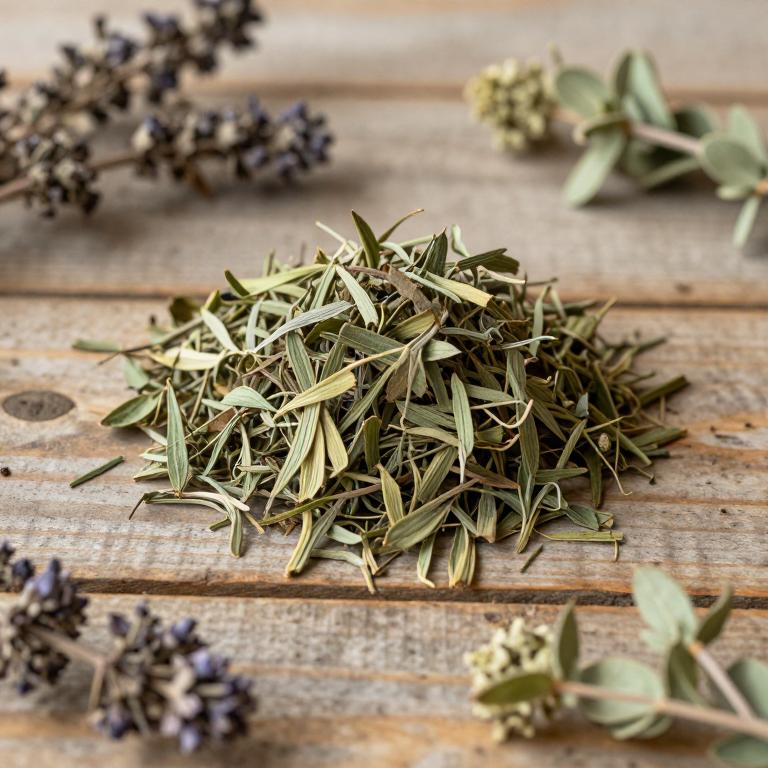
Names and Synonyms
Common Names
- scarlet pimpernel
- bird's-eye
- blue pimpernel
- poor-man's-weatherglass
- red chickweed
- shepherd's-clock
- shepherd's-weatherglass
- Common Scarlet Pimpernel
- Poor Man's Weather Glass
- Shepherd's Calendar
- Shepherd's Weather-Glass
- wink-a-peep
Scientific Names
Accepted name
Lysimachia arvensisSynonyms
- Anagallis punctifolia
- Anagallis arvensis var. carnea
- Anagallis arvensis f. purpurea
- Anagallis jacquemontii
- Anagallis arvensis var. purpurea
- Anagallis arvensis var. repens
- Anagallis mas
- Anagallis arvensis var. lilacina
- Anagallis indica
- Lysimachia arvensis var. arvensis
- Anagallis hadidii
- Anagallis arvensis decipiens
- Anagallis arvensis f. carnea
- Anagallis arvensis f. lilacina
- Anagallis arvensis f. pallida
- Anagallis arvensis f. decipiens
- Anagallis arvensis var. tridyma
- Anagallis phoenicea var. verticillata
- Anagallis arvensis var. immaculata
- Anagallis arabica
- Anagallis arvensis
- Anagallis arvensis var. platyphylloides
- Anagallis arvensis var. pallida
- Anagallis carnea
- Anagallis orientalis
Regional and Traditional Names
Spanish:
- Mata del Senor
- Hierba coral
- Yerba coral
- Jabón de gitana
- Anagalide hembra
- Arbejanilla
- Murriaô grande
- Jaboncito de golondrina
- Hierba corral
- Hierba de las guebras
- Jabon de rana
- Murriao grande
- Murage pequeno portugues
- Jabon de gitana
- murajes
- Cenicilla
- Jabonera europea
- pimpinela escarlata
German:
- Acker-Gauchheil
- Wetterkraut
- Roter Gauchheil
- Nebelpflanze
- Weinbergsstern
- Ackergauchheil
- Ackergauchheil
- Acker-Gauchheil
French:
- Mouron rouge
- mouron des champs
- mouron rouge
- buglosse des champs
- Mouron des champs rouge
Sources: Wikidata, Catalogue of Life
Taxonomical Classification
This plant belongs to the kingdom Plantae and is classified under the phylum Streptophyta and the class Equisetopsida. Within the subclass Magnoliidae, it is ordered under Ericales and placed in the family Primulaceae. Finally, its taxonomic identity is defined by the genus Lysimachia.
| Rank | Classification |
|---|---|
| Kingdom | Plantae |
| Phylum | Streptophyta |
| Class | Equisetopsida |
| Subclass | Magnoliidae |
| Order | Ericales |
| Family | Primulaceae |
| Genus | Lysimachia |
Sources: The World Checklist of Vascular Plants (WCVP)
Distribution
This plant exhibits a specific geographical distribution across several regions of Northern Europe. It can be found growing within the borders of Denmark and Finland. Its presence is also documented throughout the island of Ireland. Furthermore, the species is widely distributed across Great Britain. Finally, the range of this medicinal plant extends into the territory of Norway.
| Region | Area |
|---|---|
| Northern Europe | Denmark |
| Northern Europe | Finland |
| Northern Europe | Great Britain |
| Northern Europe | Ireland |
| Northern Europe | Norway |
| Northern Europe | Sweden |
| Middle Europe | Austria |
| Middle Europe | Belgium |
| Middle Europe | Czechia-Slovakia |
| Middle Europe | Germany |
Sources: The World Checklist of Vascular Plants (WCVP)
Botanical Identification
Ecology
The ecology of Lysimachia arvensis is characterized by a broad adaptability to diverse environmental conditions and a wide altitudinal distribution. It inhabits a variety of distinct ecosystems, including Campo Rupestre, Cerrado (latu sensu), Floresta Ombrófila (also known as Floresta Pluvial), and Floresta Ombrófila Mista. This range of habitats allows the species to occupy multiple ecological niches, from open, rocky landscapes to dense, humid forests. Furthermore, the plant exhibits significant vertical distribution across varying landscapes, maintaining an elevational range that begins at sea level (0 m AMSL) and extends up to a maximum of 3100 m AMSL.
- Elevational range max:
- 3100 m AMSL
- Elevational range min:
- 0 m AMSL
- Habitat :
- Campo Rupestre, Cerrado (lato sensu), Floresta Ombrófila (= Floresta Pluvial), Floresta Ombrófila Mista
Life history
The life history of Lysimachia arvensis is characterized by its status as an annual plant, meaning it completes its entire biological cycle—from germination to seed production—within a single growing season. As a therophyte, it survives the unfavorable seasons in the form of seeds, which remain dormant until environmental conditions are optimal for growth. This plant does not maintain vegetative structures year-round, as its life form is strictly seasonal, and it is classified as evergreen in terms of its physiological persistence during its active phase, though it lacks long-term perennial structures. The developmental strategy focuses on rapid growth and prolific seed dispersal to ensure the continuation of the species before the onset of the next dormant period.
- Deciduousness :
- evergreen
- Life form :
- therophyte
- Lifecycle :
- annual
Morphology
The morphology of Lysimachia arvensis is characterized by its growth form as a non-woody herb and forb. The plant is primarily terrestrial in its ecological habit, functioning as an independent organism rather than a parasite or epiphyte. It exhibits a self-supporting climbing habit, though it does not utilize vines or lianas to ascend. The shoot orientation is predominantly ascending, with individual shoot lengths reaching a maximum of 20 cm. In terms of stature, the plant is relatively low-growing, with a minimum height of 0.02 m, a maximum height of 0.5 m, and an average plant height of approximately 0.183 m.
- Aquatic :
- terrestrial
- Climber :
- self-supporting
- Epiphyte :
- terrestrial
- Growth form :
- herb
- Growth form :
- forb
- Parasite :
- independent
- Plant height max:
- 0.5 m
- Plant height mean:
- 0.183 m
- Plant height min:
- 0.02 m
- Shoot length max:
- 20 cm
- Shoot orientation :
- ascending
- Woodiness :
- non-woody
Physiology
The physiology of Lysimachia arvensis is characterized by a C3 photosynthetic pathway, which dictates its carbon fixation processes and metabolic efficiency. As a non-carnivorous species, it relies entirely on soil-based nutrient uptake rather than the capture of prey, and it does not function as a nitrogen fixer. The plant's leaf morphology exhibits significant variability, with leaf lengths ranging from a minimum of 0.5 cm to a maximum of 18 cm, and a mean length of 12.5 cm. The leaf width varies between 0.3 cm and 1.5 cm, resulting in a mean width of 0.75 cm. These leaves typically present an ovate form, with a mean leaf size of 1.04 cm². Furthermore, the plant maintains a mean Specific Leaf Area (SLA) of 293.2 cm²/g, a metric that reflects the relationship between its leaf area and dry mass, providing insight into its resource allocation and light-harvesting strategies.
- Carnivory :
- non-carnivorous
- Leaf form :
- ovate
- Leaf length max:
- 18 cm
- Leaf length mean:
- 12.5 cm
- Leaf length min:
- 0.5 cm
- Leaf size mean:
- 1.04 cm²
- Leaf width max:
- 1.5 cm
- Leaf width mean:
- 0.75 cm
- Leaf width min:
- 0.3 cm
- Nitrogen fixer :
- no
- Photosynthetic pathway :
- C3
- Specific Leaf Area (SLA) mean:
- 293.2 cm²/g
Reproduction
The reproduction of Lysimachia arvensis is primarily sexual, characterized by bisexual flowers that facilitate the plant's reproductive cycle. The flowering period is extensive, typically commencing in May and continuing through October. These blue flowers, which vary in size with a length between 0.5 and 0.7 cm and a width ranging from 0.4 to 1.2 cm, rely on biotic pollination syndromes, specifically utilizing insects for pollination. While the plant is capable of self-fertilization, its reproductive strategy is well-supported by these insect visitors. Following successful pollination, the plant develops dry, dehiscent capsules as its fruit type. These capsules are relatively small, maintaining a consistent length of approximately 0.35 cm and a width between 0.35 and 0.375 cm. Within each capsule, a prolific number of seeds is produced, ranging from 101 to 1000 seeds per fruit. The seeds themselves are minute, with a mean mass of approximately 0.0005318334 g (ranging from 0.0003 g to 0.00076 g), a mean length of 1.1 mm, and a consistent volume of 0.44 mm³. Dispersal is achieved through unspecialized and anthropochorous syndromes, allowing the seeds to spread effectively within their environment. Asexual reproduction is notably absent in this species.
- Dehiscence :
- dehiscent
- Dispersal syndrome :
- unspecialized
- Dispersal syndrome :
- anthropochorous
- Flower colour :
- blue
- Flower length max:
- 0.7 cm
- Flower length min:
- 0.5 cm
- Flower width max:
- 1.2 cm
- Flower width min:
- 0.4 cm
- Flowering time :
- May
- Flowering time :
- Oct
- Fruit dryness :
- dry
- Fruit length max:
- 0.35 cm
- Fruit type :
- capsule
- Fruit width max:
- 0.35 cm
- Fruit width mean:
- 0.375 cm
- Pollination syndrome :
- insect
- Pollination syndrome :
- biotic
- Reproduction asexual :
- absent
- Reproduction sexual :
- bisexual
- Seed length mean:
- 1.1 mm
- Seed mass max:
- 0.00076 g
- Seed mass mean:
- 0.0005318334 g
- Seed mass min:
- 3e-04 g
- Seed volume max:
- 0.44 mm³
- Seeds_per_fruit :
- 101-1000
- Self fertilization :
- present
Sources: Global Inventory of Floras and Traits (GIFT)
Chemicals
Lysimachia arvensis has 13 reported phytochemicals identified across 0 scientific publications and several other databases. The most consistently reported chemicals include Flavonoid, Anagalloside B, Balanitesin, Flavonol, Lanceoletin.
| Chemical | Supporting sources | Consensus |
|---|---|---|
| Flavonoid | 2 supporting sources | ★☆☆☆☆ |
| Anagalloside B | 1 supporting sources | ★☆☆☆☆ |
| Balanitesin | 1 supporting sources | ★☆☆☆☆ |
| Flavonol | 1 supporting sources | ★☆☆☆☆ |
| Lanceoletin | 1 supporting sources | ★☆☆☆☆ |
| METHYL LINOLENATE | 1 supporting sources | ★☆☆☆☆ |
| Saponins | 1 supporting sources | ★☆☆☆☆ |
| Tannin | 1 supporting sources | ★☆☆☆☆ |
| desglucoanagalloside B | 1 supporting sources | ★☆☆☆☆ |
| guanosine | 1 supporting sources | ★☆☆☆☆ |
Flavonoid
- Food research international (Ottawa, Ont.)
- Journal of toxicology and environmental health. Part A
Anagalloside B
- Japanese journal of infectious diseases
Balanitesin
- Food research international (Ottawa, Ont.)
Flavonol
- Journal of toxicology and environmental health. Part A
Lanceoletin
- Food research international (Ottawa, Ont.)
METHYL LINOLENATE
- Journal of toxicology and environmental health. Part A
Saponins
- Food research international (Ottawa, Ont.)
Tannin
- Journal of toxicology and environmental health. Part A
desglucoanagalloside B
- Japanese journal of infectious diseases
guanosine
- Journal of toxicology and environmental health. Part A
Activities
Lysimachia arvensis has 7 reported activities identified across 0 scientific publications and several other databases. The most consistently reported activities include Antioxidant, Cytotoxic, Antibacterial, Antidiabetic, Antifungal.
| Activity | Supporting sources | Consensus |
|---|---|---|
| Antioxidant | 2 supporting sources | ★☆☆☆☆ |
| Cytotoxic | 2 supporting sources | ★☆☆☆☆ |
| Antibacterial | 1 supporting sources | ★☆☆☆☆ |
| Antidiabetic | 1 supporting sources | ★☆☆☆☆ |
| Antifungal | 1 supporting sources | ★☆☆☆☆ |
| Antimicrobial | 1 supporting sources | ★☆☆☆☆ |
| Antitumor | 1 supporting sources | ★☆☆☆☆ |
Antioxidant
- Molecules (Basel, Switzerland)
- Pakistan journal of pharmaceutical sciences
Cytotoxic
- Food research international (Ottawa, Ont.)
- Pakistan journal of pharmaceutical sciences
Antibacterial
- Pakistan journal of pharmaceutical sciences
Antidiabetic
- Molecules (Basel, Switzerland)
Antifungal
- Pakistan journal of pharmaceutical sciences
Antimicrobial
- Molecules (Basel, Switzerland)
Antitumor
- Pakistan journal of pharmaceutical sciences
Preparations
Lysimachia arvensis has 6 reported preparations identified across 0 scientific publications and several other databases. The most consistently reported preparations include aqueous extracts, aqueous fraction, ethyl acetate fraction, herb of Anagallis arvensis, methanolic extract.
| Preparation | Supporting sources | Consensus |
|---|---|---|
| Aqueous extracts | 1 supporting sources | ★☆☆☆☆ |
| Aqueous fraction | 1 supporting sources | ★☆☆☆☆ |
| Ethyl acetate fraction | 1 supporting sources | ★☆☆☆☆ |
| Herb of anagallis arvensis | 1 supporting sources | ★☆☆☆☆ |
| Methanolic extract | 1 supporting sources | ★☆☆☆☆ |
| N-hexane fraction | 1 supporting sources | ★☆☆☆☆ |
Aqueous extracts
- Mycoses
Aqueous fraction
- Molecules (Basel, Switzerland)
Ethyl acetate fraction
- Molecules (Basel, Switzerland)
Herb of anagallis arvensis
- Phytochemistry
Methanolic extract
- Journal of toxicology and environmental health. Part A
N-hexane fraction
- Molecules (Basel, Switzerland)