clubmoss
Lycopodium · Accepted scientific name
Scientific literature: Very Sparse (1 studies) · ★☆☆☆☆
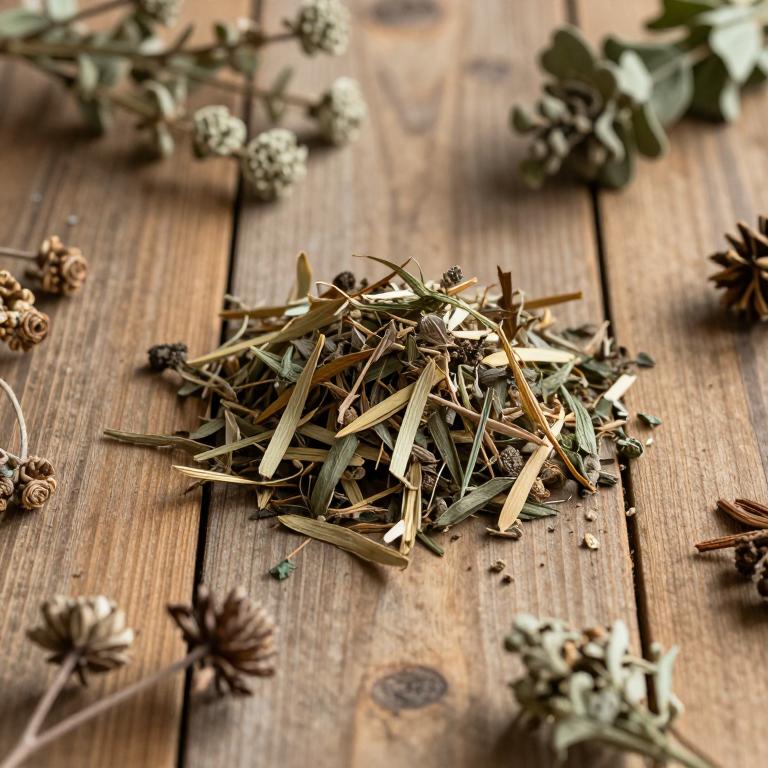
Clubmoss, scientifically known as Lycopodium, is a versatile botanical genus used extensively in traditional medicine. Renowned for its unique spore production, it has historically been utilized to treat digestive issues, respiratory ailments, and skin inflammations. Today, it remains a subject of interest in pharmacology for its complex chemical properties.
Names and Synonyms
Common Names
- clubmoss
- club-moss
- clubmosses
- creeping-cedars
- ground and creeping clubmosses
- ground pines
- running pines
Scientific Names
Accepted name
LycopodiumSynonyms
- Pseudolycopodium
- Spinulum
- Dendrolycopodium
- Lepidotis
- Lycopodiastrum
- Pseudodiphasium
- Diphasium
- Diphasiastrum
- Austrolycopodium
Regional and Traditional Names
German:
- Bärlappe
- Schlangenmoos
- Bärlapp
- Wolfsfuß
- Bärlapp
- Bärlappe
Sources: Wikidata, Catalogue of Life
Taxonomical Classification
This plant belongs to the kingdom Plantae and is classified under the phylum Streptophyta within the class Equisetopsida. It is further categorized into the subclass Lycopodiidae and the order Lycopodiales. Finally, it is a member of the family Lycopodiaceae, specifically within the genus Lycopodium.
| Rank | Classification |
|---|---|
| Kingdom | Plantae |
| Phylum | Streptophyta |
| Class | Equisetopsida |
| Subclass | Lycopodiidae |
| Order | Lycopodiales |
| Family | Lycopodiaceae |
| Genus | Lycopodium |
Sources: The World Checklist of Vascular Plants (WCVP)
Distribution
This plant exhibits a specific geographical distribution concentrated within the northern regions of Europe. Its presence can be documented across various territories, including Denmark and Finland. The species is also found in the island regions of Iceland and the Førøya Islands. Additionally, its range extends through the diverse landscapes of Great Britain. Together, these locations define the primary northern habitats where Lycopodium is located.
| Region | Area |
|---|---|
| Northern Europe | Denmark |
| Northern Europe | Finland |
| Northern Europe | Føroyar |
| Northern Europe | Great Britain |
| Northern Europe | Iceland |
| Northern Europe | Ireland |
| Northern Europe | Norway |
| Northern Europe | Sweden |
| Middle Europe | Austria |
| Middle Europe | Belgium |
Sources: The World Checklist of Vascular Plants (WCVP)
Chemicals
Lycopodium has 1 reported phytochemicals identified across 0 scientific publications and several other databases. The most consistently reported chemicals include Huperzine A.
| Chemical | Supporting sources | Consensus |
|---|---|---|
| Huperzine A | 1 supporting sources | ★☆☆☆☆ |
Huperzine A
- Proceedings of the National Academy of Sciences of the United States of America