Arabian Boxthorn
Lycium shawii · Accepted scientific name
Scientific literature: Very Sparse (20 studies) · ★☆☆☆☆
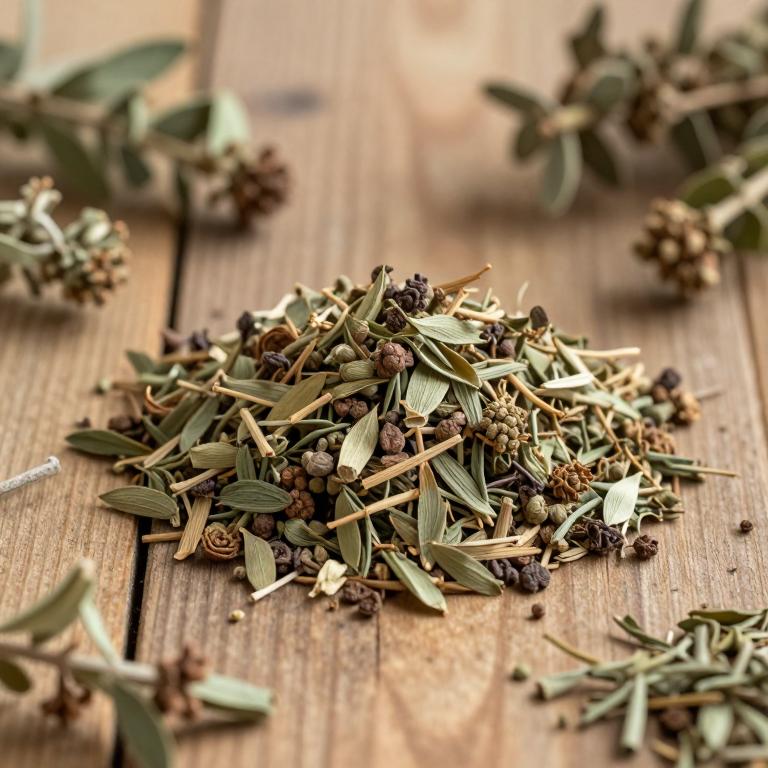
Arabian Boxthorn, scientifically known as Lycium shawii, is a resilient, thorny shrub native to the arid regions of the Middle East and North Africa. Renowned for its adaptability to harsh desert environments, this medicinal plant offers significant ethnobotanical value, providing various bioactive compounds used in traditional healing practices.
Names and Synonyms
Common Names
- Boxthorn
- Desert-thorn
- African Honeythorn
- Arabian boxthorn
- Arabian desert-thorn
- White Honeythorn
Scientific Names
Accepted name
Lycium shawiiSynonyms
- Lycium tenuiramosum
- Lycium ellenbeckii
- Lycium merkeri
- Lycium erythraeum
- Lycium javellense
- Lycium jaegeri
- Lycium shawii var. leptophyllum
- Lycium withaniifolium
- Lycium ovinum
- Lycium persicum
- Lycium albiflorum
- Lycium cufodontii
- Lycium abeliiflorum
- Lycium mediterraneum var. cinereum
- Lycium mediterraneum var. leptophyllum
- Lycium persicum subvar. leptophyllum
- Lycium persicum var. leptophyllum
- Lycium mediterraneum subsp. longiflorum
- Lycium persicum var. cinereum
- Lycium mediterraneum var. cinnamomeum
- Lycium mediterraneum var. leucocladum
- Lycium somalense
Sources: Wikidata, Catalogue of Life
Taxonomical Classification
This plant belongs to the kingdom Plantae and the phylum Streptophyta. Within the class Equisetopsida and subclass Magnoliidae, it is categorized under the order Solanales and the family Solanaceae. Finally, it is classified under the genus Lycium.
| Rank | Classification |
|---|---|
| Kingdom | Plantae |
| Phylum | Streptophyta |
| Class | Equisetopsida |
| Subclass | Magnoliidae |
| Order | Solanales |
| Family | Solanaceae |
| Genus | Lycium |
Sources: The World Checklist of Vascular Plants (WCVP)
Distribution
This plant exhibits a wide geographical distribution across the Mediterranean region. In Southeastern Europe, it can be found growing throughout Greece. Its presence extends to the Italian peninsula, specifically including the island of Sicilia. Furthermore, the species is documented in the Southeastern European territory of Kriti. Finally, its range reaches into Northern Africa, where it is located in Algeria.
| Region | Area |
|---|---|
| Southeastern Europe | Greece |
| Southeastern Europe | Italy |
| Southeastern Europe | Kriti |
| Southeastern Europe | Sicilia |
| Northern Africa | Algeria |
| Northern Africa | Egypt |
| Northern Africa | Libya |
| Northern Africa | Tunisia |
| Northeast Tropical Africa | Djibouti |
| Northeast Tropical Africa | Eritrea |
Sources: The World Checklist of Vascular Plants (WCVP)
Botanical Identification
Ecology
The ecology of Lycium shawii is defined by its adaptability to diverse topographical gradients, typically inhabiting arid and semi-arid landscapes where it thrives within specific altitudinal constraints. This species is strategically distributed across a broad vertical range, ranging from low-lying areas at an elevation of 155 m AMSL to higher elevations reaching a maximum of 915 m AMSL. Within this elevational spectrum, the plant occupies various ecological niches, often favoring rocky or sandy substrates that facilitate drainage, which is critical for its survival in Mediterranean-type climates or desert scrub environments. Its ability to colonize such a wide altitudinal span suggests a high degree of physiological tolerance to fluctuating temperature regimes and varying levels of moisture availability characteristic of different mountain and lowland zones.
- Elevational range max:
- 915 m AMSL
- Elevational range min:
- 155 m AMSL
Life history
The life history of Lycium shawii is characterized by its status as a perennial organism, ensuring its long-term presence within its ecological niche. Structurally, the plant is classified as a phanerophyte, specifically exhibiting the traits of a phanerophyte in its overall growth habit, which indicates that its perennating buds are located well above the ground level. This growth strategy allows the species to maintain a stable biological presence across multiple seasons, utilizing its robust structure to survive varying environmental conditions.
- Life form :
- phanerophyte
- Lifecycle :
- perennial
Morphology
The morphology of Lycium shawii is characterized by its growth form as a woody shrub, functioning as a self-supporting plant that does not require external structures for climbing. As a terrestrial species, it grows independently without parasitic or epiphytic tendencies. In terms of stature, the plant exhibits significant variability in height, ranging from a minimum of 1 meter to a maximum of 4.5 meters, with an average plant height of approximately 2.5 meters.
- Aquatic :
- terrestrial
- Climber :
- self-supporting
- Epiphyte :
- terrestrial
- Growth form :
- shrub
- Parasite :
- independent
- Plant height max:
- 4.5 m
- Plant height mean:
- 2.5 m
- Plant height min:
- 1 m
- Woodiness :
- woody
Physiology
The physiology of Lycium shawii is characterized by a C3 photosynthetic pathway, meaning it utilizes the Calvin cycle to fix carbon dioxide through the enzyme RuBisCO, a common strategy among many woody shrubs in arid environments. Additionally, this species does not function as a nitrogen fixer, lacking the symbiotic relationships with diazotrophic bacteria typically required to convert atmospheric nitrogen into bioavailable forms.
- Nitrogen fixer :
- no
- Photosynthetic pathway :
- C3
Reproduction
The reproduction of Lycium shawii is characterized by a specific seasonal flowering window and the production of minute seeds. The flowering period typically begins in January and concludes in April, though the timing can be variable depending on environmental conditions. The plant produces small seeds with a highly consistent mass; the mean seed mass is recorded at 0.000835 g, with individual seed weights ranging from a minimum of 0.00073 g to a maximum of 0.00094 g.
- Flowering time :
- Jan
- Flowering time :
- Apr
- Seed mass max:
- 0.00094 g
- Seed mass mean:
- 0.000835 g
- Seed mass min:
- 0.00073 g
Sources: Global Inventory of Floras and Traits (GIFT)
Chemicals
Lycium shawii has 11 reported phytochemicals identified across 0 scientific publications and several other databases. The most consistently reported chemicals include Flavonoids, Carotenoids, Chlorophylls, Fatty acids, Linoleic.
| Chemical | Supporting sources | Consensus |
|---|---|---|
| Flavonoids | 2 supporting sources | ★☆☆☆☆ |
| Carotenoids | 1 supporting sources | ★☆☆☆☆ |
| Chlorophylls | 1 supporting sources | ★☆☆☆☆ |
| Fatty acids | 1 supporting sources | ★☆☆☆☆ |
| Linoleic | 1 supporting sources | ★☆☆☆☆ |
| Phytosterols | 1 supporting sources | ★☆☆☆☆ |
| QUINOLINE | 1 supporting sources | ★☆☆☆☆ |
| Saponins | 1 supporting sources | ★☆☆☆☆ |
| fructose | 1 supporting sources | ★☆☆☆☆ |
| glucose | 1 supporting sources | ★☆☆☆☆ |
Flavonoids
- Plants (Basel, Switzerland)
- Metabolites
Carotenoids
- Turkish journal of chemistry
Chlorophylls
- Turkish journal of chemistry
Fatty acids
- Plants (Basel, Switzerland)
Linoleic
- Turkish journal of chemistry
Phytosterols
- Turkish journal of chemistry
QUINOLINE
- Metabolites
Saponins
- Plants (Basel, Switzerland)
fructose
- Turkish journal of chemistry
glucose
- Turkish journal of chemistry
Activities
Lycium shawii has 2 reported activities identified across 0 scientific publications and several other databases. The most consistently reported activities include Antibacterial, Antimalarial.
| Activity | Supporting sources | Consensus |
|---|---|---|
| Antibacterial | 1 supporting sources | ★☆☆☆☆ |
| Antimalarial | 1 supporting sources | ★☆☆☆☆ |
Antibacterial
- Metabolites
Antimalarial
- Metabolites
Conditions
Lycium shawii has 4 reported investigations on conditions identified across 0 scientific publications and several other databases. The most consistently reported conditions include inflammation, malaria, oxidative stress, vitiligo.
| Condition | Supporting sources | Consensus |
|---|---|---|
| Inflammation | 1 supporting sources | ★☆☆☆☆ |
| Malaria | 1 supporting sources | ★☆☆☆☆ |
| Oxidative stress | 1 supporting sources | ★☆☆☆☆ |
| Vitiligo | 1 supporting sources | ★☆☆☆☆ |
Inflammation
- Ecology and evolution
Malaria
- Metabolites
Oxidative stress
- Ecology and evolution
Vitiligo
- Frontiers in pharmacology
Preparations
Lycium shawii has 5 reported preparations identified across 0 scientific publications and several other databases. The most consistently reported preparations include Crude extracts, extract, extracts, hydroalcoholic extracts, water extract.
| Preparation | Supporting sources | Consensus |
|---|---|---|
| Crude extracts | 1 supporting sources | ★☆☆☆☆ |
| Extract | 1 supporting sources | ★☆☆☆☆ |
| Extracts | 1 supporting sources | ★☆☆☆☆ |
| Hydroalcoholic extracts | 1 supporting sources | ★☆☆☆☆ |
| Water extract | 1 supporting sources | ★☆☆☆☆ |
Crude extracts
- Metabolites
Extract
- Pakistan journal of biological sciences : PJBS
Extracts
- Archiv fur experimentelle Veterinarmedizin
Hydroalcoholic extracts
- Plants (Basel, Switzerland)
Water extract
- Metabolites