Lychnophora ericoides
Lychnophora ericoides · Accepted scientific name
Scientific literature: Very Sparse (34 studies) · ★☆☆☆☆
Lychnophora ericoides, is a resilient shrub native to various regions of South America. Characterized by its small, ericoid leaves and woody structure, this medicinal plant is valued in traditional folk medicine. It is primarily studied for its potential bioactive compounds, offering promising applications in natural therapeutic treatments and pharmacology.
- Family
- Asteraceae
- Native range
- Southern America
- Parts used
- Root · Leaf
- Common names
- Not available
- Scientific synonyms
- Vernonia Proteiformis · Lychnophora Platyneura · 2 more
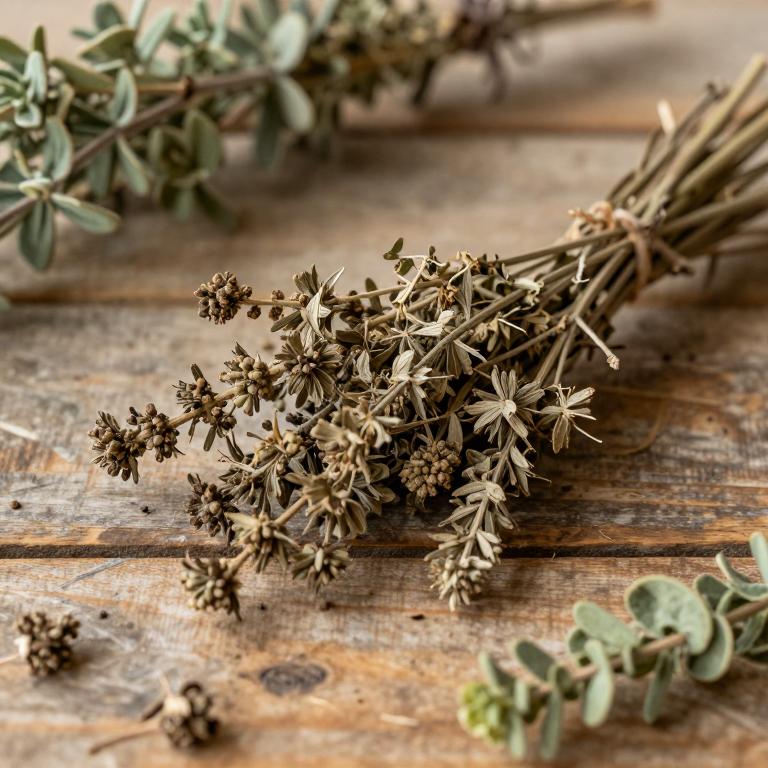
Names and Synonyms
Scientific Names
Accepted name
Lychnophora ericoidesSynonyms
- Vernonia proteiformis
- Lychnophora platyneura
- Lychnophora proteiformis
- Lychnophora cinerea
Sources: Wikidata, Catalogue of Life
Taxonomical Classification
This plant belongs to the kingdom Plantae within the phylum Streptophyta and is classified under the class Equisetopsida. As a member of the subclass Magnoliidae and the order Asterales, it is further categorized into the family Asteraceae. Specifically, it is identified by the genus Lychnophora, which includes the species Lychnophora ericoides.
| Rank | Classification |
|---|---|
| Kingdom | Plantae |
| Phylum | Streptophyta |
| Class | Equisetopsida |
| Subclass | Magnoliidae |
| Order | Asterales |
| Family | Asteraceae |
| Genus | Lychnophora |
Sources: The World Checklist of Vascular Plants (WCVP)
Distribution
This plant exhibits a specific range across several key regions within the country of Brazil. Its presence is notably documented in the Brazil West-Central area, where it occupies local ecosystems. Additionally, the species can be found distributed throughout the Brazil Northeast region. The geographical footprint of the plant further extends into the Brazil Southeast territory. Together, these locations define the primary environmental zones where the species thrives.
| Region | Area |
|---|---|
| Brazil | Brazil West-Central |
| Brazil | Brazil Northeast |
| Brazil | Brazil Southeast |
Sources: The World Checklist of Vascular Plants (WCVP)
Botanical Identification
Ecology
The ecology of Lychnophora ericoides is intrinsically linked to the specialized environmental conditions of the Campo Rupestre, a unique rupicolous vegetation type characterized by rocky outcrops and nutrient-poor soils. Within this habitat, the species thrives in high-altitude environments where soil development is minimal and drainage is rapid due to the underlying quartzitic or sandstone substrates. The ecological niche of Lychnophora ericoides is defined by its adaptation to intense solar radiation, seasonal water fluctuations, and the oligotrophic nature of the substrate, which necessitates highly specialized physiological mechanisms to manage nutrient uptake and moisture retention. This association with the Campo Rupestre dictates its distribution patterns, making it a component of a fragile and highly endemic ecosystem sensitive to changes in microclimate and soil composition.
- Habitat :
- Campo Rupestre
Morphology
The morphology of Lychnofora ericoides is characterized by a woody structure, manifesting as a tree in its growth form. It functions as an independent organism, exhibiting no parasitic tendencies, and is strictly terrestrial in its habitat, lacking aquatic or semiaquatic tendencies. Furthermore, the species is not an epiphyte, maintaining a self-supporting growth habit rather than acting as a climber or utilizing other plants for structural support.
- Aquatic :
- terrestrial
- Climber :
- self-supporting
- Epiphyte :
- terrestrial
- Growth form :
- tree
- Parasite :
- independent
- Woodiness :
- woody
Sources: Global Inventory of Floras and Traits (GIFT)
Plant Parts
Lychnophora ericoides has 2 reported plant parts identified across 5 scientific publications and several other databases that are studied for medicinal purposes. The most consistently reported plant part include root, leaf.
| Plant part | Supporting sources | Consensus |
|---|---|---|
| Root | 3 supporting sources | ★★☆☆☆ |
| Leaf | 2 supporting sources | ★☆☆☆☆ |
Root
- Journal of natural products
- Journal of ethnopharmacology
- Phytochemistry
Leaf
- Planta medica
- Phytochemistry
Chemicals
Lychnophora ericoides has 15 reported phytochemicals identified across 5 scientific publications and several other databases. The most consistently reported chemicals include (2R*,4S*)-2-((1'S*)-hydroxy-4'-methylpentyl)-4-(hydroxymethyl)butanolide, (3R*,4S*,5R*,6S*)-tetrahydro-4-hydroxy-3,5,6-trimethyl-2-pyranone, (E)-nerolidol, 1-O-(Phenylacetyl)glycerol, 3,5-Dicaffeoylquinic acid.
| Chemical | Supporting sources | Consensus |
|---|---|---|
| (2R*,4S*)-2-((1'S*)-hydroxy-4'-methylpentyl)-4-(hydroxymethyl)butanolide | 1 supporting sources | ★☆☆☆☆ |
| (3R*,4S*,5R*,6S*)-tetrahydro-4-hydroxy-3,5,6-trimethyl-2-pyranone | 1 supporting sources | ★☆☆☆☆ |
| (E)-nerolidol | 1 supporting sources | ★☆☆☆☆ |
| 1-O-(Phenylacetyl)glycerol | 1 supporting sources | ★☆☆☆☆ |
| 3,5-Dicaffeoylquinic acid | 1 supporting sources | ★☆☆☆☆ |
| 4,5-Dicaffeoylquinic acid | 1 supporting sources | ★☆☆☆☆ |
| Cubebin | 1 supporting sources | ★☆☆☆☆ |
| Flavonoids | 1 supporting sources | ★☆☆☆☆ |
| GOYAZENSOLIDE | 1 supporting sources | ★☆☆☆☆ |
| Lignans | 1 supporting sources | ★☆☆☆☆ |
(2R*,4S*)-2-((1'S*)-hydroxy-4'-methylpentyl)-4-(hydroxymethyl)butanolide
- Journal of natural products
(3R*,4S*,5R*,6S*)-tetrahydro-4-hydroxy-3,5,6-trimethyl-2-pyranone
- Journal of natural products
(E)-nerolidol
- Phytochemistry
1-O-(Phenylacetyl)glycerol
- Journal of natural products
3,5-Dicaffeoylquinic acid
- Natural product communications
4,5-Dicaffeoylquinic acid
- Natural product communications
Cubebin
- Phytochemistry
Flavonoids
- Metabolites
GOYAZENSOLIDE
- Metabolites
Lignans
- Phytochemistry
Activities
Lychnophora ericoides has 3 reported activities identified across 5 scientific publications and several other databases. The most consistently reported activities include Analgesic, Cytostatic, Cytotoxic.
| Activity | Supporting sources | Consensus |
|---|---|---|
| Analgesic | 3 supporting sources | ★★☆☆☆ |
| Cytostatic | 1 supporting sources | ★☆☆☆☆ |
| Cytotoxic | 1 supporting sources | ★☆☆☆☆ |
Analgesic
- Planta medica
- Genetics and molecular research : GMR
- Phytochemistry
Cytostatic
- Metabolites
Cytotoxic
- Metabolites
Conditions
Lychnophora ericoides has 6 reported investigations on conditions identified across 5 scientific publications and several other databases. The most consistently reported conditions include analgesic, Acute myeloid leukemia, Multiple myeloma, inflammation, pain.
| Condition | Supporting sources | Consensus |
|---|---|---|
| Analgesic | 2 supporting sources | ★☆☆☆☆ |
| Acute myeloid leukemia | 1 supporting sources | ★☆☆☆☆ |
| Multiple myeloma | 1 supporting sources | ★☆☆☆☆ |
| Inflammation | 1 supporting sources | ★☆☆☆☆ |
| Pain | 1 supporting sources | ★☆☆☆☆ |
| Wounds | 1 supporting sources | ★☆☆☆☆ |
Analgesic
- Planta medica
- Phytochemistry
Acute myeloid leukemia
- Metabolites
Multiple myeloma
- Metabolites
Inflammation
- Journal of ethnopharmacology
Pain
- Journal of ethnopharmacology
Wounds
- Journal of ethnopharmacology
Preparations
Lychnophora ericoides has 4 reported preparations identified across 5 scientific publications and several other databases. The most consistently reported preparations include essential oils, ethanol extracts, extract from roots, leaf polar extract.
| Preparation | Supporting sources | Consensus |
|---|---|---|
| Essential oils | 1 supporting sources | ★☆☆☆☆ |
| Ethanol extracts | 1 supporting sources | ★☆☆☆☆ |
| Extract from roots | 1 supporting sources | ★☆☆☆☆ |
| Leaf polar extract | 1 supporting sources | ★☆☆☆☆ |
Essential oils
- Phytochemistry
Ethanol extracts
- Chemistry & biodiversity
Extract from roots
- Phytochemistry
Leaf polar extract
- Planta medica