Luisia brachystachys
Luisia brachystachys · Accepted scientific name
Scientific literature: Very Sparse (19 studies) · ★☆☆☆☆
Luisia brachystachys, scientifically known as Luisia brachystachys, is a specialized orchid species valued for its unique botanical characteristics. Often found in specific tropical ecosystems, this plant is studied for its potential medicinal properties. Understanding its biological profile is essential for exploring its traditional uses and its ecological importance.
- Family
- Not available
- Native range
- Asia-Temperate
- Parts used
- Not available
- Common names
- Not available
- Scientific synonyms
- Not available
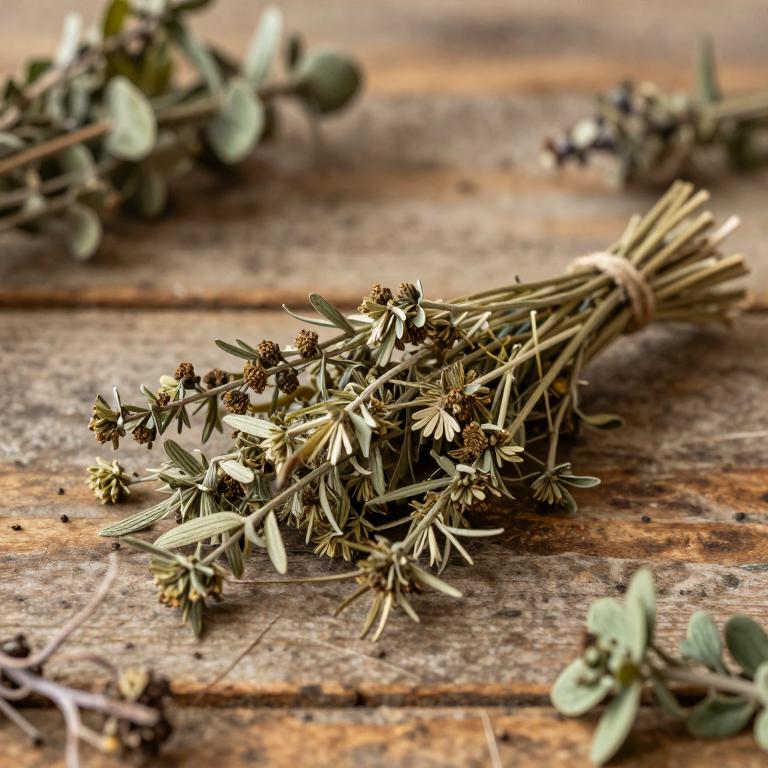
Names and Synonyms
Scientific Names
Accepted name
Luisia brachystachysDistribution
This plant exhibits a broad geographical distribution across parts of Asia. In China, it is specifically located within the South-Central region. Its presence extends into the Indian Subcontinent, where it can be found in Assam and Bangladesh. Furthermore, it inhabits the rugged terrains of the East Himalaya. Finally, the species is also documented growing within the borders of Nepal.
| Region | Area |
|---|---|
| China | China South-Central |
| Indian Subcontinent | Assam |
| Indian Subcontinent | Bangladesh |
| Indian Subcontinent | East Himalaya |
| Indian Subcontinent | Nepal |
| Indian Subcontinent | West Himalaya |
| Indo-China | Andaman Is. |
| Indo-China | Laos |
| Indo-China | Myanmar |
| Indo-China | Thailand |
Sources: The World Checklist of Vascular Plants (WCVP)
Botanical Identification
Ecology
The ecology of Luisia brachystachys is defined by its specific preference for montane environments, where it thrives within a distinct altitudinal niche. This species is typically found inhabiting mid-to-high elevation zones, occupying a vertical range that begins at 1300 m AMSL and extends up to a maximum of 1900 m AMSL. This elevational distribution suggests that the plant is adapted to the specific temperature gradients, humidity levels, and atmospheric conditions characteristic of these subalpine or montane ecosystems. Such a specialized range indicates that its survival and reproductive success are closely tied to the ecological stability found between these two specific altitudinal boundaries.
- Elevational range max:
- 1900 m AMSL
- Elevational range min:
- 1300 m AMSL
Life history
The life history of Luisia brachystachys is characterized by a specialized growth habit and survival strategy classified under the life form of a chamaephyte. As a chamaephyte, its perennating buds are located close to the soil surface, allowing it to withstand varying environmental conditions by maintaining its regenerative organs at a low level. This life form is consistent across its biological classification, specifically categorized as a chamaephyte within the broader spectrum of plant life forms that includes phanerophytes, hemicryptophytes, cryptophytes, and therophytes. This positioning enables the plant to navigate its specific ecological niche by balancing structural resilience with the ability to thrive in habitats where low-growing vegetation is advantageous for survival.
- Life form :
- chamaephyte
Morphology
The morphology of Luisia brachystachys is characterized by its life as an obligatory epiphyte, a growth form that dictates its structural development and ecological niche. As a non-woody herb, the plant lacks rigid, lignified tissues, instead maintaining a delicate and flexible stature. Despite its epiphytic nature, it does not function as a parasite, remaining biologically independent from its host plants for nutrient acquisition. The plant exhibits a self-supporting climbing habit, which allows it to navigate and anchor itself within its arboreal environment without being an obligatory climber. In terms of its moisture relationship and habitat positioning, the species spans a spectrum of environmental adaptations, categorized across aquatic, semiaquatic, and terrestrial traits.
- Aquatic :
- terrestrial
- Climber :
- self-supporting
- Epiphyte :
- obligatory
- Growth form :
- herb
- Parasite :
- independent
- Woodiness :
- non-woody
Sources: Global Inventory of Floras and Traits (GIFT)
Chemicals
Luisia brachystachys has 1 reported phytochemicals identified across 0 scientific publications and several other databases. The most consistently reported chemicals include betulinic acid.
| Chemical | Supporting sources | Consensus |
|---|---|---|
| betulinic acid | 1 supporting sources | ★☆☆☆☆ |
betulinic acid
- Dr. Duke
Activities
Luisia brachystachys has 18 reported activities identified across 0 scientific publications and several other databases. The most consistently reported activities include Anthelmintic, AntiHIV, Antibacterial, Anticancer, Anticarcinomic.
| Activity | Supporting sources | Consensus |
|---|---|---|
| Anthelmintic | 1 supporting sources | ★☆☆☆☆ |
| AntiHIV | 1 supporting sources | ★☆☆☆☆ |
| Antibacterial | 1 supporting sources | ★☆☆☆☆ |
| Anticancer | 1 supporting sources | ★☆☆☆☆ |
| Anticarcinomic | 1 supporting sources | ★☆☆☆☆ |
| Antiedemic | 1 supporting sources | ★☆☆☆☆ |
| Antiinflammatory | 1 supporting sources | ★☆☆☆☆ |
| Antileukemic | 1 supporting sources | ★☆☆☆☆ |
| Antimalarial | 1 supporting sources | ★☆☆☆☆ |
| Antimelanomic | 1 supporting sources | ★☆☆☆☆ |
Anthelmintic
- Dr. Duke
AntiHIV
- Dr. Duke
Antibacterial
- Dr. Duke
Anticancer
- Dr. Duke
Anticarcinomic
- Dr. Duke
Antiedemic
- Dr. Duke
Antiinflammatory
- Dr. Duke
Antileukemic
- Dr. Duke
Antimalarial
- Dr. Duke
Antimelanomic
- Dr. Duke