Luehea paniculata
Luehea paniculata · Accepted scientific name
Scientific literature: Very Sparse (8 studies) · ★☆☆☆☆
Luehea paniculata, scientifically known as Luehea paniculata, is a versatile tropical tree valued in traditional medicine. Native to South America, its bark and leaves contain bioactive compounds with anti-inflammatory and antimicrobial properties. Often used to treat skin conditions and digestive ailments, it remains a significant subject in ethnobotanical research.
- Family
- Malvaceae
- Native range
- Southern America
- Parts used
- Leaf
- Common names
- Not available
- Scientific synonyms
- Luehea Parvifolia
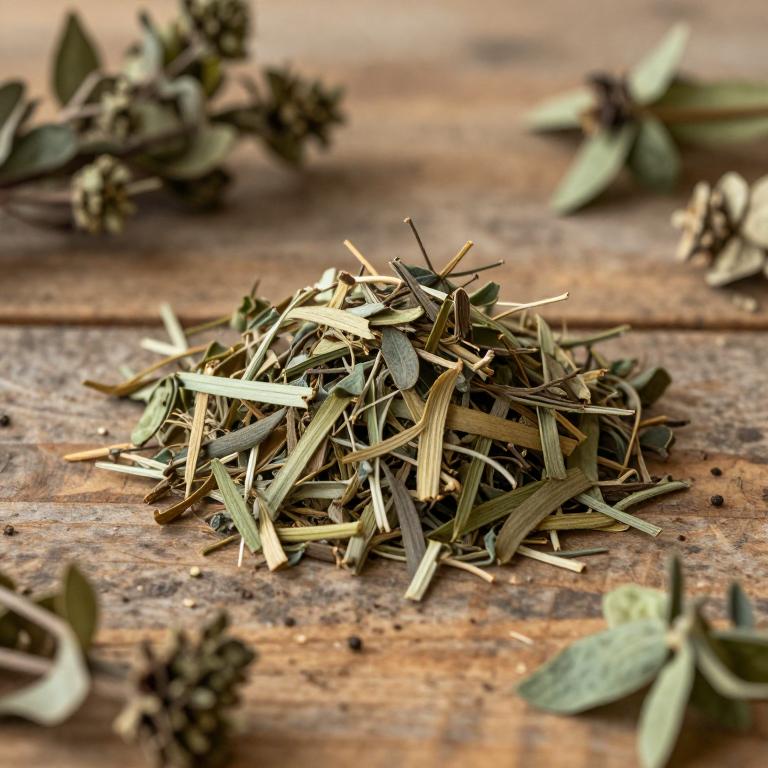
Names and Synonyms
Scientific Names
Accepted name
Luehea paniculataSynonyms
- Luehea parvifolia
Sources: Wikidata, Catalogue of Life
Taxonomical Classification
This plant belongs to the kingdom Plantae and is classified under the phylum Streptophyta within the class Equisetopsida. As a member of the subclass Magnoliidae and the order Malvales, it is specifically situated in the family Malvaceae. Finally, its taxonomic identity is defined by its placement within the genus Luehea.
| Rank | Classification |
|---|---|
| Kingdom | Plantae |
| Phylum | Streptophyta |
| Class | Equisetopsida |
| Subclass | Magnoliidae |
| Order | Malvales |
| Family | Malvaceae |
| Genus | Luehea |
Sources: The World Checklist of Vascular Plants (WCVP)
Distribution
This plant exhibits a diverse range of locations across the South American continent. In Northern South America, its presence has been documented in Suriname. Moving toward the western part of the continent, it can be found in both Bolivia and Peru. Within Brazil, its distribution is quite broad, spanning from the West-Central region to the Northeast. These various locations highlight the widespread natural range of Luehea paniculata.
| Region | Area |
|---|---|
| Northern South America | Suriname |
| Western South America | Bolivia |
| Western South America | Peru |
| Brazil | Brazil West-Central |
| Brazil | Brazil Northeast |
| Brazil | Brazil Southeast |
| Brazil | Brazil North |
| Brazil | Brazil South |
| Southern South America | Argentina Northeast |
| Southern South America | Paraguay |
Sources: The World Checklist of Vascular Plants (WCVP)
Botanical Identification
Ecology
The ecology of Luehea paniculata is characterized by its adaptability across diverse Brazilian biomes, including the Cerrado (latu sensu), Ciliary or Gallery Forests, Seasonal Deciduous Forests, and Ombrophilous (Pluvial) Forests. This species thrives within a specific altitudinal gradient, occurring from sea level up to a maximum elevation of 500 meters above mean sea level (m AMSL). Its presence in such varied habitats—ranging from the more open, seasonal structures of the Cerrado to the denser, more humid environments of gallery and ombrophilous forests—indicates a high degree of ecological plasticity regarding moisture availability and forest structure.
- Elevational range max:
- 500 m AMSL
- Elevational range min:
- 0 m AMSL
- Habitat :
- Cerrado (lato sensu), Floresta Ciliar ou Galeria, Floresta Estacional Decidual, Floresta Ombrófila (= Floresta Pluvial)
Life history
The life history of Luehea paniculata is characterized by its status as a perennial species, allowing it to maintain a long-term presence within its ecological niche through multiple growing seasons. As a deciduous plant, it undergoes a seasonal cycle of shedding its foliage, a process typically synchronized with periods of environmental stress or specific climatic shifts to conserve moisture and energy. This lifecycle enables the plant to persist over many years, navigating seasonal changes by entering periods of dormancy before regenerating its canopy.
- Deciduousness :
- deciduous
- Lifecycle :
- perennial
Morphology
The morphology of Luehea paniculata is characterized by a woody growth form, specifically classified as a tree. This species is a self-supporting plant, lacking any climbing or vining habits, and functions as an independent organism rather than a parasite. It is a strictly terrestrial plant, showing no aquatic, semiaquatic, or epiphytic tendencies. In terms of its physical dimensions, the plant reaches a mean height of approximately 8 meters, with the potential to attain a maximum height of up to 10 meters.
- Aquatic :
- terrestrial
- Climber :
- self-supporting
- Epiphyte :
- terrestrial
- Growth form :
- tree
- Parasite :
- independent
- Plant height max:
- 10 m
- Plant height mean:
- 8 m
- Woodiness :
- woody
Physiology
The physiology of Luehea paniculata is characterized by a C3 photosynthetic pathway, meaning it utilizes the Calvin cycle to fix carbon dioxide without the specialized anatomical adaptations found in C4 or CAM plants. This metabolic strategy dictates its reliance on specific environmental conditions, such as moderate temperatures and adequate water availability, to maintain efficient gas exchange and carbon assimilation. Furthermore, this species does not function as a nitrogen fixer, as it lacks the symbiotic relationship with nitrogen-fixing bacteria required to convert atmospheric nitrogen into usable forms; consequently, its nutritional physiology is dependent on the uptake of nitrogenous compounds directly from the soil substrate.
- Nitrogen fixer :
- no
- Photosynthetic pathway :
- C3
Sources: Global Inventory of Floras and Traits (GIFT)
Plant Parts
Luehea paniculata has 1 reported plant parts identified across 1 scientific publications and several other databases that are studied for medicinal purposes. The most consistently reported plant part include leaf.
| Plant part | Supporting sources | Consensus |
|---|---|---|
| Leaf | 1 supporting sources | ★☆☆☆☆ |
Leaf
- BioMed research international
Chemicals
Luehea paniculata has 3 reported phytochemicals identified across 1 scientific publications and several other databases. The most consistently reported chemicals include Flavonoids, Vitexin, rosmarinic acid.
| Chemical | Supporting sources | Consensus |
|---|---|---|
| Flavonoids | 1 supporting sources | ★☆☆☆☆ |
| Vitexin | 1 supporting sources | ★☆☆☆☆ |
| rosmarinic acid | 1 supporting sources | ★☆☆☆☆ |
Flavonoids
- BioMed research international
Vitexin
- BioMed research international
rosmarinic acid
- BioMed research international
Conditions
Luehea paniculata has 2 reported investigations on conditions identified across 1 scientific publications and several other databases. The most consistently reported conditions include Candida albicans, fungal infections.
| Condition | Supporting sources | Consensus |
|---|---|---|
| Candida albicans | 1 supporting sources | ★☆☆☆☆ |
| Fungal infections | 1 supporting sources | ★☆☆☆☆ |
Candida albicans
- BioMed research international
Fungal infections
- BioMed research international
Preparations
Luehea paniculata has 2 reported preparations identified across 1 scientific publications and several other databases. The most consistently reported preparations include ethanol extracts of bark, ethanol extracts of leaf.
| Preparation | Supporting sources | Consensus |
|---|---|---|
| Ethanol extracts of bark | 1 supporting sources | ★☆☆☆☆ |
| Ethanol extracts of leaf | 1 supporting sources | ★☆☆☆☆ |
Ethanol extracts of bark
- BioMed research international
Ethanol extracts of leaf
- BioMed research international