Luehea divaricata
Luehea divaricata · Accepted scientific name
Scientific literature: Very Sparse (28 studies) · ★☆☆☆☆
Luehea divaricata, scientifically known as Luehea divaricata, is a versatile medicinal tree native to South American landscapes. Renowned for its therapeutic properties, it is widely utilized in traditional medicine to treat skin ailments, inflammation, and digestive issues. Its bark and leaves contain bioactive compounds essential for holistic healing.
- Family
- Malvaceae
- Native range
- Southern America
- Parts used
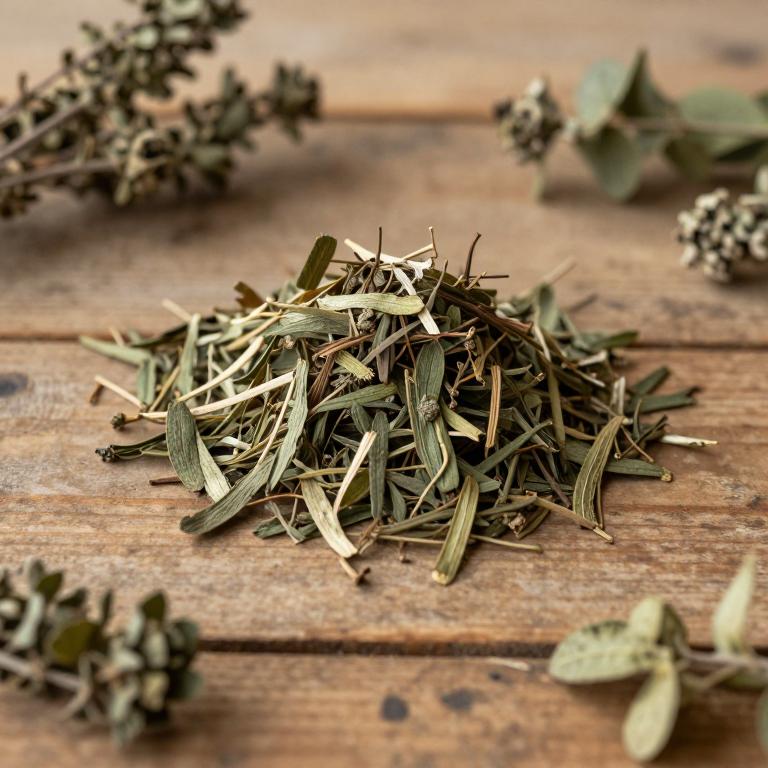
- Leaf
- Common names
- Not available
- Scientific synonyms
- Alegria Divaricata · Brotera Mediterranea · 1 more
Names and Synonyms
Scientific Names
Accepted name
Luehea divaricataSynonyms
- Alegria divaricata
- Brotera mediterranea
- Thespesia brasiliensis
Regional and Traditional Names
Spanish:
- Brotera mediterranea
- Thespesia brasilienses
- Alegria divaricata
- Sota Caballo
- Azota caballos
- Caa-obetí
- azota caballo
Sources: Wikidata, Catalogue of Life
Taxonomical Classification
This plant belongs to the kingdom Plantae and is classified within the phylum Streptophyta and the class Equisetopsida. Under the subclass Magnoliidae, it is organized into the order Malvales and the family Malvaceae. Finally, it is categorized under the genus Luehea, specifically identified as Luehea divaricata.
| Rank | Classification |
|---|---|
| Kingdom | Plantae |
| Phylum | Streptophyta |
| Class | Equisetopsida |
| Subclass | Magnoliidae |
| Order | Malvales |
| Family | Malvaceae |
| Genus | Luehea |
Sources: The World Checklist of Vascular Plants (WCVP)
Distribution
This plant exhibits a wide geographical distribution across several key regions in South America and the Caribbean. Within the country of Brazil, it is widely established across the West-Central, Northeast, Southeast, and South regions. Beyond the borders of Brazil, its presence extends into the Caribbean islands. Specifically, it can be found growing in the Dominican Republic. This widespread range highlights the adaptable nature of the species across diverse environmental zones.
| Region | Area |
|---|---|
| Caribbean | Dominican Republic |
| Brazil | Brazil West-Central |
| Brazil | Brazil Northeast |
| Brazil | Brazil Southeast |
| Brazil | Brazil South |
| Southern South America | Argentina Northeast |
| Southern South America | Paraguay |
| Southern South America | Uruguay |
Sources: The World Checklist of Vascular Plants (WCVP)
Botanical Identification
Ecology
The ecology of Luehea divaricata is characterized by its presence in high forest environments, specifically within the Bosque alto habitat. This species thrives across a distinct altitudinal gradient, occupying an elevational range that begins at sea level (0 m AMSL) and extends up to a maximum altitude of 500 m AMSL.
- Elevational range max:
- 500 m AMSL
- Elevational range min:
- 0 m AMSL
- Habitat :
- Bosque alto
Life history
The life history of Luehea divaricata is characterized by its status as a perennial species, allowing it to establish long-term presence within its native ecosystems. As a deciduous plant, it undergoes a seasonal cycle of shedding its foliage, a strategic adaptation that influences its growth patterns and resource management throughout the year. This combination of a multi-year lifespan and a seasonal loss of leaves dictates its ecological niche and its ability to persist through varying environmental conditions.
- Deciduousness :
- deciduous
- Lifecycle :
- perennial
Morphology
The morphology of Luehea divaricata is characterized by its robust growth form as a woody tree, reaching an average and maximum height of approximately 20 m. As a self-supporting species, it does not exhibit climbing habits such as lianas or vines, nor does it function as an epiphyte, maintaining a strictly terrestrial existence. The plant is biologically independent, functioning as a non-parasitic organism within its ecosystem.
- Aquatic :
- terrestrial
- Climber :
- self-supporting
- Epiphyte :
- terrestrial
- Growth form :
- tree
- Parasite :
- independent
- Plant height mean:
- 20 m
- Woodiness :
- woody
Physiology
The physiology of Luehea divaricata is characterized by a C3 photosynthetic pathway, a common metabolic strategy for many woody species that facilitates carbon fixation under moderate environmental conditions. Its leaf morphology and resource allocation are reflected in a Specific Leaf Area (SLA) that remains consistent across recorded measurements, with a minimum, mean, and maximum value all documented at 202 cm²/g. This value indicates a specific structural investment in leaf tissue relative to its surface area. Furthermore, the plant does not function as a nitrogen fixer, meaning it lacks the symbiotic relationship with diazotrophic bacteria required to convert atmospheric nitrogen into bioavailable forms, relying instead on the uptake of nitrogen from the soil substrate.
- Nitrogen fixer :
- no
- Photosynthetic pathway :
- C3
- Specific Leaf Area (SLA) min:
- 202 cm²/g
Sources: Global Inventory of Floras and Traits (GIFT)
Plant Parts
Luehea divaricata has 1 reported plant parts identified across 3 scientific publications and several other databases that are studied for medicinal purposes. The most consistently reported plant part include leaf.
| Plant part | Supporting sources | Consensus |
|---|---|---|
| Leaf | 3 supporting sources | ★★☆☆☆ |
Leaf
- Genetics and molecular research : GMR
- Journal of ethnopharmacology
- Phytomedicine : international journal of phytotherapy and phytopharmacology
Chemicals
Luehea divaricata has 11 reported phytochemicals identified across 3 scientific publications and several other databases. The most consistently reported chemicals include Flavonoids, Isovitexin, Lignan, Maslinic acid, Prostaglandins.
| Chemical | Supporting sources | Consensus |
|---|---|---|
| Flavonoids | 1 supporting sources | ★☆☆☆☆ |
| Isovitexin | 1 supporting sources | ★☆☆☆☆ |
| Lignan | 1 supporting sources | ★☆☆☆☆ |
| Maslinic acid | 1 supporting sources | ★☆☆☆☆ |
| Prostaglandins | 1 supporting sources | ★☆☆☆☆ |
| RUTIN | 1 supporting sources | ★☆☆☆☆ |
| Saponins | 1 supporting sources | ★☆☆☆☆ |
| Steroids | 1 supporting sources | ★☆☆☆☆ |
| Triterpenes | 1 supporting sources | ★☆☆☆☆ |
| nitric oxide | 1 supporting sources | ★☆☆☆☆ |
Flavonoids
- Journal of pharmaceutics
Isovitexin
- Phytomedicine : international journal of phytotherapy and phytopharmacology
Lignan
- Journal of pharmaceutics
Maslinic acid
- Journal of pharmaceutics
Prostaglandins
- Journal of ethnopharmacology
RUTIN
- Journal of pharmaceutics
Saponins
- Journal of pharmaceutics
Steroids
- Journal of pharmaceutics
Triterpenes
- Journal of pharmaceutics
nitric oxide
- Journal of ethnopharmacology
Activities
Luehea divaricata has 2 reported activities identified across 3 scientific publications and several other databases. The most consistently reported activities include Diuretic, Hypotensive.
| Activity | Supporting sources | Consensus |
|---|---|---|
| Diuretic | 1 supporting sources | ★☆☆☆☆ |
| Hypotensive | 1 supporting sources | ★☆☆☆☆ |
Diuretic
- Journal of ethnopharmacology
Hypotensive
- Journal of ethnopharmacology
Conditions
Luehea divaricata has 8 reported investigations on conditions identified across 3 scientific publications and several other databases. The most consistently reported conditions include dysentery, tumors, arthritis, bleeding, bronchitis.
| Condition | Supporting sources | Consensus |
|---|---|---|
| Dysentery | 2 supporting sources | ★☆☆☆☆ |
| Tumors | 2 supporting sources | ★☆☆☆☆ |
| Arthritis | 1 supporting sources | ★☆☆☆☆ |
| Bleeding | 1 supporting sources | ★☆☆☆☆ |
| Bronchitis | 1 supporting sources | ★☆☆☆☆ |
| Cancer | 1 supporting sources | ★☆☆☆☆ |
| Rheumatism | 1 supporting sources | ★☆☆☆☆ |
| Ulcers | 1 supporting sources | ★☆☆☆☆ |
Dysentery
- Genetics and molecular research : GMR
- Biological research
Tumors
- Genetics and molecular research : GMR
- Biological research
Arthritis
- Genetics and molecular research : GMR
Bleeding
- Genetics and molecular research : GMR
Bronchitis
- Biological research
Cancer
- Genetics and molecular research : GMR
Rheumatism
- Biological research
Ulcers
- Genetics and molecular research : GMR
Preparations
Luehea divaricata has 8 reported preparations identified across 3 scientific publications and several other databases. The most consistently reported preparations include AqueFr, AceFr, Aqueous extract of the bark, Aqueous extracts, ButFr.
| Preparation | Supporting sources | Consensus |
|---|---|---|
| Aquefr | 2 supporting sources | ★☆☆☆☆ |
| Acefr | 1 supporting sources | ★☆☆☆☆ |
| Aqueous extract of the bark | 1 supporting sources | ★☆☆☆☆ |
| Aqueous extracts | 1 supporting sources | ★☆☆☆☆ |
| Butfr | 1 supporting sources | ★☆☆☆☆ |
| Esld | 1 supporting sources | ★☆☆☆☆ |
| Aqueous fraction | 1 supporting sources | ★☆☆☆☆ |
| Crude methanol extract | 1 supporting sources | ★☆☆☆☆ |
Aquefr
- Journal of ethnopharmacology
- Phytomedicine : international journal of phytotherapy and phytopharmacology
Acefr
- Journal of ethnopharmacology
Aqueous extract of the bark
- Genetics and molecular research : GMR
Aqueous extracts
- Memorias do Instituto Oswaldo Cruz
Butfr
- Journal of ethnopharmacology
Esld
- Journal of ethnopharmacology
Aqueous fraction
- Phytomedicine : international journal of phytotherapy and phytopharmacology
Crude methanol extract
- Journal of ethnopharmacology