Luehea candicans
Luehea candicans · Accepted scientific name
Scientific literature: Very Sparse (11 studies) · ★☆☆☆☆
Luehea candicans, scientifically known as Luehea candicans, is a versatile medicinal tree native to South American forests. Renowned for its therapeutic potential, its bark and leaves are traditionally utilized in folk medicine to treat inflammation, skin ailments, and digestive issues, offering significant pharmacological interest for modern scientific research.
- Family
- Malvaceae
- Native range
- Southern America
- Parts used
- Leaf
- Common names
- Not available
- Scientific synonyms
- Not available
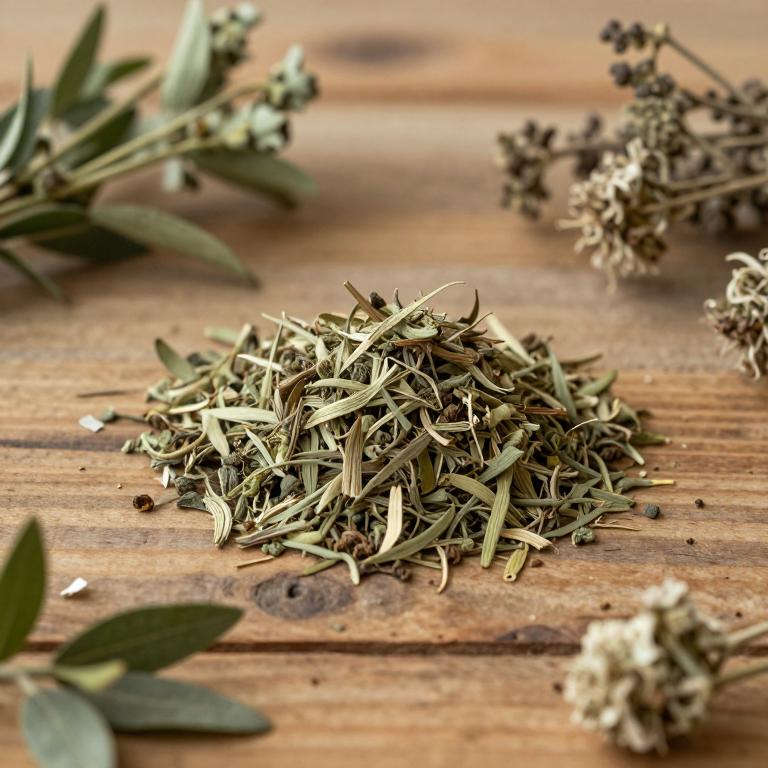
Names and Synonyms
Scientific Names
Accepted name
Luehea candicansSources: Wikidata, Catalogue of Life
Taxonomical Classification
This plant belongs to the kingdom Plantae and the phylum Streptophyta, falling under the class Equisetopsida and subclass Magnoliidae. Within the order Malvales, it is classified under the family Malvaceae. Specifically, Luehea candicans is a member of the genus Luehea.
| Rank | Classification |
|---|---|
| Kingdom | Plantae |
| Phylum | Streptophyta |
| Class | Equisetopsida |
| Subclass | Magnoliidae |
| Order | Malvales |
| Family | Malvaceae |
| Genus | Luehea |
Sources: The World Checklist of Vascular Plants (WCVP)
Distribution
This plant exhibits a broad distribution across several key regions of the South American continent. In Western South America, its presence is specifically noted within the borders of Bolivia. Within Brazil, it is widely spread, inhabiting the West-Central, Southeast, and South regions. Additionally, its range extends into the Southern part of the continent, specifically reaching the Northeast of Argentina. Together, these locations highlight the diverse ecological areas where the species can be found.
| Region | Area |
|---|---|
| Western South America | Bolivia |
| Brazil | Brazil West-Central |
| Brazil | Brazil Southeast |
| Brazil | Brazil South |
| Southern South America | Argentina Northeast |
| Southern South America | Paraguay |
Sources: The World Checklist of Vascular Plants (WCVP)
Botanical Identification
Ecology
The ecology of Luehea candicans is characterized by its adaptability to diverse environmental settings, ranging from naturally occurring biomes to human-modified landscapes. It thrives within several distinct habitats, including the Cerrado (latu sensu), Ombrophilous Forest (also known as Pluvial Forest), and Anthropic Areas. This species is found across a broad altitudinal gradient, occupying low-lying regions starting from sea level (0 m AMSL) up to a maximum elevation of 500 m AMSL.
- Elevational range max:
- 500 m AMSL
- Elevational range min:
- 0 m AMSL
- Habitat :
- Área Antrópica, Cerrado (lato sensu), Floresta Ombrófila (= Floresta Pluvial)
Life history
The life history of Luehea candicans is characterized by its status as a perennial species, allowing it to persist in its environment through multiple growing seasons. As a long-lived woody plant, it undergoes a developmental progression from seed germination to maturity, establishing a robust structural presence within its ecosystem. Its perennial nature ensures a continuous cycle of growth and resource accumulation, enabling the plant to survive seasonal fluctuations and contribute to the stability of its habitat over many years.
- Lifecycle :
- perennial
Morphology
The morphology of Luehea candicans is characterized by its growth form as a woody tree, reaching a mean height of approximately 10 m, with a maximum height potential of up to 15 m. As a self-supporting species, it does not function as a climber, liana, or vine, and it grows as an independent organism rather than a parasite. The plant is strictly terrestrial, meaning it is neither aquatic nor semiaquatic, and it does not exhibit epiphytic behavior, maintaining a terrestrial life habit throughout its development.
- Aquatic :
- terrestrial
- Climber :
- self-supporting
- Epiphyte :
- terrestrial
- Growth form :
- tree
- Parasite :
- independent
- Plant height max:
- 15 m
- Plant height mean:
- 10 m
- Woodiness :
- woody
Physiology
The physiology of Luehea candicans is characterized by a C3 photosynthetic pathway, meaning it utilizes the Calvin cycle for carbon fixation without the specialized adaptations found in C4 or CAM plants. This metabolic strategy dictates its carbon assimilation efficiency and water-use patterns in its native environments. Furthermore, this species is not a nitrogen fixer, as it lacks the symbiotic relationship with nitrogen-fixing bacteria required to convert atmospheric nitrogen into usable forms, necessitating the uptake of nitrogen through its root system from the surrounding soil.
- Nitrogen fixer :
- no
- Photosynthetic pathway :
- C3
Sources: Global Inventory of Floras and Traits (GIFT)
Plant Parts
Luehea candicans has 1 reported plant parts identified across 1 scientific publications and several other databases that are studied for medicinal purposes. The most consistently reported plant part include leaf.
| Plant part | Supporting sources | Consensus |
|---|---|---|
| Leaf | 1 supporting sources | ★☆☆☆☆ |
Leaf
- Brazilian journal of biology = Revista brasleira de biologia
Chemicals
Luehea candicans has 5 reported phytochemicals identified across 1 scientific publications and several other databases. The most consistently reported chemicals include (-)-Epicatechin, Betulin, Liriodendrin, Lupeol, Vitexin.
| Chemical | Supporting sources | Consensus |
|---|---|---|
| (-)-Epicatechin | 1 supporting sources | ★☆☆☆☆ |
| Betulin | 1 supporting sources | ★☆☆☆☆ |
| Liriodendrin | 1 supporting sources | ★☆☆☆☆ |
| Lupeol | 1 supporting sources | ★☆☆☆☆ |
| Vitexin | 1 supporting sources | ★☆☆☆☆ |
(-)-Epicatechin
- Natural product research
Betulin
- Natural product research
Liriodendrin
- Natural product research
Lupeol
- Natural product research
Vitexin
- Natural product research