yerba de jicotea
Ludwigia erecta · Accepted scientific name
Scientific literature: Very Sparse (3 studies) · ★☆☆☆☆
Yerba de jicotea, scientifically known as Ludwigia erecta, is a versatile medicinal herb widely utilized in traditional folk medicine. Often found in tropical wetlands, this plant is prized for its diverse therapeutic properties, primarily used to treat inflammatory conditions, skin ailments, and various digestive issues across several cultures.
- Family
- Onagraceae
- Native range
- Africa
- Parts used
- Not available
- Common names
- Yerba De Jicotea
- Scientific synonyms
- Jussiaea Acuminata Var. Latifolia · Jussiaea Erecta Var. Plumeriana · 13 more
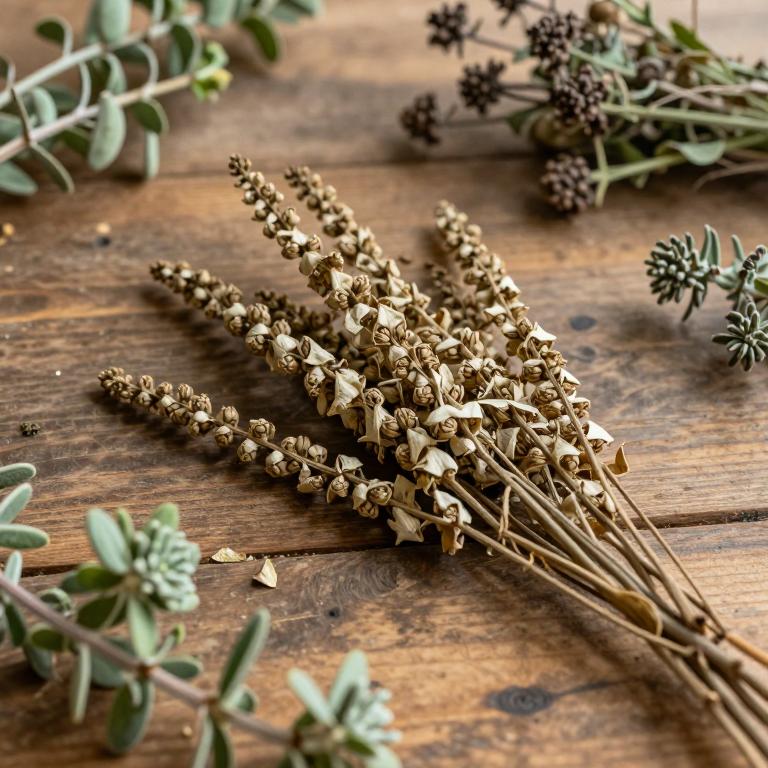
Names and Synonyms
Common Names
- yerba de jicotea
Scientific Names
Accepted name
Ludwigia erectaSynonyms
- Jussiaea acuminata var. latifolia
- Jussiaea erecta var. plumeriana
- Jussiaea erecta var. sebana
- Ludwigia plumeriana
- Isnardia discolor
- Jussiaea declinata
- Jussiaea onagra
- Jussiaea acuminata
- Jussiaea ramosa
- Jussiaea plumeriana
- Ludwigia acuminata
- Jussiaea nubica
- Jussiaea sessiliflora
- Jussiaea altissima
- Jussiaea acuminata var. longifolia
Regional and Traditional Names
Spanish:
- Clavito
Sources: Wikidata, Catalogue of Life
Taxonomical Classification
This plant, Ludwigia erecta, belongs to the kingdom Plantae and the phylum Streptophyta. Within the class Equisetopsida and subclass Magnoliidae, it is further categorized under the order Myrteleales and the family Onagraceae. Finally, its taxonomic classification is completed within the genus Ludwigia.
| Rank | Classification |
|---|---|
| Kingdom | Plantae |
| Phylum | Streptophyta |
| Class | Equisetopsida |
| Subclass | Magnoliidae |
| Order | Myrtales |
| Family | Onagraceae |
| Genus | Ludwigia |
Sources: The World Checklist of Vascular Plants (WCVP)
Distribution
This plant exhibits a specific geographical distribution across the African continent. In Northern Africa, its presence is recorded within the borders of Egypt. Moving toward the western region, it is found throughout West Tropical Africa. Specifically, it inhabits the territories of Benin, Burkina, and Guinea-Bissau. Finally, its range extends into the country of Guinea within the same tropical zone.
| Region | Area |
|---|---|
| Northern Africa | Egypt |
| West Tropical Africa | Benin |
| West Tropical Africa | Burkina |
| West Tropical Africa | Guinea-Bissau |
| West Tropical Africa | Guinea |
| West Tropical Africa | Ivory Coast |
| West Tropical Africa | Mali |
| West Tropical Africa | Mauritania |
| West Tropical Africa | Nigeria |
| West Tropical Africa | Niger |
Sources: The World Checklist of Vascular Plants (WCVP)
Botanical Identification
Ecology
The ecology of Ludwigia erecta is characterized by its remarkable adaptability across diverse environmental landscapes and varying altitudes. This species thrives in a wide array of habitats, ranging from anthropogenic areas (Área Antrópica) to specialized natural formations such as the Caatinga (strictu sensu), Campo de Várzea, and Campo Rupestre. It is also frequently found within diverse forest structures, including riparian or gallery forests (Floresta Ciliar ou Galeria), terra firme forests (Floresta de Terra Firme), and the Amazonian savanna (Savana Amazônica). In terms of vertical distribution, the plant exhibits a broad altitudinal tolerance, inhabiting environments from sea level (0 m AMSL) up to elevations of 1500 m AMSL.
- Elevational range max:
- 1500 m AMSL
- Elevational range min:
- 0 m AMSL
- Habitat :
- Área Antrópica, Caatinga (stricto sensu), Campo de Várzea, Campo Rupestre, Floresta Ciliar ou Galeria, Floresta de Terra Firme, Savana Amazônica
Life history
The life history of Ludwigia erecta is characterized by a variable lifecycle that can manifest as an annual, biennial, or perennial species depending on environmental conditions and habitat stability. As a plant specifically adapted to aquatic or semi-aquatic environments, its primary life form is categorized as a hydrophyte, allowing it to thrive in saturated substrates and waterlogged soils. Additionally, its biological strategy incorporates traits of a therophyte, often completing its reproductive cycle through seeds that ensure survival during unfavorable periods.
- Life form :
- hydrophyte
- Life form :
- therophyte
- Lifecycle :
- annual
Morphology
The morphology of Ludwigia erecta is characterized by its growth form as a non-woody herb and forb. This plant is self-supporting in its structure rather than acting as a liana or vine, and it functions as an independent organism without parasitic tendencies. It is a terrestrial species, lacking epiphytic qualities, and typically occupies non-aquatic environments. In terms of stature, the plant exhibits significant variability in height, ranging from a minimum of 0.02 m to a maximum of 3 m, with a mean plant height of approximately 2 m.
- Aquatic :
- terrestrial
- Climber :
- self-supporting
- Epiphyte :
- terrestrial
- Growth form :
- herb
- Growth form :
- forb
- Parasite :
- independent
- Plant height max:
- 3 m
- Plant height mean:
- 2 m
- Plant height min:
- 0.02 m
- Woodiness :
- non-woody
Physiology
The physiology of Ludwigia erecta is characterized by a C3 photosynthetic pathway, which involves the direct fixation of carbon dioxide through the Calvin cycle without the specialized spatial separation of carbon fixation seen in C4 plants or the nocturnal acid accumulation typical of CAM plants. This metabolic process relies on the enzyme Rubisco to catalyze the initial carboxylation step. Furthermore, regarding its nutrient acquisition strategies, the plant is not a nitrogen fixer, meaning it lacks the symbiotic relationship with nitrogen-fixing bacteria required to convert atmospheric nitrogen into bioavailable forms and must instead rely on the uptake of nitrates or ammonium from its substrate.
- Nitrogen fixer :
- no
- Photosynthetic pathway :
- C3
Reproduction
The reproduction of Ludwigia erecta is characterized by a highly flexible phenological cycle, where both the flowering and fruiting periods are variable and can occur across any month of the year, including January through December. Because the onset and conclusion of these reproductive stages are inconsistent and subject to environmental fluctuations, the plant exhibits a continuous potential for propagation throughout the seasons. The seeds produced during the fruiting phase are notably minute, with a minimum mass of 1e-05 g and a maximum mass of 0.00014 g, resulting in a calculated mean seed mass of 7.5e-05 g. This small seed size facilitates efficient dispersal, supporting the plant's ability to colonize diverse habitats.
- Flowering time :
- variable
- Fruiting time :
- variable
- Seed mass max:
- 0.00014 g
- Seed mass mean:
- 7.5e-05 g
- Seed mass min:
- 1e-05 g
Sources: Global Inventory of Floras and Traits (GIFT)
Activities
Ludwigia erecta has 1 reported activities identified across 0 scientific publications and several other databases. The most consistently reported activities include Antimalarial.
| Activity | Supporting sources | Consensus |
|---|---|---|
| Antimalarial | 1 supporting sources | ★☆☆☆☆ |
Antimalarial
- Frontiers in pharmacology
Conditions
Ludwigia erecta has 1 reported investigations on conditions identified across 0 scientific publications and several other databases. The most consistently reported conditions include Plasmodium falciparum.
| Condition | Supporting sources | Consensus |
|---|---|---|
| Plasmodium falciparum | 2 supporting sources | ★☆☆☆☆ |
Plasmodium falciparum
- Phytotherapy research : PTR
- Frontiers in pharmacology
Preparations
Ludwigia erecta has 2 reported preparations identified across 0 scientific publications and several other databases. The most consistently reported preparations include methanol extract, water extract.
| Preparation | Supporting sources | Consensus |
|---|---|---|
| Methanol extract | 1 supporting sources | ★☆☆☆☆ |
| Water extract | 1 supporting sources | ★☆☆☆☆ |
Methanol extract
- Phytotherapy research : PTR
Water extract
- Phytotherapy research : PTR