Swamp Box
Lophostemon suaveolens · Accepted scientific name
Scientific literature: Very Sparse (10 studies) · ★☆☆☆☆
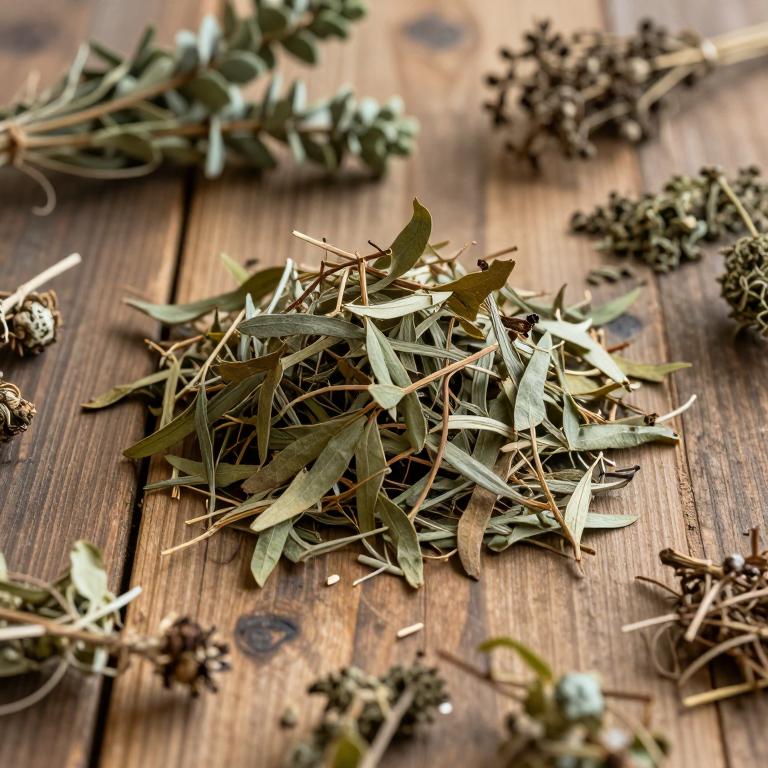
Swamp Box, scientifically known as Lophostemon suaveolens, is a versatile shrub native to Australian wetlands. Renowned for its fragrant foliage and vibrant blooms, this resilient plant holds significant ethnobotanical value. Traditionally used in various medicinal practices, it offers unique therapeutic potential, making it a subject of growing botanical interest.
Names and Synonyms
Common Names
- Swamp Box
- Swamp Mahogany
- Swamp Turpentine
- paperbark-mahogany
- swamp terpentine
- swamp-box
- swamp-mahogany
- water-gum
Scientific Names
Accepted name
Lophostemon suaveolensSynonyms
- Tristania suaveolens
- Lophostemon depressus
- Tristania salicifolia
- Tristania rhytiphloia
- Tristania suaveolens var. glabrescens
- Melaleuca suaveolens
Sources: Wikidata, Catalogue of Life
Taxonomical Classification
This plant belongs to the kingdom Plantae and is classified within the phylum Streptophyta and the class Equisetopsida. Following the subclass Magnoliidae, it is placed in the order Myrtales and the family Myrtaceae. Finally, it is categorized under the genus Lophostemon, specifically identified as the species Lophostemon suaveolens.
| Rank | Classification |
|---|---|
| Kingdom | Plantae |
| Phylum | Streptophyta |
| Class | Equisetopsida |
| Subclass | Magnoliidae |
| Order | Myrtales |
| Family | Myrtaceae |
| Genus | Lophostemon |
Sources: The World Checklist of Vascular Plants (WCVP)
Distribution
This plant exhibits a specific geographical range spanning across parts of Oceania and Australia. Within the region of Papuasia, it can be found growing in New Guinea. Its distribution also extends into the Australian continent, specifically covering the state of New South Wales. Furthermore, the species is documented to inhabit various areas throughout Queensland. Collectively, these locations define the natural habitat where this medicinal plant thrives.
| Region | Area |
|---|---|
| Papuasia | New Guinea |
| Australia | New South Wales |
| Australia | Queensland |
Sources: The World Checklist of Vascular Plants (WCVP)
Botanical Identification
Life history
The life history of Lophostemon suaveolenis is characterized by its perennial lifecycle, allowing the plant to persist through multiple growing seasons. As a phanerophyte, its regenerative buds are located on aerial shoots well above the soil surface, a structural strategy that defines its primary life form. This species maintains an evergreen deciduousness, ensuring that it retains its foliage throughout the year rather than shedding it seasonally. These combined traits—its long-lived perennial nature, its elevated phanerophyte growth habit, and its consistent evergreen state—dictate its ecological presence and survival strategies within its natural habitat.
- Deciduousness :
- evergreen
- Life form :
- phanerophyte
- Lifecycle :
- perennial
Morphology
The morphology of Lophostemon suaveolens is characterized by its robust growth form as a woody tree, reaching an average height of approximately 15 m. As a terrestrial organism, it does not exhibit aquatic or epiphytic tendencies, maintaining an independent existence rather than functioning as a parasite. Structurally, the plant is self-supporting, lacking the climbing habits of lianas or vines, and relies on its sturdy, woody framework to maintain its stature within its ecosystem.
- Aquatic :
- terrestrial
- Climber :
- self-supporting
- Epiphyte :
- terrestrial
- Growth form :
- tree
- Parasite :
- independent
- Plant height mean:
- 15 m
- Woodiness :
- woody
Physiology
The physiology of Lophostemon suaveolens is characterized by a C3 photosynthetic pathway, which dictates its carbon fixation processes and metabolic efficiency. The plant's vegetative structure is defined by its leaf morphology, with individual leaves typically measuring between 9 cm and 15 cm in length and maintaining a width ranging from a minimum of 4 cm to a maximum of 5 cm. Furthermore, the species does not function as a nitrogen fixer, relying instead on soil nutrient availability rather than symbiotic nitrogen-fixing bacteria to satisfy its nutritional requirements.
- Leaf length max:
- 15 cm
- Leaf length min:
- 9 cm
- Leaf width max:
- 5 cm
- Leaf width min:
- 4 cm
- Nitrogen fixer :
- no
- Photosynthetic pathway :
- C3
Reproduction
The reproduction of Lophostemon suaveolens is characterized by a specific phenological cycle and biotic pollination mechanisms. The flowering period typically begins in October and continues through December, though the timing can be variable. The plant relies on biotic pollination syndromes, specifically utilizing insects as primary pollinators, with bees playing a significant role in the reproductive process. The resulting seeds are notably minute, exhibiting a mean mass of approximately 0.00067 g. Individual seed weights fluctuate within a range from a minimum of 0.00005 g to a maximum of 0.00129 g.
- Flowering time :
- Oct
- Flowering time :
- Dec
- Pollination syndrome :
- insect
- Pollination syndrome :
- bee
- Pollination syndrome :
- biotic
- Seed mass max:
- 0.00129 g
- Seed mass mean:
- 0.00067 g
- Seed mass min:
- 5e-05 g
Sources: Global Inventory of Floras and Traits (GIFT)
Plant Parts
Lophostemon suaveolens has 1 reported plant parts identified across 1 scientific publications and several other databases that are studied for medicinal purposes. The most consistently reported plant part include leaf.
| Plant part | Supporting sources | Consensus |
|---|---|---|
| Leaf | 1 supporting sources | ★☆☆☆☆ |
Leaf
- Natural product research
Chemicals
Lophostemon suaveolens has 4 reported phytochemicals identified across 1 scientific publications and several other databases. The most consistently reported chemicals include Aromadendrene, Eucalyptin, Spathulenol, betulinic acid.
| Chemical | Supporting sources | Consensus |
|---|---|---|
| Aromadendrene | 1 supporting sources | ★☆☆☆☆ |
| Eucalyptin | 1 supporting sources | ★☆☆☆☆ |
| Spathulenol | 1 supporting sources | ★☆☆☆☆ |
| betulinic acid | 1 supporting sources | ★☆☆☆☆ |
Aromadendrene
- Natural product research
Eucalyptin
- Natural product research
Spathulenol
- Natural product research
betulinic acid
- Natural product research
Conditions
Lophostemon suaveolens has 4 reported investigations on conditions identified across 1 scientific publications and several other databases. The most consistently reported conditions include Staphylococcus aureus, Candida albicans, Streptococcus pyogenes, wounds.
| Condition | Supporting sources | Consensus |
|---|---|---|
| Staphylococcus aureus | 2 supporting sources | ★☆☆☆☆ |
| Candida albicans | 1 supporting sources | ★☆☆☆☆ |
| Streptococcus pyogenes | 1 supporting sources | ★☆☆☆☆ |
| Wounds | 1 supporting sources | ★☆☆☆☆ |
Staphylococcus aureus
- BMC research notes
- Natural product research
Candida albicans
- BMC research notes
Streptococcus pyogenes
- Natural product research
Wounds
- BMC research notes
Preparations
Lophostemon suaveolens has 1 reported preparations identified across 1 scientific publications and several other databases. The most consistently reported preparations include aqueous and aqueous ethanolic extracts.
| Preparation | Supporting sources | Consensus |
|---|---|---|
| Aqueous and aqueous ethanolic extracts | 1 supporting sources | ★☆☆☆☆ |
Aqueous and aqueous ethanolic extracts
- BMC research notes