Lonicera quinquelucularis
Lonicera quinquelocularis · Accepted scientific name
Scientific literature: Very Sparse (4 studies) · ★☆☆☆☆
Lonicera quinquelucularis, scientifically known as Lonicera quinquelocularis, is a specialized medicinal plant valued for its unique bioactive properties. Often utilized in traditional healing practices, this species offers potential therapeutic benefits. Understanding its botanical characteristics and chemical constituents is essential for exploring its role in modern pharmacology and herbal medicine.
- Family
- Caprifoliaceae
- Native range
- Asia-Temperate
- Parts used
- Root
- Common names
- Translucent Honeysuckle
- Scientific synonyms
- Lonicera Quinquelocularis Var. Translucens · Lonicera Quinquelocularis F. Translucens · 7 more
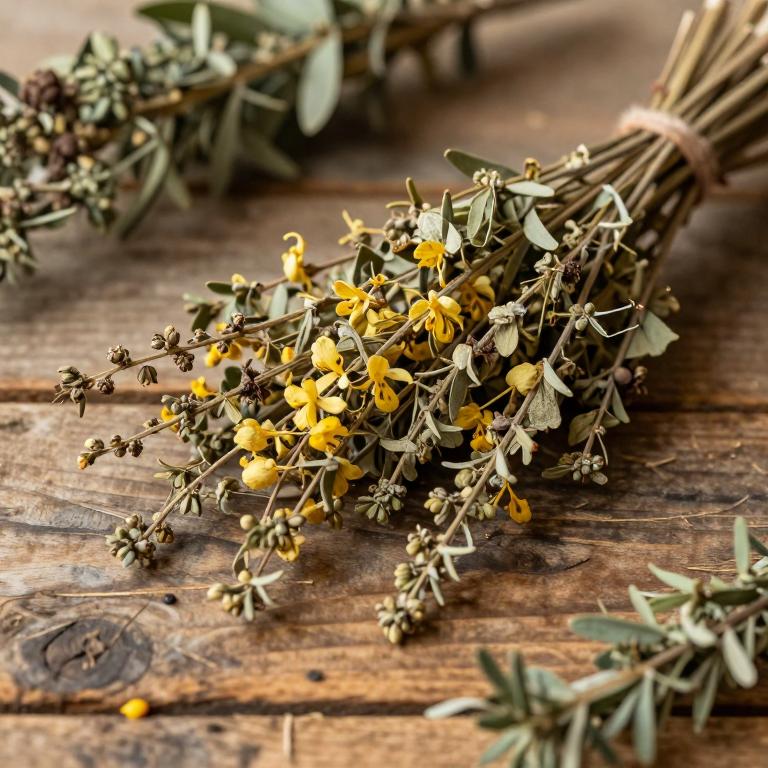
Names and Synonyms
Common Names
- translucent honeysuckle
Scientific Names
Accepted name
Lonicera quinquelocularisSynonyms
- Lonicera quinquelocularis var. translucens
- Lonicera quinquelocularis f. translucens
- Caprifolium quinqueloculare
- Lonicera translucens
- Lonicera xylosteum var. alba
- Lonicera diversifolia var. royleana
- Lonicera xylosteum var. leucocarpa
- Lonicera xylosteum var. brachypoda
- Lonicera quinquelocularis f. diversifolia
Regional and Traditional Names
German:
- durchsichtige Heckenkirsche
Sources: Wikidata, Catalogue of Life
Taxonomical Classification
This plant belongs to the kingdom Plantae and is classified within the phylum Streptophyta and the class Equisetopsida. As a member of the subclass Magnoliidae and the order Dipsacales, it is further categorized into the family Caprifoliaceae. Finally, its specific taxonomic identity is defined by its placement within the genus Lonicera.
| Rank | Classification |
|---|---|
| Kingdom | Plantae |
| Phylum | Streptophyta |
| Class | Equisetopsida |
| Subclass | Magnoliidae |
| Order | Dipsacales |
| Family | Caprifoliaceae |
| Genus | Lonicera |
Sources: The World Checklist of Vascular Plants (WCVP)
Distribution
This plant exhibits a specific geographical range primarily concentrated within the mountainous regions of Asia. In Western Asia, its presence is documented within the borders of Afghanistan. The species is also widely distributed across the Indian Subcontinent, specifically spanning the East Himalaya and the West Himalaya. Furthermore, its habitat extends into the high-altitude terrains of Nepal. Finally, the plant can be found growing within the territories of Pakistan.
| Region | Area |
|---|---|
| Western Asia | Afghanistan |
| Indian Subcontinent | East Himalaya |
| Indian Subcontinent | Nepal |
| Indian Subcontinent | Pakistan |
| Indian Subcontinent | West Himalaya |
Sources: The World Checklist of Vascular Plants (WCVP)
Botanical Identification
Ecology
The ecology of Lonicera quinquelocularis is defined by its specific niche within montane environments, where it thrives across a significant altitudinal gradient. This species is typically found in high-elevation habitats, occupying an ecological range that begins at 1,200 m AMSL and extends upward to a maximum elevation of 3,500 m AMSL. This broad elevational span suggests an ability to adapt to varying temperature regimes, atmospheric pressures, and moisture availability characteristic of mountain ecosystems. By inhabiting these diverse vertical zones, the plant interacts with a wide array of microclimates, ranging from lower montane forests to higher subalpine or alpine transitions, which dictates its distribution and survival strategies within its native landscape.
- Elevational range max:
- 3500 m AMSL
- Elevational range min:
- 1200 m AMSL
Life history
The life history of Lonicera quinquefoliolatus is characterized by its classification as a perennial species, meaning it lives for more than two years and maintains its presence in the ecosystem through multiple growing seasons. As a perennial woody shrub, it undergoes seasonal cycles of growth, flowering, and dormancy, often establishing a permanent root system that allows it to survive varying environmental conditions. Its life cycle involves a developmental progression from seed germination to maturity, followed by a reproductive phase where it produces flowers and fruit to ensure the continuity of the species. Unlike annuals that complete their life cycle in a single season or biennials that require two, this plant's perennial nature allows for sustained physiological processes and long-term structural development within its habitat.
- Lifecycle :
- perennial
Morphology
The morphology of Lonicera quinquelocularis is characterized by its woody structure and distinct growth habit. It functions as a self-supporting climber, exhibiting characteristics of a liana or vine that can maintain its own structure. While it possesses a shrub-like growth form, its physical development is defined by its woody nature. The plant is an independent organism, meaning it does not function as a parasite, and it maintains a terrestrial life cycle rather than growing as an epiphyte.
- Climber :
- self-supporting
- Epiphyte :
- terrestrial
- Growth form :
- shrub
- Parasite :
- independent
- Woodiness :
- woody
Reproduction
The reproduction of Lonicera quinquelocularis is characterized by a specific seasonal flowering cycle that facilitates its reproductive success. The flowering period for this species typically commences in April, marking the beginning of its reproductive phase. This blooming activity continues through the late spring and early summer months, ultimately concluding in June. Consequently, the plant's reproductive window is concentrated within these months, providing a distinct timeframe for pollination and subsequent seed development.
- Flowering time :
- Apr
- Flowering time :
- Jun
Sources: Global Inventory of Floras and Traits (GIFT)
Plant Parts
Lonicera quinquelocularis has 1 reported plant parts identified across 1 scientific publications and several other databases that are studied for medicinal purposes. The most consistently reported plant part include root.
| Plant part | Supporting sources | Consensus |
|---|---|---|
| Root | 1 supporting sources | ★☆☆☆☆ |
Root
- Phytochemistry
Chemicals
Lonicera quinquelocularis has 3 reported phytochemicals identified across 1 scientific publications and several other databases. The most consistently reported chemicals include 6'-O-beta-Apiofuranosylsweroside, Loganin, Sweroside.
| Chemical | Supporting sources | Consensus |
|---|---|---|
| 6'-O-beta-Apiofuranosylsweroside | 1 supporting sources | ★☆☆☆☆ |
| Loganin | 1 supporting sources | ★☆☆☆☆ |
| Sweroside | 1 supporting sources | ★☆☆☆☆ |
6'-O-beta-Apiofuranosylsweroside
- Phytochemistry
Loganin
- Phytochemistry
Sweroside
- Phytochemistry
Preparations
Lonicera quinquelocularis has 1 reported preparations identified across 1 scientific publications and several other databases. The most consistently reported preparations include ethanolic extract of the roots.
| Preparation | Supporting sources | Consensus |
|---|---|---|
| Ethanolic extract of the roots | 1 supporting sources | ★☆☆☆☆ |
Ethanolic extract of the roots
- Phytochemistry