Lonicera etrusca var. etrusca
Lonicera etrusca var. etrusca · Accepted scientific name
Scientific literature: Very Sparse (11 studies) · ★☆☆☆☆
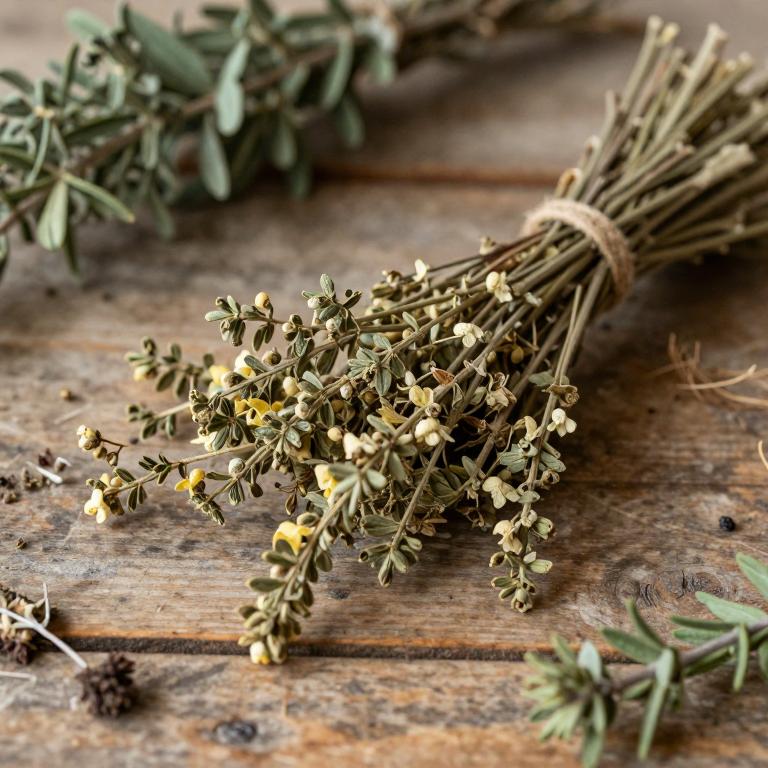
, scientifically known as Lonicera etrusca var. etrusca, is a distinctive shrub valued for its traditional medicinal properties. Found primarily in Mediterranean habitats, this variety is utilized in various herbal practices to support holistic wellness. Its unique chemical profile offers intriguing potential for contemporary pharmacological research and natural healing.
- Family
- Caprifoliaceae
- Native range
- Europe
- Parts used
- Flower · Leaf
- Common names
- Not available
- Scientific synonyms
- Lonicera Etrusca Var. Cyrenaica · Lonicera Etrusca Var. Virescens · 28 more
Names and Synonyms
Scientific Names
Accepted name
Lonicera etrusca var. etruscaSynonyms
- Lonicera etrusca var. cyrenaica
- Lonicera etrusca var. virescens
- Caprifolium dimorphum
- Lonicera raeseri
- Lonicera etrusca var. reverchonii
- Lonicera etrusca var. superba
- Lonicera etrusca var. roeseri
- Lonicera etrusca var. parviflora
- Lonicera etrusca var. rotundifolia
- Lonicera etrusca var. hirsuta
- Lonicera etrusca f. mollis
- Lonicera etrusca var. pubescens
- Lonicera etrusca var. xylostemoides
- Lonicera etrusca f. gigantea
- Lonicera caprifolium arborea
- Lonicera etrusca superba
- Lonicera etrusca var. glabra
- Lonicera etrusca var. villiflora
- Caprifolium dimorphum
- Caprifolium cyrenaicum
- Caprifolium etruscum
- Caprifolium germanicum
- Lonicera charlottii
- Lonicera roeseri
- Lonicera viscidula
- Lonicera mollis
- Lonicera dimorpha
- Lonicera cyrenaica
- Lonicera gigantea
- Lonicera glabra
Taxonomical Classification
This plant belongs to the kingdom Plantae and the phylum Streptophyta, falling within the class Equisetopsida and subclass Magnoliidae. It is classified under the order Dipsacales and the family Caprifoliaceae. Specifically, its taxonomic identity is defined by the genus Lonicera, with the variety etrusca denoting its specific classification as Lonicera etrusca var. etrusca.
| Rank | Classification |
|---|---|
| Kingdom | Plantae |
| Phylum | Streptophyta |
| Class | Equisetopsida |
| Subclass | Magnoliidae |
| Order | Dipsacales |
| Family | Caprifoliaceae |
| Genus | Lonicera |
Sources: The World Checklist of Vascular Plants (WCVP)
Distribution
This plant exhibits a diverse geographical distribution across several distinct regions of the European continent. In Middle Europe, its presence can be documented within the territories of Germany and Switzerland. Moving toward the southwestern part of the continent, it is also found throughout the country of France. The species extends its range to the island of Corse, which is located in the Mediterranean. Finally, its distribution reaches as far west as the nation of Portugal.
| Region | Area |
|---|---|
| Middle Europe | Germany |
| Middle Europe | Switzerland |
| Southwestern Europe | Corse |
| Southwestern Europe | France |
| Southwestern Europe | Portugal |
| Southwestern Europe | Sardegna |
| Southwestern Europe | Spain |
| Southeastern Europe | Albania |
| Southeastern Europe | Bulgaria |
| Southeastern Europe | Greece |
Sources: The World Checklist of Vascular Plants (WCVP)
Plant Parts
Lonicera etrusca var. etrusca has 3 reported plant parts identified across 3 scientific publications and several other databases that are studied for medicinal purposes. The most consistently reported plant part include flower, leaf, stem.
| Plant part | Supporting sources | Consensus |
|---|---|---|
| Flower | 1 supporting sources | ★☆☆☆☆ |
| Leaf | 1 supporting sources | ★☆☆☆☆ |
| Stem | 1 supporting sources | ★☆☆☆☆ |
Flower
- Iranian journal of pharmaceutical research : IJPR
Leaf
- Turkish journal of pharmaceutical sciences
Stem
- Turkish journal of pharmaceutical sciences
Chemicals
Lonicera etrusca var. etrusca has 3 reported phytochemicals identified across 3 scientific publications and several other databases. The most consistently reported chemicals include CHLOROGENIC ACID, caffeic acid, spermidine.
| Chemical | Supporting sources | Consensus |
|---|---|---|
| CHLOROGENIC ACID | 1 supporting sources | ★☆☆☆☆ |
| caffeic acid | 1 supporting sources | ★☆☆☆☆ |
| spermidine | 1 supporting sources | ★☆☆☆☆ |
CHLOROGENIC ACID
- Turkish journal of pharmaceutical sciences
caffeic acid
- Turkish journal of pharmaceutical sciences
spermidine
- Iranian journal of pharmaceutical research : IJPR
Activities
Lonicera etrusca var. etrusca has 1 reported activities identified across 3 scientific publications and several other databases. The most consistently reported activities include Antioxidant.
| Activity | Supporting sources | Consensus |
|---|---|---|
| Antioxidant | 1 supporting sources | ★☆☆☆☆ |
Antioxidant
- Journal of chromatography. A
Preparations
Lonicera etrusca var. etrusca has 2 reported preparations identified across 3 scientific publications and several other databases. The most consistently reported preparations include dried flower powders, methanolic extracts.
| Preparation | Supporting sources | Consensus |
|---|---|---|
| Dried flower powders | 1 supporting sources | ★☆☆☆☆ |
| Methanolic extracts | 1 supporting sources | ★☆☆☆☆ |
Dried flower powders
- Iranian journal of pharmaceutical research : IJPR
Methanolic extracts
- Journal of chromatography. A