Lonicera angustifolia
Lonicera angustifolia · Accepted scientific name
Scientific literature: Very Sparse (8 studies) · ★☆☆☆☆
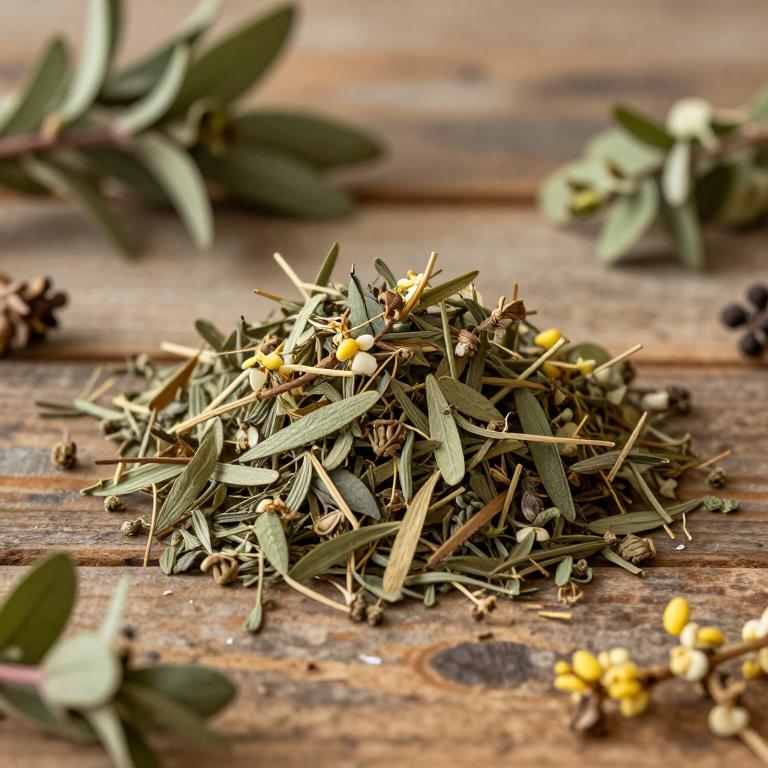
Lonicera angustifolia, scientifically known as Lonicera angustifolia, is commonly referred to as slender honeysuckle. This deciduous shrub is valued for its fragrant, tubular flowers and medicinal properties. Traditionally used in herbal remedies, it possesses antioxidant and anti-inflammatory qualities, making it a significant plant in various holistic healing practices.
- Family
- Caprifoliaceae
- Native range
- Asia-Temperate
- Parts used
- Leaf
- Common names
- Not available
- Scientific synonyms
- Caprifolium Angustifolium · Devendraea Angustifolia
Names and Synonyms
Scientific Names
Accepted name
Lonicera angustifoliaSynonyms
- Caprifolium angustifolium
- Devendraea angustifolia
Sources: Wikidata
Taxonomical Classification
This plant, Lonicera angustifolia, belongs to the kingdom Plantae and the phylum Streptophyta. Within the class Equisetopsida and subclass Magnoliidae, it is categorized under the order Dipsacales. Finally, it is classified under the family Caprifoliaceae within the genus Lonicera.
| Rank | Classification |
|---|---|
| Kingdom | Plantae |
| Phylum | Streptophyta |
| Class | Equisetopsida |
| Subclass | Magnoliidae |
| Order | Dipsacales |
| Family | Caprifoliaceae |
| Genus | Lonicera |
Sources: The World Checklist of Vascular Plants (WCVP)
Distribution
This plant, Lonicera angustifolia, exhibits a diverse geographical distribution across several key regions in Asia. In Western Asia, its presence can be documented within the borders of Afghanistan. Moving eastward, it is found throughout South-Central China as well as the high-altitude regions of Tibet. The species also extends into the Indian Subcontinent, specifically inhabiting the state of Assam. Finally, its range encompasses the rugged landscapes of the East Himalaya.
| Region | Area |
|---|---|
| Western Asia | Afghanistan |
| China | China South-Central |
| China | Tibet |
| Indian Subcontinent | Assam |
| Indian Subcontinent | East Himalaya |
| Indian Subcontinent | Nepal |
| Indian Subcontinent | Pakistan |
| Indian Subcontinent | West Himalaya |
| Indo-China | Myanmar |
Sources: The World Checklist of Vascular Plants (WCVP)
Botanical Identification
Ecology
The ecology of Lonicera angustifolia is defined by its adaptation to high-altitude environments, specifically within a specialized niche that spans a significant vertical gradient. This species thrives within a distinct elevational range, establishing itself in montane or subalpine ecosystems where it occupies habitats between a minimum elevation of 2200 m AMSL and a maximum elevation of 4650 m AMSL. Such a broad altitudinal distribution suggests a high degree of physiological plasticity, allowing the plant to endure the varying temperature regimes, UV intensities, and atmospheric pressures characteristic of these high-altitude zones. Its presence within these specific parameters indicates a preference for environments shaped by these vertical transitions, where it likely competes within complex mountain plant communities.
- Elevational range max:
- 4650 m AMSL
- Elevational range min:
- 2200 m AMSL
Life history
The life history of Lonicera angustifolia is characterized by its status as a perennial species, meaning it lives for more than two years and maintains its presence in the ecosystem through multiple growing seasons. As a woody shrub, it typically undergoes a seasonal cycle of dormancy during colder months, followed by a period of active growth in the spring and summer. Its life cycle involves the establishment of a robust root system that allows it to persist and potentially spread through vegetative means or seed dispersal. During its active phase, the plant engages in flowering and fruit production, which are critical stages for its reproductive success and long-term survival within its natural habitat.
- Lifecycle :
- perennial
Morphology
The morphology of Lonicera angustifolia is characterized by a woody growth form, manifesting as a robust shrub that exhibits climbing tendencies. It functions as a self-supporting climber, utilizing its structure to navigate its environment through both liana and vine-like behaviors, though it possesses the inherent strength to remain self-supporting rather than being strictly obligatory in its climbing mechanism. As a terrestrial species, it establishes itself firmly in the soil rather than growing as an epiphyte. Its structural integrity is defined by its woody nature, providing the necessary rigidity for its shrubby habit and sprawling growth pattern.
- Climber :
- self-supporting
- Epiphyte :
- terrestrial
- Growth form :
- shrub
- Woodiness :
- woody
Reproduction
The reproduction of Lonicera angustifolia is characterized by a specific seasonal flowering cycle that facilitates its pollination and subsequent seed production. The flowering period typically commences in April, marking the beginning of its reproductive phase. This blooming stage continues through the spring and into the early summer, with the flowering process concluding in June. This temporal window is essential for the plant's lifecycle, ensuring that its floral structures are available for pollinators during these specific months.
- Flowering time :
- Apr
- Flowering time :
- Jun
Sources: Global Inventory of Floras and Traits (GIFT)
Plant Parts
Lonicera angustifolia has 1 reported plant parts identified across 1 scientific publications and several other databases that are studied for medicinal purposes. The most consistently reported plant part include leaf.
| Plant part | Supporting sources | Consensus |
|---|---|---|
| Leaf | 1 supporting sources | ★☆☆☆☆ |
Leaf
- Fitoterapia
Chemicals
Lonicera angustifolia has 7 reported phytochemicals identified across 1 scientific publications and several other databases. The most consistently reported chemicals include 6'-O-beta-Apiofuranosylsweroside, BETA-SITOSTEROL, Loganin, OLEANOLIC ACID, Sweroside.
| Chemical | Supporting sources | Consensus |
|---|---|---|
| 6'-O-beta-Apiofuranosylsweroside | 1 supporting sources | ★☆☆☆☆ |
| BETA-SITOSTEROL | 1 supporting sources | ★☆☆☆☆ |
| Loganin | 1 supporting sources | ★☆☆☆☆ |
| OLEANOLIC ACID | 1 supporting sources | ★☆☆☆☆ |
| Sweroside | 1 supporting sources | ★☆☆☆☆ |
| Ursolic acid | 1 supporting sources | ★☆☆☆☆ |
| methyl 4-hydroxy-benzoate | 1 supporting sources | ★☆☆☆☆ |
6'-O-beta-Apiofuranosylsweroside
- Fitoterapia
BETA-SITOSTEROL
- Fitoterapia
Loganin
- Fitoterapia
OLEANOLIC ACID
- Fitoterapia
Sweroside
- Fitoterapia
Ursolic acid
- Fitoterapia
methyl 4-hydroxy-benzoate
- Fitoterapia