Lonchocarpus heptaphyllus
Lonchocarpus heptaphyllus · Accepted scientific name
Scientific literature: Very Sparse (2 studies) · ★☆☆☆☆
Lonchocarpus heptaphyllus, scientifically known as Lonchocarpus heptaphyllus, is a remarkable medicinal plant valued in traditional healing practices. Renowned for its diverse bioactive compounds, it serves as a natural resource for treating various ailments. Understanding its botanical properties and therapeutic potential is essential for advancing modern pharmacological research and herbal medicine.
- Family
- Not available
- Native range
- Asia-Tropical
- Parts used
- Leaf · Stem
- Common names
- Not available
- Scientific synonyms
- Not available
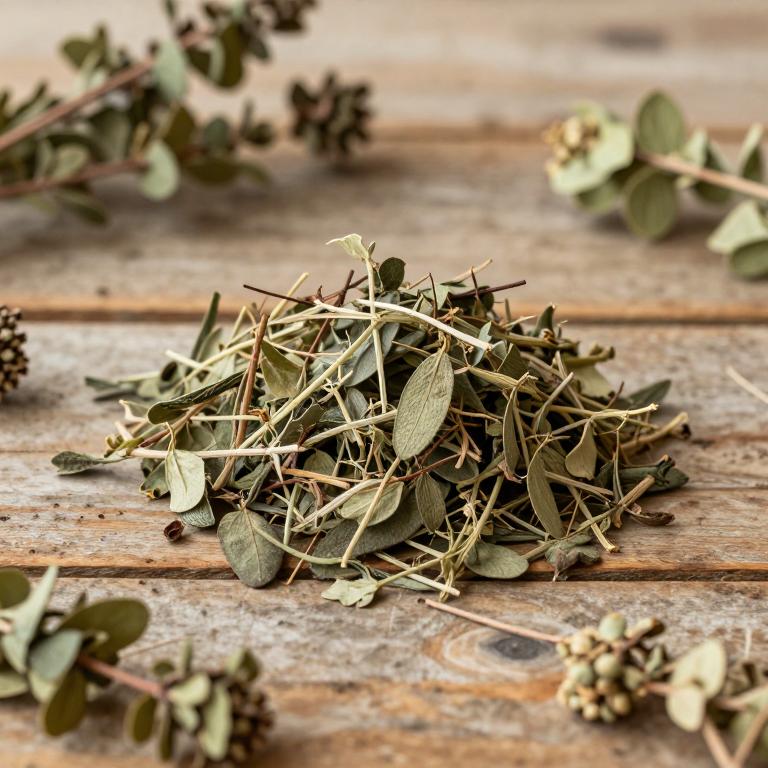
Names and Synonyms
Scientific Names
Accepted name
Lonchocarpus heptaphyllusDistribution
This plant exhibits a broad geographical distribution that spans across two major continents. In the Indian Subcontinent, it can be specifically located within the country of Sri Lanka. Moving towards the Americas, its presence is well-documented throughout various regions of Mexico, including the Gulf, the Southwest, and the Southeast. Additionally, the species extends its range into Central America, where it is found in Belize. This wide-reaching habitat demonstrates the plant's ability to adapt to diverse tropical and subtropical environments.
| Region | Area |
|---|---|
| Indian Subcontinent | Sri Lanka |
| Mexico | Mexico Gulf |
| Mexico | Mexico Southwest |
| Mexico | Mexico Southeast |
| Central America | Belize |
| Central America | Costa Rica |
| Central America | Honduras |
| Central America | Nicaragua |
| Central America | Panamá |
| Caribbean | Cuba |
Sources: The World Checklist of Vascular Plants (WCVP)
Botanical Identification
Ecology
The ecology of Lonchocarpus heptaphyllus is characterized by its preference for specialized, moisture-rich environments, specifically thriving within coastal forests (Floresta Ciliar), gallery forests (Galeria), and seasonally flooded forests (Floresta de Igapó). This species occupies a broad altitudinal gradient, ranging from sea level up to a maximum elevation of 1000 m AMSL. On average, the plant is found at a mean elevation of 235 m AMSL, indicating its prevalence in lower-lying, humid riverine and coastal ecosystems.
- Elevational range max:
- 1000 m AMSL
- Elevational range mean:
- 235 m AMSL
- Elevational range min:
- 0 m AMSL
- Habitat :
- Floresta Ciliar ou Galeria, Floresta de Igapó
Life history
The life history of Lonchocarpus heptaphyllus is characterized by its status as a perennial organism, allowing it to persist in its environment through multiple growing seasons. As an evergreen species, it maintains its foliage year-round, ensuring continuous photosynthetic activity and a consistent structural presence within its ecological niche.
- Deciduousness :
- evergreen
- Lifecycle :
- perennial
Morphology
The morphology of Lonchocarpus heptaphyllus is characterized by its stature as a large, woody tree that reaches a mean height of 15 m, with the potential to attain a maximum height of up to 31 m. As an independent species, it does not function as a parasite and is strictly terrestrial in its habitat, lacking any epiphytic tendencies such as holoepiphytic or hemiepiphytic growth. The plant exhibits a self-supporting growth habit, distinguishing it from climbing lianas or vines, and maintains a robust, woody structure throughout its development.
- Aquatic :
- terrestrial
- Climber :
- self-supporting
- Epiphyte :
- terrestrial
- Growth form :
- tree
- Parasite :
- independent
- Plant height max:
- 31 m
- Plant height mean:
- 15 m
- Woodiness :
- woody
Physiology
The physiology of Lonchocarpus heptaphyllus is characterized by a C3 photosynthetic pathway, indicating a carbon fixation process that occurs primarily through the Calvin cycle without the specialized spatial separation found in C4 plants. Its leaf structure maintains a consistent leaf dry matter content (LDMC) of 361.2 mg/g, representing a uniform value across its mean, minimum, and maximum recorded measurements. Additionally, this species functions as a nitrogen fixer, a physiological trait that allows it to enhance soil fertility by converting atmospheric nitrogen into biologically available forms.
- Leaf dry matter content (LDMC) mean:
- 361.2 mg/g
- Nitrogen fixer :
- yes
- Photosynthetic pathway :
- C3
Reproduction
The reproduction of Lonchocarpus heptaphyllus is characterized by specific seed morphology and diverse dispersal strategies. The seeds produced by this species exhibit significant variability in physical dimensions, with seed lengths ranging from a minimum of 6 mm to a maximum of 30 mm. In terms of weight, the seeds demonstrate a wide distribution, featuring a minimum mass of 0.05 g and a maximum mass of 0.161 g, with an overall mean seed mass of approximately 0.0863666665 g. Regarding the mechanisms of propagation, the plant utilizes a multifaceted dispersal syndrome; while it exhibits characteristics of anemochory (wind dispersal), it also employs zoochory (animal dispersal), autochory (self-dispersal), hydrochory (water dispersal), and unspecialized dispersal methods to ensure its seeds reach suitable environments for germination.
- Dispersal syndrome :
- anemochorous
- Seed length max:
- 30 mm
- Seed length min:
- 6 mm
- Seed mass max:
- 0.161 g
- Seed mass mean:
- 0.0863666665 g
- Seed mass min:
- 0.05 g
Sources: Global Inventory of Floras and Traits (GIFT)
Plant Parts
Lonchocarpus heptaphyllus has 2 reported plant parts identified across 2 scientific publications and several other databases that are studied for medicinal purposes. The most consistently reported plant part include leaf, stem.
| Plant part | Supporting sources | Consensus |
|---|---|---|
| Leaf | 1 supporting sources | ★☆☆☆☆ |
| Stem | 1 supporting sources | ★☆☆☆☆ |
Leaf
- Chemical & pharmaceutical bulletin
Stem
- Chemical & pharmaceutical bulletin