Lomatia hirsuta
Lomatia hirsuta · Accepted scientific name
Scientific literature: Very Sparse (13 studies) · ★☆☆☆☆
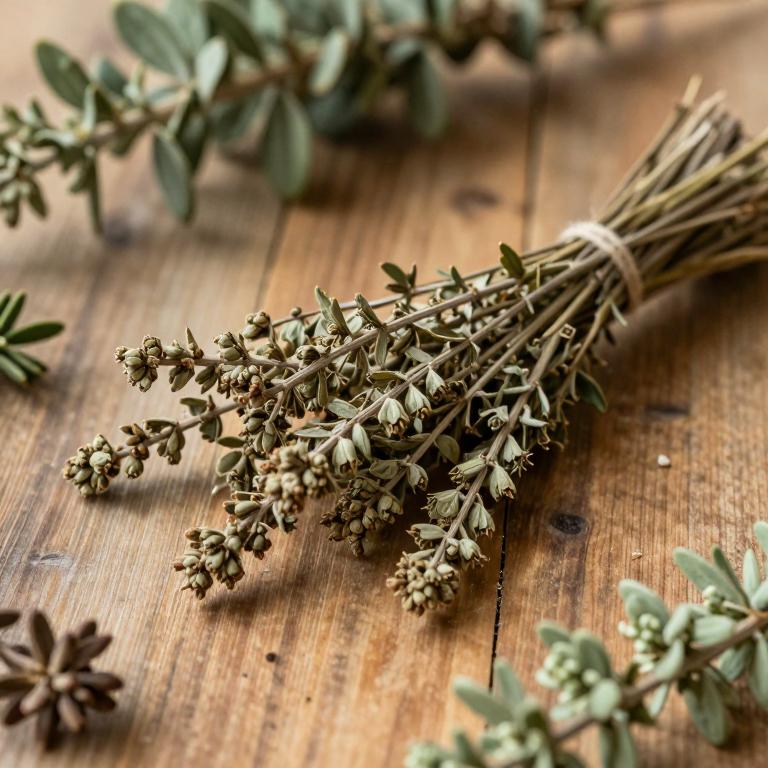
Lomatia hirsuta, scientifically known as Lomatia hirsuta, is a distinctive medicinal shrub native to specific tropical regions. Renowned for its therapeutic properties, this plant is traditionally utilized in folk medicine to treat various ailments. Its unique chemical composition offers significant potential for pharmacological research and natural healing applications.
- Family
- Proteaceae
- Native range
- Southern America
- Parts used
- Leaf
- Common names
- Not available
- Scientific synonyms
- Embothrium Hirsutum
Names and Synonyms
Scientific Names
Accepted name
Lomatia hirsutaSynonyms
- Embothrium hirsutum
Regional and Traditional Names
Spanish:
- Radal
- Lomatia alnifolia
- Lomatia obliqua
- Tricondylus obliqua
- Embothrium alnifolium
- Lomatia opaca
- Raral
- Nogal silvestre
- Embothrium hirsutum
- Galuay
- Garrao
- Garua
- nogal
- radal
French:
- Radal
- Noyer sylvestre
Sources: Wikidata, Catalogue of Life
Taxonomical Classification
This plant belongs to the kingdom Plantae and is classified under the phylum Streptophyta within the class Equisetopsida. Further taxonomic hierarchy places it in the subclass Magnoliidae and the order Proteales. Finally, it is a member of the family Proteaceae and is categorized under the genus Lomatia.
| Rank | Classification |
|---|---|
| Kingdom | Plantae |
| Phylum | Streptophyta |
| Class | Equisetopsida |
| Subclass | Magnoliidae |
| Order | Proteales |
| Family | Proteaceae |
| Genus | Lomatia |
Sources: The World Checklist of Vascular Plants (WCVP)
Distribution
This plant exhibits a broad distribution across several regions of the South American continent. In the western part of the continent, it can be found growing in Ecuador and Peru. Moving toward the southern reaches, its range extends into the southern regions of Argentina. The species is also well-established within the central and southern territories of Chile. Consequently, its habitat spans a diverse longitudinal stretch from the equatorial west to the southern tip of the landmass.
| Region | Area |
|---|---|
| Western South America | Ecuador |
| Western South America | Peru |
| Southern South America | Argentina South |
| Southern South America | Chile Central |
| Southern South America | Chile South |
Sources: The World Checklist of Vascular Plants (WCVP)
Botanical Identification
Ecology
The ecology of Lomatia hirsuta is characterized by its distribution across a broad altitudinal gradient, allowing it to occupy diverse topographical niches. It is found at elevations ranging from 0 m AMSL to a maximum of 1000 m AMSL, a span that enables the species to adapt to varying climatic conditions and environmental pressures. This wide elevational range suggests a high degree of ecological plasticity, permitting the plant to thrive in both lowland coastal or tropical environments and more temperate mid-elevation zones. Such a distribution pattern indicates its ability to inhabit a variety of microclimates and soil compositions within these vertical limits.
- Elevational range max:
- 1000 m AMSL
- Elevational range min:
- 0 m AMSL
Life history
The life history of Lomatia hirsuta is characterized by its nature as a perennial organism, allowing it to persist through multiple growing seasons and establish a stable presence within its ecosystem. Throughout its developmental stages, the plant maintains an evergreen habit, ensuring that its foliage remains functional and active year-round rather than shedding seasonally. This combination of a long-lived life cycle and continuous leaf retention enables the species to maintain consistent photosynthetic activity, contributing to its long-term survival and growth patterns.
- Deciduousness :
- evergreen
- Lifecycle :
- perennial
Morphology
The morphology of Lomatia hirsuta is characterized by its growth form as a woody tree, reaching a mean plant height of approximately 8 m. This species is strictly terrestrial in its habitat, lacking any aquatic or epiphytic tendencies. As a self-supporting organism, it does not function as a liana, vine, or climber, and it maintains an independent existence without acting as a parasite.
- Aquatic :
- terrestrial
- Climber :
- self-supporting
- Epiphyte :
- terrestrial
- Growth form :
- tree
- Parasite :
- independent
- Plant height mean:
- 8 m
- Woodiness :
- woody
Physiology
The physiology of Lomatia hirsuta is characterized by a standard C3 photosynthetic pathway, utilizing the Calvin cycle to fix atmospheric carbon dioxide into organic compounds without the specialized anatomical adaptations found in C4 or CAM plants. In terms of nutrient acquisition, this species does not function as a nitrogen fixer, meaning it lacks the symbiotic relationship with diazotrophic bacteria required to convert atmospheric nitrogen into bioavailable forms, relying instead on the uptake of nitrates and ammonium from the soil.
- Nitrogen fixer :
- no
- Photosynthetic pathway :
- C3
Reproduction
The reproduction of Lomatia hirsuta is characterized by the production of seeds that exhibit specific physical dimensions critical to its dispersal and establishment. The seed mass within this species shows measurable variation, with a calculated mean seed mass of 0.006946667 g. Throughout the reproductive cycle, individual seed weights fluctuate, reaching a maximum mass of 0.01 g and a minimum mass of 0.00427 g. These quantitative traits reflect the biological investment in progeny, where the distribution of seed mass plays a vital role in the plant's ability to colonize suitable habitats.
- Seed mass max:
- 0.01 g
- Seed mass mean:
- 0.006946667 g
- Seed mass min:
- 0.00427 g
Sources: Global Inventory of Floras and Traits (GIFT)
Plant Parts
Lomatia hirsuta has 1 reported plant parts identified across 1 scientific publications and several other databases that are studied for medicinal purposes. The most consistently reported plant part include leaf.
| Plant part | Supporting sources | Consensus |
|---|---|---|
| Leaf | 1 supporting sources | ★☆☆☆☆ |
Leaf
- BMC complementary and alternative medicine
Chemicals
Lomatia hirsuta has 8 reported phytochemicals identified across 1 scientific publications and several other databases. The most consistently reported chemicals include 2-Methoxyjuglone, CINNAMIC ACID, Quercetine, Rhamnetin, Umbelliferone.
| Chemical | Supporting sources | Consensus |
|---|---|---|
| 2-Methoxyjuglone | 1 supporting sources | ★☆☆☆☆ |
| CINNAMIC ACID | 1 supporting sources | ★☆☆☆☆ |
| Quercetine | 1 supporting sources | ★☆☆☆☆ |
| Rhamnetin | 1 supporting sources | ★☆☆☆☆ |
| Umbelliferone | 1 supporting sources | ★☆☆☆☆ |
| Vanillic acid | 1 supporting sources | ★☆☆☆☆ |
| iso-rhamnetin | 1 supporting sources | ★☆☆☆☆ |
| scopoletin | 1 supporting sources | ★☆☆☆☆ |
2-Methoxyjuglone
- BMC complementary and alternative medicine
CINNAMIC ACID
- BMC complementary and alternative medicine
Quercetine
- Journal of ethnopharmacology
Rhamnetin
- Journal of ethnopharmacology
Umbelliferone
- Journal of ethnopharmacology
Vanillic acid
- BMC complementary and alternative medicine
iso-rhamnetin
- Journal of ethnopharmacology
scopoletin
- Journal of ethnopharmacology
Conditions
Lomatia hirsuta has 3 reported investigations on conditions identified across 1 scientific publications and several other databases. The most consistently reported conditions include asthma, cough, inflammation.
| Condition | Supporting sources | Consensus |
|---|---|---|
| Asthma | 2 supporting sources | ★☆☆☆☆ |
| Cough | 1 supporting sources | ★☆☆☆☆ |
| Inflammation | 1 supporting sources | ★☆☆☆☆ |
Asthma
- Journal of ethnopharmacology
- BMC complementary and alternative medicine
Cough
- BMC complementary and alternative medicine
Inflammation
- Journal of ethnopharmacology
Preparations
Lomatia hirsuta has 2 reported preparations identified across 1 scientific publications and several other databases. The most consistently reported preparations include extracts of the leaves, tea.
| Preparation | Supporting sources | Consensus |
|---|---|---|
| Extracts of the leaves | 1 supporting sources | ★☆☆☆☆ |
| Tea | 1 supporting sources | ★☆☆☆☆ |
Extracts of the leaves
- BMC complementary and alternative medicine
Tea
- BMC complementary and alternative medicine