English ryegrass
Lolium perenne · Accepted scientific name
Scientific literature: Very Sparse (8 studies) · ★☆☆☆☆
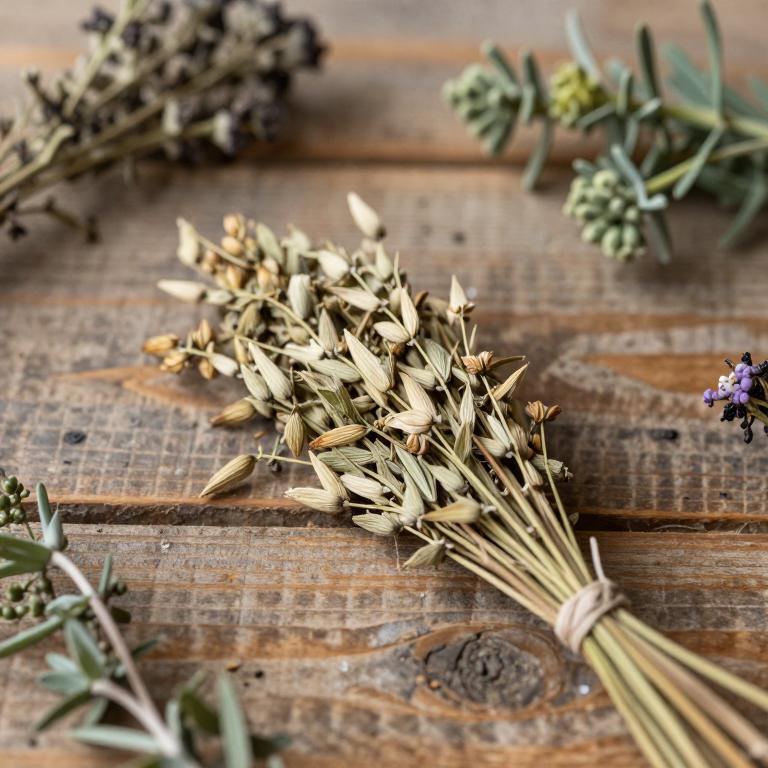
English ryegrass, scientifically known as Lolium perenne, is a versatile perennial grass valued globally. Beyond its primary role in forage and turf management, it holds significant ethnobotanical importance. Historically utilized in traditional medicine, its bioactive compounds offer potential therapeutic properties, making it a subject of growing pharmacological interest.
Names and Synonyms
Common Names
- English ryegrass
- perennial ryegrass
- Common Rye-Grass
- Perennial Rye-Grass
- Perennial Rye
- Strand Wheat
- ray grass
- winter ryegrass
Scientific Names
Accepted name
Lolium perenneSynonyms
- Lolium perenne subsp. stoloniferum
- Lolium perenne subsp. trabutii
- Festuca perennis
- Lolium perenne var. humile
- Lolium perenne var. commune
- Lolium perenne var. orgiale
- Lolium perenne var. paleaceum
- Lolium perenne var. purpurascens
- Lolium perenne subsp. compositum
- Lolium perenne subsp. tenue
- Lolium perenne var. scabriculme
- Lolium tenue
- Lolium perenne subsp. cristatum
- Lolium trabutii
- Lolium perenne var. monstrosum
- Lolium perenne subsp. ramosum
- Lolium perenne var. paniculatum
- Lolium perenne var. angustifolium
- Lolium perenne var. ramosum
- Lolium perenne var. stickneiensis
- Lolium perenne var. stoloniferum
- Lolium perenne var. auriculatum
- Lolium perenne f. microstachyum
- Lolium perenne var. viviparum
- Lolium perenne var. confertum
- Lolium perenne var. whitworthiense
- Lolium perenne var. tenue
- Lolium perenne var. condensatum
- Lolium perenne var. furcatum
- Lolium repens
- Lolium halleri
- Lolium perenne var. geniculatum
- Lolium perenne var. longiglume
- Lolium perenne var. pacyanum
- Lolium perenne var. pauciflorum
- Lolium perenne var. polyanthum
- Lolium perenne var. ramosum
- Lolium cechicum
- Lolium perenne var. russellianum
- Lolium brasilianum
- Lolium perenne var. secundum
- Lolium jechelianum
- Lolium perenne var. sphaerostachuym
- Lolium perenne var. spicatum
- Lolium glumosum
- Lolium perenne var. spurium
- Lolium gmelinii
- Lolium perenne f. polyanthum
- Lolium perenne f. compositum
- Lolium marschallii
- Lolium perenne var. aristulatum
- Lolium perenne var. brasilianum
- Lolium perenne var. compressum
- Lolium perenne var. cristatum
- Lolium perenne f. tenue
Regional and Traditional Names
Spanish:
- Lolium montevidense
- Raigras perenne
- Cesped ingles
- Raigras ingles
- Lolium tenue
- Ballico ingles
- Lolium latum
- Cesped inglés
- Ballica
- Raigras
- Raigrás inglés
- Lolium canadense
- Raigrás perenne
- Raigrás
- Raigrás ingles
- Ballico inglés
- ballico perenne
- césped inglés
- raygras
- raygrás inglés
German:
- Deutsches Weidelgras
- Ausdauerndes Weidelgras
- Ausdauernder Lolch
- Englisches Raygras
- Dauer-Lolch
- Englisches Raigras
- deutsches Weidelgras
- englisches Raygras
- Ausdauerndes Weidelgras
- Ausdauernder Lolch
French:
- Ray-grass anglais
- Ray grass anglais
- ray-grass commun
- ivraie vivace
- ray-grass anglais
- ray-grass commun
- ray-grass d'Angleterre
Sources: Wikidata, Catalogue of Life
Taxonomical Classification
This plant belongs to the kingdom Plantae and the phylum Streptophyta within the class Equisetopsida. It is further classified under the subclass Magnoliidae and the order Poales. Finally, it is a member of the family Poaceae and falls under the genus Lolium.
| Rank | Classification |
|---|---|
| Kingdom | Plantae |
| Phylum | Streptophyta |
| Class | Equisetopsida |
| Subclass | Magnoliidae |
| Order | Poales |
| Family | Poaceae |
| Genus | Lolium |
Sources: The World Checklist of Vascular Plants (WCVP)
Distribution
This plant exhibits a specific distribution pattern across the northern regions of Europe. It can be found growing in the landscapes of Denmark and Finland. Its presence extends to the island territories of Føroyar and Iceland. Furthermore, the species is widely distributed throughout Great Britain. These locations highlight its preference for northern European environments.
| Region | Area |
|---|---|
| Northern Europe | Denmark |
| Northern Europe | Finland |
| Northern Europe | Føroyar |
| Northern Europe | Great Britain |
| Northern Europe | Iceland |
| Northern Europe | Ireland |
| Northern Europe | Norway |
| Northern Europe | Sweden |
| Middle Europe | Austria |
| Middle Europe | Belgium |
Sources: The World Checklist of Vascular Plants (WCVP)
Botanical Identification
Ecology
The ecology of Lolium perenne is characterized by its remarkable adaptability to diverse landscapes, showing a particular affinity for anthropic areas (Área Antrópica) where human activity has modified the terrain. This species exhibits a broad altitudinal distribution, ranging from sea level (0 m AMSL) up to a maximum elevation of 3500 m AMSL. On average, the plant is most commonly encountered at a mean elevation of 1200 m AMSL, reflecting its ability to thrive across a wide range of vertical gradients and environmental conditions.
- Elevational range max:
- 3500 m AMSL
- Elevational range mean:
- 1200 m AMSL
- Elevational range min:
- 0 m AMSL
- Habitat :
- Área Antrópica
Life history
The life history of Lolium perenne is characterized by its classification as a perennial plant, allowing it to persist through multiple growing seasons. Structurally, it functions as a hemicryptophyte, a life form where the perennating buds are located at or just below the soil surface, protected by leaf litter or soil. This species maintains an evergreen status, retaining its green foliage throughout various seasons to maximize photosynthetic efficiency. Its growth habit and survival strategies are rooted in its hemicryptophytic nature, ensuring resilience across its extended lifecycle.
- Deciduousness :
- evergreen
- Life form :
- hemicryptophyte
- Lifecycle :
- perennial
Morphology
The morphology of Lolium perenne is characterized by its growth form as a non-woody, graminoid herb. As a self-supporting plant, it does not exhibit climbing or parasitic behaviors, functioning as an independent organism within its habitat. It is strictly a terrestrial species, lacking aquatic or epiphytic tendencies. In terms of stature, the plant exhibits variable height, with individual specimens typically ranging from a minimum of 0.08 m to a maximum of 0.9 m, resulting in an average plant height of approximately 0.54 m.
- Aquatic :
- terrestrial
- Climber :
- self-supporting
- Epiphyte :
- terrestrial
- Growth form :
- herb
- Growth form :
- graminoid
- Parasite :
- independent
- Plant height max:
- 0.9 m
- Plant height mean:
- 0.541666666666667 m
- Plant height min:
- 0.08 m
- Woodiness :
- non-woody
Physiology
The physiology of Lolium perenne is characterized by a C3 photosynthetic pathway, which dictates its metabolic efficiency and carbon fixation processes. As a non-carnivorous species, it relies entirely on soil-based nutrient uptake rather than the absorption of organic matter through specialized structures. The leaf morphology displays significant variability, with leaf lengths ranging from a minimum of 0.1 cm to a maximum of 15 cm. The leaves are notably narrow, maintaining a mean width of 0.3 cm, with measurements spanning from a minimum of 0.1 cm to a maximum of 0.5 cm, resulting in a mean leaf size of 4.02 cm². Furthermore, the plant exhibits a mean Specific Leaf Area (SLA) of 256.68 cm²/g, a metric that reflects its leaf thickness and its strategy for optimizing light interception and resource allocation.
- Carnivory :
- non-carnivorous
- Leaf length max:
- 15 cm
- Leaf length min:
- 0.1 cm
- Leaf size mean:
- 4.02 cm²
- Leaf width max:
- 0.5 cm
- Leaf width mean:
- 0.3 cm
- Leaf width min:
- 0.1 cm
- Photosynthetic pathway :
- C3
- Specific Leaf Area (SLA) mean:
- 256.68 cm²/g
Reproduction
The reproduction of Lolium perenne is characterized by a sexual process through bisexual flowers, although asexual reproduction is noted as absent. The plant produces a spike-type inflorescence, which varies in length from a minimum of 0.05 m to a maximum of 0.25 m. Flowering typically occurs during the month of June, with flower lengths ranging between 0.4 cm and 0.9 cm. The pollination syndrome is strictly abiotic, relying on wind to facilitate the transfer of pollen, and self-fertilization is absent. Following successful pollination, the plant produces dry fruits that contain a high density of seeds, typically ranging from 101 to 1000 seeds per fruit. The seeds themselves are quite small, with a mean length of 3 mm, a mean width of 1.1 mm, and a mean volume of 1.6 mm³. The seed mass is minimal, averaging approximately 0.0019687975 g, with values ranging from 0.00132 g to 0.00386 g. For dispersal, the species utilizes an anemochorous syndrome, meaning the seeds are dispersed by the wind.
- Dispersal syndrome :
- anemochorous
- Flower length max:
- 0.9 cm
- Flower length min:
- 0.4 cm
- Flowering time :
- Jun
- Fruit dryness :
- dry
- Inflorescence :
- spike
- Inflorescence length max:
- 0.25 m
- Inflorescence length min:
- 0.05 m
- Pollination syndrome :
- wind
- Pollination syndrome :
- abiotic
- Reproduction asexual :
- absent
- Reproduction sexual :
- bisexual
- Seed length mean:
- 3 mm
- Seed mass max:
- 0.00386 g
- Seed mass mean:
- 0.0019687975 g
- Seed mass min:
- 0.00132 g
- Seed volume max:
- 1.6 mm³
- Seed width mean:
- 1.1 mm
- Seeds_per_fruit :
- 101-1000
- Self fertilization :
- absent
Sources: Global Inventory of Floras and Traits (GIFT)
Chemicals
Lolium perenne has 5 reported phytochemicals identified across 0 scientific publications and several other databases. The most consistently reported chemicals include ABA, CD, CU, PB, ZN.
| Chemical | Supporting sources | Consensus |
|---|---|---|
| ABA | 1 supporting sources | ★☆☆☆☆ |
| CD | 1 supporting sources | ★☆☆☆☆ |
| CU | 1 supporting sources | ★☆☆☆☆ |
| PB | 1 supporting sources | ★☆☆☆☆ |
| ZN | 1 supporting sources | ★☆☆☆☆ |
ABA
- Plant physiology and biochemistry : PPB
CD
- Huan jing ke xue= Huanjing kexue
CU
- Huan jing ke xue= Huanjing kexue
PB
- Huan jing ke xue= Huanjing kexue
ZN
- Huan jing ke xue= Huanjing kexue
Activities
Lolium perenne has 2 reported activities identified across 0 scientific publications and several other databases. The most consistently reported activities include Antidiabetic, Antioxidant.
| Activity | Supporting sources | Consensus |
|---|---|---|
| Antidiabetic | 1 supporting sources | ★☆☆☆☆ |
| Antioxidant | 1 supporting sources | ★☆☆☆☆ |
Antidiabetic
- Molecules (Basel, Switzerland)
Antioxidant
- Molecules (Basel, Switzerland)
Conditions
Lolium perenne has 1 reported investigations on conditions identified across 0 scientific publications and several other databases. The most consistently reported conditions include heat stress.
| Condition | Supporting sources | Consensus |
|---|---|---|
| Heat stress | 1 supporting sources | ★☆☆☆☆ |
Heat stress
- Plants (Basel, Switzerland)