Common Eightday Curebush
Lobostemon fruticosus · Accepted scientific name
Scientific literature: Very Sparse (16 studies) · ★☆☆☆☆
Common Eightday Curebush, scientifically known as Lobostemon fruticosus, is a resilient shrub native to South Africa. Renowned for its potent medicinal properties, it is traditionally used to treat various ailments. This hardy plant plays a vital role in indigenous healing practices, offering significant therapeutic potential in natural medicine.
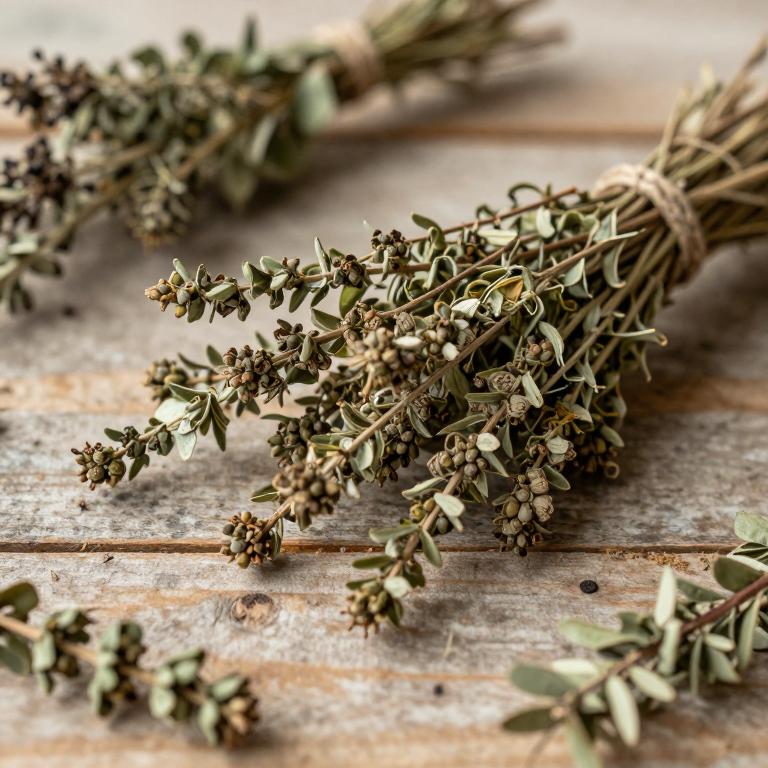
Names and Synonyms
Common Names
- Common Eightday Curebush
- Eightday Healthbush
- Pyjama
- Pyjama Bush
Scientific Names
Accepted name
Lobostemon fruticosusSynonyms
- Lobostemon obovatus
- Echium fruticosum var. minor
- Echium africanum
- Lobostemon lasiophyllus
- Echium bergianum
- Lobostemon scaber
- Echium frondosum
- Echium fruticosum
- Lobostemon fruticosus var. bergianus
- Echium lasiophyllum
- Echium obovatum
- Echium scabrum
Sources: Wikidata, Catalogue of Life
Taxonomical Classification
This plant belongs to the kingdom Plantae and the phylum Streptophyta, falling under the class Equisetopsida and subclass Magnoliidae. Within the order Boraginales and the family Boraginaceae, it is classified under the genus Lobostemon. Specifically, the species is identified as Lobostemon fruticosus.
| Rank | Classification |
|---|---|
| Kingdom | Plantae |
| Phylum | Streptophyta |
| Class | Equisetopsida |
| Subclass | Magnoliidae |
| Order | Boraginales |
| Family | Boraginaceae |
| Genus | Lobostemon |
Sources: The World Checklist of Vascular Plants (WCVP)
Distribution
This plant is a species native to a specific region within the southern part of the African continent. Its primary geographical distribution is concentrated within the Cape Provinces of South Africa. Within this area, it thrives in the unique ecological conditions provided by the local climate and soil. The range of Lobostemon fruticosus is therefore quite localized to these southern coastal and inland territories. Understanding this specific habitat is essential for studying the natural occurrence of the species.
| Region | Area |
|---|---|
| Southern Africa | Cape Provinces |
Sources: The World Checklist of Vascular Plants (WCVP)
Botanical Identification
Ecology
The ecology of Lobostemon fruticosus is characterized by its ability to inhabit a diverse range of altitudinal gradients, allowing it to occupy various ecological niches within its native landscape. This species demonstrates significant environmental plasticity, thriving in habitats that span from low-lying areas at a minimum elevation of 30 m AMSL to much higher montane regions, reaching a maximum elevation of 1372 m AMSL. This broad elevational range suggests that the plant is adapted to a variety of microclimates, including different temperature regimes, moisture availability, and atmospheric pressures encountered between sea level and sub-montane zones. Such a wide distribution pattern typically indicates a resilience to varying soil compositions and light availability, enabling it to persist across a complex topographical spectrum.
- Elevational range max:
- 1372 m AMSL
- Elevational range min:
- 30 m AMSL
Life history
The life history of Lobostemon fruticosus is characterized by its status as a perennial organism, allowing it to persist in its environment over multiple growing seasons. Unlike annuals that complete their life cycle in a single year or biennials that require two, this plant maintains a long-term presence, often establishing stable woody or semi-woody structures that support continuous growth and reproductive efforts. This perennial nature enables it to adapt to seasonal fluctuations and invest energy into sustained physiological processes, ensuring its longevity within its natural habitat.
- Lifecycle :
- perennial
Morphology
The morphology of Lobostemon fruticosus is characterized by a shrubby growth form, exhibiting a woody structure that defines its physical development. This plant typically reaches a height ranging from a minimum of 0.5 m to a maximum of 0.8 m. As a self-supporting species, it does not require external structures for climbing, maintaining its upright posture through its own woody stems. In terms of its ecological habitat and life strategy, it is categorized as a terrestrial plant, functioning as an independent organism rather than acting as a parasite or an epiphyte. While its growth patterns are adapted to terrestrial environments, its physiological classification spans the spectrum of aquatic, semiaquatic, and terrestrial niches, though it primarily manifests as a terrestrial shrub.
- Aquatic :
- terrestrial
- Climber :
- self-supporting
- Epiphyte :
- terrestrial
- Growth form :
- shrub
- Parasite :
- independent
- Plant height max:
- 0.8 m
- Plant height min:
- 0.5 m
- Woodiness :
- woody
Sources: Global Inventory of Floras and Traits (GIFT)
Plant Parts
Lobostemon fruticosus has 1 reported plant parts identified across 1 scientific publications and several other databases that are studied for medicinal purposes. The most consistently reported plant part include leaf.
| Plant part | Supporting sources | Consensus |
|---|---|---|
| Leaf | 1 supporting sources | ★☆☆☆☆ |
Leaf
- Journal of ethnopharmacology
Chemicals
Lobostemon fruticosus has 6 reported phytochemicals identified across 1 scientific publications and several other databases. The most consistently reported chemicals include GLOBOIDNAN B, Globoidnan A, RUTIN, Rabdosiin, Sagerinic acid.
| Chemical | Supporting sources | Consensus |
|---|---|---|
| GLOBOIDNAN B | 1 supporting sources | ★☆☆☆☆ |
| Globoidnan A | 1 supporting sources | ★☆☆☆☆ |
| RUTIN | 1 supporting sources | ★☆☆☆☆ |
| Rabdosiin | 1 supporting sources | ★☆☆☆☆ |
| Sagerinic acid | 1 supporting sources | ★☆☆☆☆ |
| rosmarinic acid | 1 supporting sources | ★☆☆☆☆ |
GLOBOIDNAN B
- Journal of ethnopharmacology
Globoidnan A
- Journal of ethnopharmacology
RUTIN
- Journal of ethnopharmacology
Rabdosiin
- Journal of ethnopharmacology
Sagerinic acid
- Journal of ethnopharmacology
rosmarinic acid
- Journal of ethnopharmacology
Activities
Lobostemon fruticosus has 2 reported activities identified across 1 scientific publications and several other databases. The most consistently reported activities include Antibacterial, Antiviral.
| Activity | Supporting sources | Consensus |
|---|---|---|
| Antibacterial | 1 supporting sources | ★☆☆☆☆ |
| Antiviral | 1 supporting sources | ★☆☆☆☆ |
Antibacterial
- Journal of ethnopharmacology
Antiviral
- Journal of ethnopharmacology
Conditions
Lobostemon fruticosus has 5 reported investigations on conditions identified across 1 scientific publications and several other databases. The most consistently reported conditions include burns, eczema, erysipelas, ringworm, wounds.
| Condition | Supporting sources | Consensus |
|---|---|---|
| Burns | 1 supporting sources | ★☆☆☆☆ |
| Eczema | 1 supporting sources | ★☆☆☆☆ |
| Erysipelas | 1 supporting sources | ★☆☆☆☆ |
| Ringworm | 1 supporting sources | ★☆☆☆☆ |
| Wounds | 1 supporting sources | ★☆☆☆☆ |
Burns
- Journal of ethnopharmacology
Eczema
- Journal of ethnopharmacology
Erysipelas
- Journal of ethnopharmacology
Ringworm
- Journal of ethnopharmacology
Wounds
- Journal of ethnopharmacology
Preparations
Lobostemon fruticosus has 2 reported preparations identified across 1 scientific publications and several other databases. The most consistently reported preparations include acetone extract, crude extract.
| Preparation | Supporting sources | Consensus |
|---|---|---|
| Acetone extract | 1 supporting sources | ★☆☆☆☆ |
| Crude extract | 1 supporting sources | ★☆☆☆☆ |
Acetone extract
- Journal of ethnopharmacology
Crude extract
- Journal of ethnopharmacology