Litsea rotundifolia var. oblongifolia
Litsea rotundifolia var. oblongifolia · Accepted scientific name
Scientific literature: Very Sparse (2 studies) · ★☆☆☆☆
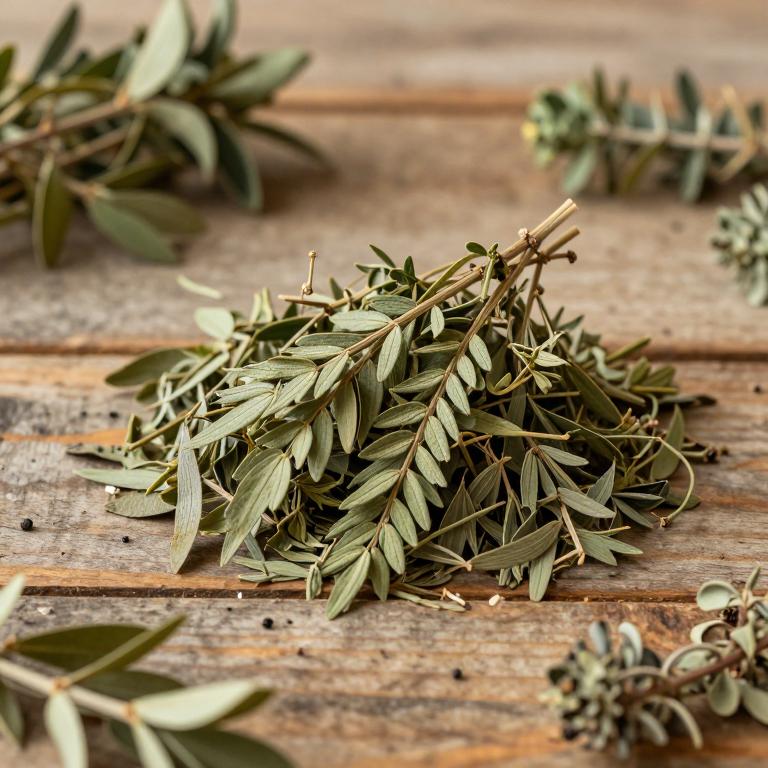
, scientifically known as Litsea rotundifolia var. oblongifolia, is a significant medicinal plant valued for its unique therapeutic properties. Belonging to the Lauraceae family, this variety is recognized for its aromatic leaves, which are traditionally utilized in various herbal remedies to promote healing, alleviate discomfort, and support overall wellness.
- Family
- Lauraceae
- Native range
- Asia-Temperate
- Parts used
- Root
- Common names
- Not available
- Scientific synonyms
- Iozoste Rotundifolia Var. Oblongifolia · Actinodaphne Chinensis Var. Oblongifolia
Names and Synonyms
Scientific Names
Accepted name
Litsea rotundifolia var. oblongifoliaSynonyms
- Iozoste rotundifolia var. oblongifolia
- Actinodaphne chinensis var. oblongifolia
Sources: Wikidata, Catalogue of Life
Taxonomical Classification
This plant belongs to the kingdom Plantae and the phylum Streptophyta, falling under the class Equisetopsida and subclass Magnoliidae. It is further classified within the order Laurales and the family Lauraceae. Specifically, it is a variety of the genus Litsea, identified as Litsea rotundifolia var. oblongifolia.
| Rank | Classification |
|---|---|
| Kingdom | Plantae |
| Phylum | Streptophyta |
| Class | Equisetopsida |
| Subclass | Magnoliidae |
| Order | Laurales |
| Family | Lauraceae |
| Genus | Litsea |
Sources: The World Checklist of Vascular Plants (WCVP)
Distribution
This plant exhibits a specific distribution across several key regions in East and Southeast Asia. Within China, its presence is documented in the southeastern territories as well as on the island of Hainan. Moving toward Eastern Asia, the species is also found growing in Taiwan. Its range extends into the Indo-China peninsula, specifically inhabiting parts of Laos. Finally, the geographical footprint of this variety includes the country of Vietnam.
| Region | Area |
|---|---|
| China | Hainan |
| China | China Southeast |
| Eastern Asia | Taiwan |
| Indo-China | Laos |
| Indo-China | Vietnam |
Sources: The World Checklist of Vascular Plants (WCVP)
Plant Parts
Litsea rotundifolia var. oblongifolia has 1 reported plant parts identified across 1 scientific publications and several other databases that are studied for medicinal purposes. The most consistently reported plant part include root.
| Plant part | Supporting sources | Consensus |
|---|---|---|
| Root | 1 supporting sources | ★☆☆☆☆ |
Root
- Zhong yao cai = Zhongyaocai = Journal of Chinese medicinal materials
Chemicals
Litsea rotundifolia var. oblongifolia has 1 reported phytochemicals identified across 1 scientific publications and several other databases. The most consistently reported chemicals include Terpenoids.
| Chemical | Supporting sources | Consensus |
|---|---|---|
| Terpenoids | 1 supporting sources | ★☆☆☆☆ |
Terpenoids
- Zhong yao cai = Zhongyaocai = Journal of Chinese medicinal materials
Preparations
Litsea rotundifolia var. oblongifolia has 1 reported preparations identified across 1 scientific publications and several other databases. The most consistently reported preparations include essential oil from roots.
| Preparation | Supporting sources | Consensus |
|---|---|---|
| Essential oil from roots | 1 supporting sources | ★☆☆☆☆ |
Essential oil from roots
- Zhong yao cai = Zhongyaocai = Journal of Chinese medicinal materials