Litsea coreana
Litsea coreana · Accepted scientific name
Scientific literature: Very Sparse (19 studies) · ★☆☆☆☆
Litsea coreana, scientifically known as Litsea coreana, is a versatile medicinal plant valued in traditional healing practices. Native to East Asian regions, it features aromatic foliage often used to treat respiratory ailments and skin irritations. Its unique chemical properties offer significant therapeutic potential for modern pharmacological research and herbal wellness.
- Family
- Lauraceae
- Native range
- Asia-Temperate
- Parts used
- Not available
- Common names
- Not available
- Scientific synonyms
- Not available
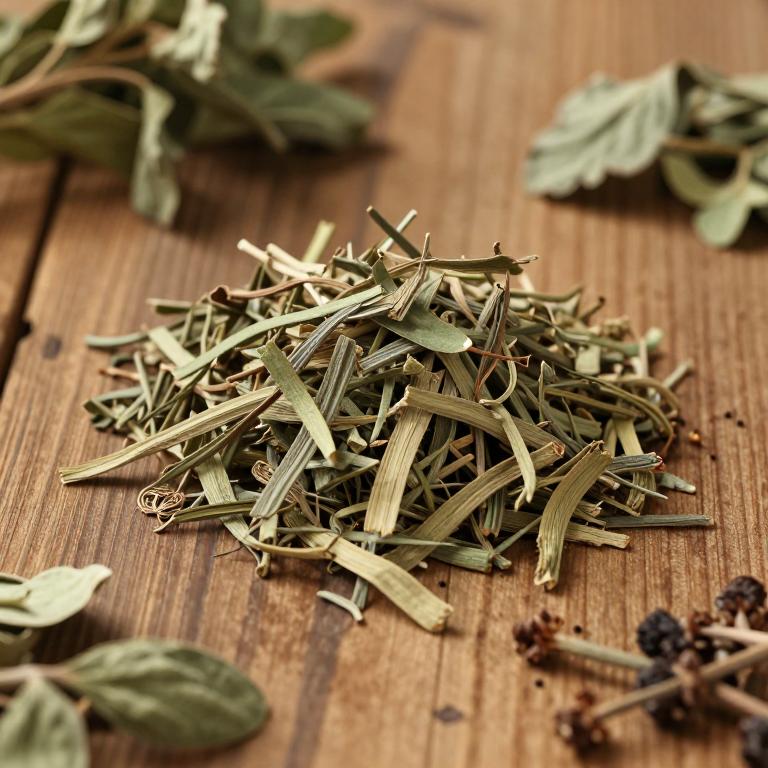
Names and Synonyms
Scientific Names
Accepted name
Litsea coreanaSources: Wikidata, Catalogue of Life
Taxonomical Classification
This plant belongs to the kingdom Plantae within the phylum Streptophyta and the class Equisetopsida. It is further classified under the subclass Magnoliidae in the order Laurales, falling into the family Lauraceae. Finally, it is identified by the genus Litsea as the species Litsea coreana.
| Rank | Classification |
|---|---|
| Kingdom | Plantae |
| Phylum | Streptophyta |
| Class | Equisetopsida |
| Subclass | Magnoliidae |
| Order | Laurales |
| Family | Lauraceae |
| Genus | Litsea |
Sources: The World Checklist of Vascular Plants (WCVP)
Distribution
This plant exhibits a broad distribution across several key regions of Eastern Asia. Within China, it is specifically found in both the South-Central and Southeast territories. Its presence extends across the Korean Peninsula, covering the area identified as Korea. The species is also widely distributed throughout Japan within the Eastern Asian region. Finally, its geographical range includes the island of Taiwan.
| Region | Area |
|---|---|
| China | China South-Central |
| China | China Southeast |
| Eastern Asia | Japan |
| Eastern Asia | Korea |
| Eastern Asia | Taiwan |
| Indo-China | Vietnam |
Sources: The World Checklist of Vascular Plants (WCVP)
Botanical Identification
Life history
The life history of Litsea coreana is characterized by its nature as a perennial plant, allowing it to persist through multiple growing seasons and establish a stable presence in its natural habitat. Throughout its development, it maintains an evergreen status, ensuring that its foliage remains lush and functional year-round without the seasonal shedding of leaves typical of deciduous species. This combination of a long-lived lifecycle and continuous leaf retention supports its steady physiological processes and long-term survival in its ecological niche.
- Deciduousness :
- evergreen
- Lifecycle :
- perennial
Morphology
The morphology of Litsea coreana is characterized by its growth form as a woody tree, exhibiting a self-supporting structure rather than functioning as a climber or vine. As a terrestrial species, it grows independently without being an epiphyte or a parasite. The plant displays significant vertical development, with its height ranging from a minimum of 8 meters to a maximum of 15 meters, maintaining an average plant height of approximately 11.5 meters.
- Aquatic :
- terrestrial
- Climber :
- self-supporting
- Epiphyte :
- terrestrial
- Growth form :
- tree
- Parasite :
- independent
- Plant height max:
- 15 m
- Plant height mean:
- 11.5 m
- Plant height min:
- 8 m
- Woodiness :
- woody
Physiology
The physiology of Litsea coreana is characterized by a C3 photosynthetic pathway, which dictates its carbon fixation processes and metabolic efficiency. Its leaf morphology is defined by an elliptic form with entire margins and a complete absence of thorns or spines. The leaves exhibit significant dimensional variability, with lengths ranging from a minimum of 4.5 cm to a maximum of 9.5 cm, maintaining a mean length of 7 cm. Correspondingly, the leaf width fluctuates between a minimum of 1.4 cm and a maximum of 4 cm, with an average width of 2.7 cm. Furthermore, the plant displays a consistent Specific Leaf Area (SLA) of 117.2423372 cm²/g, reflecting its structural investment in leaf tissue density and surface area optimization for light interception.
- Leaf form :
- elliptic
- Leaf length max:
- 9.5 cm
- Leaf length mean:
- 7 cm
- Leaf length min:
- 4.5 cm
- Leaf margin :
- entire
- Leaf spines :
- no
- Leaf thorns :
- no
- Leaf width max:
- 4 cm
- Leaf width mean:
- 2.7 cm
- Leaf width min:
- 1.4 cm
- Photosynthetic pathway :
- C3
- Specific Leaf Area (SLA) min:
- 117.2423372 cm²/g
Reproduction
The reproduction of Litsea coreana is characterized by the production of small, relatively uniform fruits that exhibit specific morphological dimensions. The fruit dimensions are quite consistent, with the length and width following a very similar range. Specifically, the fruit length typically reaches a mean value of 0.75 cm, with measurements ranging from a minimum of 0.7 cm to a maximum of 0.8 cm. Similarly, the fruit width displays a corresponding pattern, maintaining a mean size of 0.75 cm, while the width dimensions vary from a minimum of 0.7 cm to a maximum of 0.8 cm. This high level of symmetry between the length and width parameters indicates that the fruits are nearly spherical or globular in shape.
- Fruit length max:
- 0.8 cm
- Fruit length mean:
- 0.75 cm
- Fruit length min:
- 0.7 cm
- Fruit width max:
- 0.8 cm
- Fruit width mean:
- 0.75 cm
- Fruit width min:
- 0.7 cm
Sources: Global Inventory of Floras and Traits (GIFT)
Chemicals
Litsea coreana has 5 reported phytochemicals identified across 0 scientific publications and several other databases. The most consistently reported chemicals include Astragalin, Flavonoids, Hyperoside, Isoquercitrin, polyphenols.
| Chemical | Supporting sources | Consensus |
|---|---|---|
| Astragalin | 1 supporting sources | ★☆☆☆☆ |
| Flavonoids | 1 supporting sources | ★☆☆☆☆ |
| Hyperoside | 1 supporting sources | ★☆☆☆☆ |
| Isoquercitrin | 1 supporting sources | ★☆☆☆☆ |
| polyphenols | 1 supporting sources | ★☆☆☆☆ |
Astragalin
- Molecules (Basel, Switzerland)
Flavonoids
- Pharmaceutical biology
Hyperoside
- Molecules (Basel, Switzerland)
Isoquercitrin
- Molecules (Basel, Switzerland)
polyphenols
- Pharmaceutical biology
Activities
Litsea coreana has 1 reported activities identified across 0 scientific publications and several other databases. The most consistently reported activities include Antibacterial.
| Activity | Supporting sources | Consensus |
|---|---|---|
| Antibacterial | 1 supporting sources | ★☆☆☆☆ |
Antibacterial
- Pharmaceutical biology
Conditions
Litsea coreana has 6 reported investigations on conditions identified across 0 scientific publications and several other databases. The most consistently reported conditions include Leptin, free fatty acid, hyperlipidemia, impaired glucose tolerance, insulin resistance.
| Condition | Supporting sources | Consensus |
|---|---|---|
| Leptin | 1 supporting sources | ★☆☆☆☆ |
| Free fatty acid | 1 supporting sources | ★☆☆☆☆ |
| Hyperlipidemia | 1 supporting sources | ★☆☆☆☆ |
| Impaired glucose tolerance | 1 supporting sources | ★☆☆☆☆ |
| Insulin resistance | 1 supporting sources | ★☆☆☆☆ |
| Liver diseases | 1 supporting sources | ★☆☆☆☆ |
Leptin
- Zhong yao cai = Zhongyaocai = Journal of Chinese medicinal materials
Free fatty acid
- Zhong yao cai = Zhongyaocai = Journal of Chinese medicinal materials
Hyperlipidemia
- Zhong yao cai = Zhongyaocai = Journal of Chinese medicinal materials
Impaired glucose tolerance
- Zhong yao cai = Zhongyaocai = Journal of Chinese medicinal materials
Insulin resistance
- Zhong yao cai = Zhongyaocai = Journal of Chinese medicinal materials
Liver diseases
- Phytotherapy research : PTR
Preparations
Litsea coreana has 4 reported preparations identified across 0 scientific publications and several other databases. The most consistently reported preparations include eagle tea, hawk tea, laoying cha, total flavonoids of Litsea coreana (TFLC).
| Preparation | Supporting sources | Consensus |
|---|---|---|
| Eagle tea | 1 supporting sources | ★☆☆☆☆ |
| Hawk tea | 1 supporting sources | ★☆☆☆☆ |
| Laoying cha | 1 supporting sources | ★☆☆☆☆ |
| Total flavonoids of litsea coreana (tflc) | 1 supporting sources | ★☆☆☆☆ |
Eagle tea
- Pharmaceutical biology
Hawk tea
- Pharmaceutical biology
Laoying cha
- Pharmaceutical biology
Total flavonoids of litsea coreana (tflc)
- Zhong yao cai = Zhongyaocai = Journal of Chinese medicinal materials