Lithraea molleoides
Lithraea molleoides · Accepted scientific name
Scientific literature: Very Sparse (23 studies) · ★☆☆☆☆
, scientifically known as Lithraea molleoides, is a versatile medicinal tree native to South America. Commonly referred to as "mopa-mopa," its bark and resin are prized in traditional medicine for their potent anti-inflammatory, antiseptic, and healing properties, frequently used to treat skin ailments, respiratory issues, and various inflammatory conditions.
- Family
- Anacardiaceae
- Native range
- Africa
- Parts used
- Leaf
- Common names
- Not available
- Scientific synonyms
- Lithraea Ternifolia · Rhus Clausseniana · 9 more
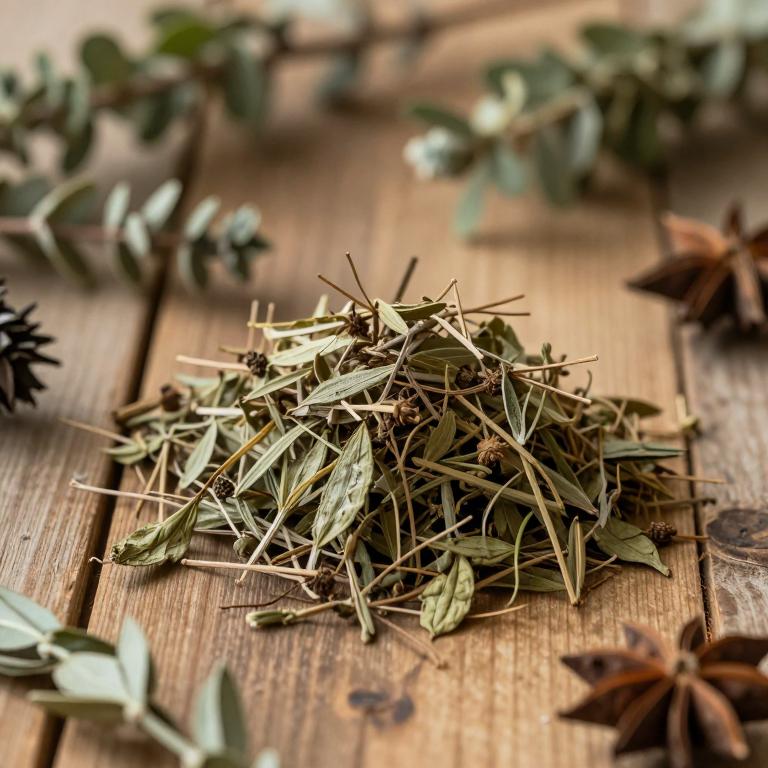
Names and Synonyms
Scientific Names
Accepted name
Lithraea molleoidesSynonyms
- Lithraea ternifolia
- Rhus clausseniana
- Schinus ternifolia
- Rhus commersonii
- Rhus meridionalis
- Lithraea gilliesii
- Lithraea lorentzii
- Schinus molleoides
- Lithraea aroeirinha
- Schinus terebinthifolia var. ternifolia
- Lithraea molleoides var. lorentziana
Regional and Traditional Names
Spanish:
- Molle de beber
- chichita
Sources: Wikidata, Catalogue of Life
Taxonomical Classification
This plant belongs to the kingdom Plantae and is classified under the phylum Streptophyta within the class Equisetopsida. It is further categorized under the subclass Magnoliidae and the order Sapindales, falling into the family Anacardiaceae. Finally, it is identified by its specific genus, Lithraea.
| Rank | Classification |
|---|---|
| Kingdom | Plantae |
| Phylum | Streptophyta |
| Class | Equisetopsida |
| Subclass | Magnoliidae |
| Order | Sapindales |
| Family | Anacardiaceae |
| Genus | Lithraea |
Sources: The World Checklist of Vascular Plants (WCVP)
Distribution
This plant exhibits a remarkably wide and fragmented geographical distribution across several continents. In Northern Africa, its presence can be identified within the borders of Tunisia. Moving across the Atlantic, it is found in the Southwestern United States, specifically in California, as well as throughout Mexico Central. The species also extends into Western South America, where it inhabits regions of Bolivia. Finally, its range includes the West-Central portion of Brazil.
| Region | Area |
|---|---|
| Northern Africa | Tunisia |
| Southwestern U.S.A. | California |
| Mexico | Mexico Central |
| Western South America | Bolivia |
| Brazil | Brazil West-Central |
| Brazil | Brazil Northeast |
| Brazil | Brazil Southeast |
| Brazil | Brazil South |
| Southern South America | Argentina Northeast |
| Southern South America | Argentina Northwest |
Sources: The World Checklist of Vascular Plants (WCVP)
Botanical Identification
Ecology
The ecology of Lithraea molleoides is characterized by a broad altitudinal distribution, spanning from sea level (0 m AMSL) to high-altitude regions reaching up to 2500 m AMSL. This species demonstrates significant adaptability to varying topographical gradients, allowing it to inhabit diverse ecological niches across a wide vertical range. In terms of preferred environment, it is notably found within the Cerrado biome, where it integrates into the specific soil and climatic conditions unique to these tropical savanna ecosystems.
- Elevational range max:
- 2500 m AMSL
- Elevational range min:
- 0 m AMSL
- Habitat :
- Cerrado
Life history
The life history of Lithraea molleoides is characterized by a perennial lifecycle, allowing the individual to persist across multiple growing seasons. As a phanerophyte, its regenerative buds are located high above the ground on woody stems, a structural adaptation typical of trees or large shrubs. This species maintains an evergreen deciduousness, retaining its foliage throughout the year to facilitate continuous photosynthetic activity.
- Deciduousness :
- evergreen
- Life form :
- phanerophyte
- Lifecycle :
- perennial
Morphology
The morphology of Lithraea molleoides is characterized by a woody growth form, specifically manifesting as a self-supporting tree. As a terrestrial organism, it does not exhibit aquatic or semiaquatic tendencies, nor does it function as an epiphyte or a parasite, maintaining an independent lifestyle. The plant typically reaches a height with a mean stature of approximately 10 m. In terms of its structural habit, it is classified as a self-supporting tree rather than a climber, liana, or vine, ensuring its stability through its robust, woody development.
- Aquatic :
- terrestrial
- Climber :
- self-supporting
- Epiphyte :
- terrestrial
- Growth form :
- tree
- Parasite :
- independent
- Plant height mean:
- 10 m
- Woodiness :
- woody
Physiology
The physiology of Lithraea molleoides is characterized by a C3 photosynthetic pathway, a mechanism where carbon fixation occurs primarily through the enzyme Rubisco during the Calvin cycle, typically optimized for environments where water availability is sufficient to allow stomatal conductance. In terms of nutrient cycling and symbiotic relationships, this species is not a nitrogen fixer, meaning it lacks the specialized root nodules containing diazotrophic bacteria necessary to convert atmospheric nitrogen into bioavailable forms, and instead relies on the uptake of nitrogenous compounds directly from the soil matrix.
- Nitrogen fixer :
- no
- Photosynthetic pathway :
- C3
Reproduction
The reproduction of Lithraea molleoides is characterized by a biotic pollination syndrome, primarily facilitated by insects, with specific involvement from bees to ensure successful fertilization. Following pollination, the plant produces fleshy fruits that serve as the vessel for its progeny. The seeds contained within these fruits exhibit a highly consistent morphology, maintaining a uniform seed volume with a minimum, maximum, and mean value of 21 mm³.
- Fruit dryness :
- fleshy
- Pollination syndrome :
- insect
- Pollination syndrome :
- bee
- Pollination syndrome :
- biotic
- Seed volume max:
- 21 mm³
Sources: Global Inventory of Floras and Traits (GIFT)
Plant Parts
Lithraea molleoides has 1 reported plant parts identified across 1 scientific publications and several other databases that are studied for medicinal purposes. The most consistently reported plant part include leaf.
| Plant part | Supporting sources | Consensus |
|---|---|---|
| Leaf | 1 supporting sources | ★☆☆☆☆ |
Leaf
- Phytomedicine : international journal of phytotherapy and phytopharmacology
Chemicals
Lithraea molleoides has 8 reported phytochemicals identified across 1 scientific publications and several other databases. The most consistently reported chemicals include (Z,Z)-5-(Trideca-4,7-dienyl)resorcinol, 1,3-dihydroxy-5-(tridec-4',7'-dienyl)benzene, Gallic acid, RUTIN, caffeic acid.
| Chemical | Supporting sources | Consensus |
|---|---|---|
| (Z,Z)-5-(Trideca-4,7-dienyl)resorcinol | 1 supporting sources | ★☆☆☆☆ |
| 1,3-dihydroxy-5-(tridec-4',7'-dienyl)benzene | 1 supporting sources | ★☆☆☆☆ |
| Gallic acid | 1 supporting sources | ★☆☆☆☆ |
| RUTIN | 1 supporting sources | ★☆☆☆☆ |
| caffeic acid | 1 supporting sources | ★☆☆☆☆ |
| catechol | 1 supporting sources | ★☆☆☆☆ |
| ferulic acid | 1 supporting sources | ★☆☆☆☆ |
| mannitol | 1 supporting sources | ★☆☆☆☆ |
(Z,Z)-5-(Trideca-4,7-dienyl)resorcinol
- Journal of natural products
1,3-dihydroxy-5-(tridec-4',7'-dienyl)benzene
- Phytomedicine : international journal of phytotherapy and phytopharmacology
Gallic acid
- Journal of ethnopharmacology
RUTIN
- Journal of ethnopharmacology
caffeic acid
- Journal of ethnopharmacology
catechol
- Journal of ethnopharmacology
ferulic acid
- Journal of ethnopharmacology
mannitol
- Journal of ethnopharmacology
Activities
Lithraea molleoides has 6 reported activities identified across 1 scientific publications and several other databases. The most consistently reported activities include Antiarthritic, Antiseptic, Antiulcer, Antiulcerogenic, Diuretic.
| Activity | Supporting sources | Consensus |
|---|---|---|
| Antiarthritic | 1 supporting sources | ★☆☆☆☆ |
| Antiseptic | 1 supporting sources | ★☆☆☆☆ |
| Antiulcer | 1 supporting sources | ★☆☆☆☆ |
| Antiulcerogenic | 1 supporting sources | ★☆☆☆☆ |
| Diuretic | 1 supporting sources | ★☆☆☆☆ |
| Tonic | 1 supporting sources | ★☆☆☆☆ |
Antiarthritic
- Phytotherapy research : PTR
Antiseptic
- Journal of ethnopharmacology
Antiulcer
- Journal of ethnopharmacology
Antiulcerogenic
- Journal of ethnopharmacology
Diuretic
- Phytotherapy research : PTR
Tonic
- Phytotherapy research : PTR
Conditions
Lithraea molleoides has 7 reported investigations on conditions identified across 1 scientific publications and several other databases. The most consistently reported conditions include Chlamydia pneumoniae, Chlamydia trachomatis, Helicobacter pylori, diuretic, gastric ulcers.
| Condition | Supporting sources | Consensus |
|---|---|---|
| Chlamydia pneumoniae | 1 supporting sources | ★☆☆☆☆ |
| Chlamydia trachomatis | 1 supporting sources | ★☆☆☆☆ |
| Helicobacter pylori | 1 supporting sources | ★☆☆☆☆ |
| Diuretic | 1 supporting sources | ★☆☆☆☆ |
| Gastric ulcers | 1 supporting sources | ★☆☆☆☆ |
| Infectious diseases | 1 supporting sources | ★☆☆☆☆ |
| Respiratory diseases | 1 supporting sources | ★☆☆☆☆ |
Chlamydia pneumoniae
- Heliyon
Chlamydia trachomatis
- Heliyon
Helicobacter pylori
- Journal of ethnopharmacology
Diuretic
- Phytotherapy research : PTR
Gastric ulcers
- Journal of ethnopharmacology
Infectious diseases
- Journal of ethnopharmacology
Respiratory diseases
- Phytotherapy research : PTR
Preparations
Lithraea molleoides has 4 reported preparations identified across 1 scientific publications and several other databases. The most consistently reported preparations include MeOH-CH(2)Cl(2) extract, Methanolic extract, aqueous extracts, dichloromethane extract.
| Preparation | Supporting sources | Consensus |
|---|---|---|
| Meoh-ch(2)cl(2) extract | 1 supporting sources | ★☆☆☆☆ |
| Methanolic extract | 1 supporting sources | ★☆☆☆☆ |
| Aqueous extracts | 1 supporting sources | ★☆☆☆☆ |
| Dichloromethane extract | 1 supporting sources | ★☆☆☆☆ |
Meoh-ch(2)cl(2) extract
- Journal of natural products
Methanolic extract
- Journal of ethnopharmacology
Aqueous extracts
- Journal of ethnopharmacology
Dichloromethane extract
- Phytomedicine : international journal of phytotherapy and phytopharmacology