Chinese sweet-tea
Lithocarpus litseifolius · Accepted scientific name
Scientific literature: Very Sparse (25 studies) · ★☆☆☆☆
Chinese sweet-tea, scientifically known as Lithocarpus litseifolius, is a significant medicinal plant valued in traditional practices. Known for its unique botanical properties, this species is often utilized for its potential therapeutic benefits. Understanding its chemical composition and ecological importance provides vital insights into its role in natural pharmacology.
- Family
- Fagaceae
- Native range
- Asia-Temperate
- Parts used
- Not available
- Common names
- Chinese Sweet-Tea
- Scientific synonyms
- Quercus Synbalanos · Lithocarpus Synbalanos · 10 more
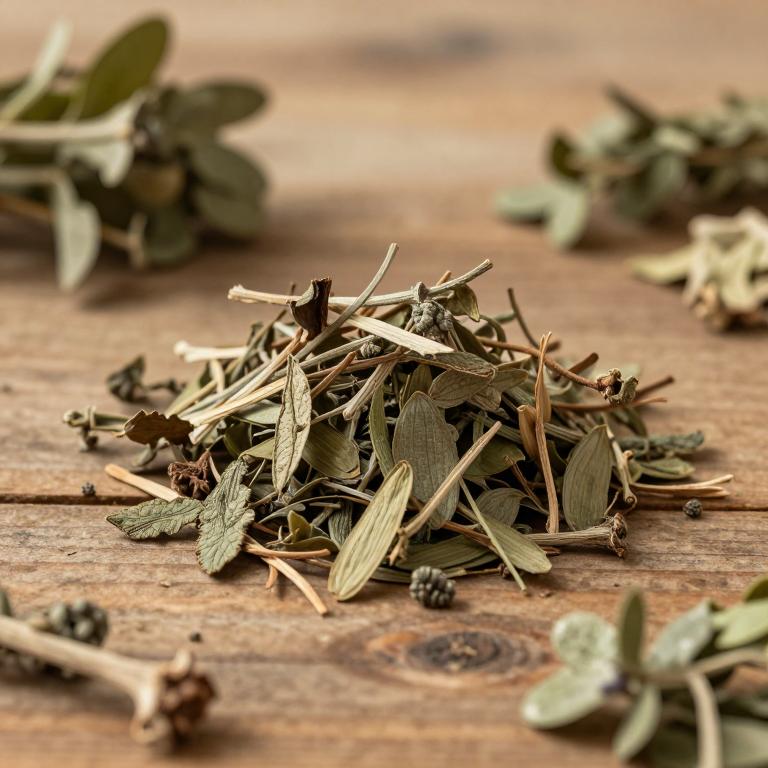
Names and Synonyms
Common Names
- Chinese sweet-tea
Scientific Names
Accepted name
Lithocarpus litseifoliusSynonyms
- Quercus synbalanos
- Lithocarpus synbalanos
- Pasania litseifolia
- Quercus litseifolia
- Pasania mucronata
- Lithocarpus mucronatus
- Pasania lysistachya
- Pasania synbalanos
- Pasania wenshanensis
- Lithocarpus litseifolius var. pubescens
- Synaedrys litseifolia
- Synaedrys synbalanos
Sources: Wikidata, Catalogue of Life
Taxonomical Classification
This plant belongs to the kingdom Plantae and the phylum Streptophyta, falling under the class Equisetopsida and subclass Magnoliidae. Within the order Fagales, it is classified under the family Fagaceae and the genus Lithocarpus. Together, these taxonomic levels identify the specific biological lineage of Lithocarpus litseifolius.
| Rank | Classification |
|---|---|
| Kingdom | Plantae |
| Phylum | Streptophyta |
| Class | Equisetopsida |
| Subclass | Magnoliidae |
| Order | Fagales |
| Family | Fagaceae |
| Genus | Lithocarpus |
Sources: The World Checklist of Vascular Plants (WCVP)
Distribution
This plant exhibits a broad geographical distribution across several key regions in Asia. In China, its presence is documented throughout the South-Central, Southeast, and Hainan areas. Its range extends into the Indian Subcontinent, specifically within the state of Assam. Additionally, the species can be found within the Indo-China region, particularly in Laos. Together, these locations highlight the plant's ability to thrive in diverse subtropical environments.
| Region | Area |
|---|---|
| China | China South-Central |
| China | Hainan |
| China | China Southeast |
| Indian Subcontinent | Assam |
| Indo-China | Laos |
| Indo-China | Myanmar |
| Indo-China | Vietnam |
Sources: The World Checklist of Vascular Plants (WCVP)
Botanical Identification
Ecology
The ecology of Lithocarpus litseifolius is characterized by a highly specialized and narrow altitudinal distribution within its native habitat. This species is strictly confined to high-altitude environments, exhibiting a precise elevational range that lacks significant vertical variation. Specifically, its occurrence is concentrated at a consistent level of 2200 m AMSL, representing both its minimum and maximum recorded elevations. This stability in its elevational mean suggests that the plant is adapted to the specific climatic conditions, such as temperature gradients and moisture availability, found exclusively at this particular height above sea level.
- Elevational range max:
- 2200 m AMSL
Life history
The life history of Lithocarpus litseifolius is characterized by its classification as a phanerophyte, specifically exhibiting traits consistent with both phanerophyte and nanophanerophyte growth forms, which indicates that its perennating buds are located well above the ground level on woody stems. As a long-lived woody species, it maintains a stable presence in its ecosystem through an evergreen deciduousness pattern, ensuring that its foliage remains functional throughout the year without the seasonal shedding of leaves typical of deciduous species. This combination of a phanerophyte life form and an evergreen nature allows the plant to sustain continuous photosynthetic activity and structural permanence within its native habitat.
- Deciduousness :
- evergreen
- Life form :
- phanerophyte
Morphology
The morphology of Lithocarpus litsefolius is characterized by a woody growth form, primarily manifesting as a tree. While some members of similar botanical classifications may exhibit climbing tendencies, this species is categorized as a self-supporting organism, lacking the traits of an obligatory or facultative liana or vine. It functions as an independent plant, not acting as a parasite, and maintains a terrestrial life habit rather than an epiphytic one.
- Climber :
- self-supporting
- Epiphyte :
- terrestrial
- Growth form :
- tree
- Parasite :
- independent
- Woodiness :
- woody
Physiology
The physiology of Lithocarpus litsefolius is characterized by its specific metabolic processes, most notably its utilization of the C3 photosynthetic pathway. As a C3 plant, its carbon fixation process occurs primarily through the Calvin cycle, where the enzyme RuBisCO facilitates the initial carboxylation of CO2 to form a three-carbon compound, 3-phosphoglycerate. This pathway dictates the plant's water-use efficiency and its adaptive strategies for gas exchange and light utilization within its natural habitat. The efficiency of this C3 mechanism influences the plant's overall energy production, growth rates, and its ability to regulate transpiration in response to varying environmental moisture levels.
- Photosynthetic pathway :
- C3
Reproduction
The reproduction of Lithocarpus litsefolius is characterized by the production of specific fruit and seed dimensions that define its reproductive output. The fruits produced by this species exhibit a varied morphology, with lengths ranging from a minimum of 0.8 cm to a maximum of 1.5 cm, while maintaining an average fruit length of approximately 1.15 cm. In terms of lateral dimensions, the fruit width varies between a minimum of 1.2 cm and a maximum of 2 cm, with a mean fruit width of 1.6 cm. The seeds contained within these fruits are remarkably consistent in their mass; the seed mass is recorded at a uniform value of 5.2 g, representing both the mean, minimum, and maximum mass values observed. This precise set of reproductive traits ensures the dispersal and establishment characteristics of the species.
- Fruit length max:
- 1.5 cm
- Fruit length mean:
- 1.15 cm
- Fruit length min:
- 0.8 cm
- Fruit width max:
- 2 cm
- Fruit width mean:
- 1.6 cm
- Fruit width min:
- 1.2 cm
- Seed mass mean:
- 5.2 g
Sources: Global Inventory of Floras and Traits (GIFT)
Chemicals
Lithocarpus litseifolius has 12 reported phytochemicals identified across 0 scientific publications and several other databases. The most consistently reported chemicals include Phlorizin, Trilobatin, phloretin, ARABINOGALACTAN, CE.
| Chemical | Supporting sources | Consensus |
|---|---|---|
| Phlorizin | 3 supporting sources | ★★☆☆☆ |
| Trilobatin | 3 supporting sources | ★★☆☆☆ |
| phloretin | 2 supporting sources | ★☆☆☆☆ |
| ARABINOGALACTAN | 1 supporting sources | ★☆☆☆☆ |
| CE | 1 supporting sources | ★☆☆☆☆ |
| ETHYLENE | 1 supporting sources | ★☆☆☆☆ |
| Flavonoid | 1 supporting sources | ★☆☆☆☆ |
| Flavonoids | 1 supporting sources | ★☆☆☆☆ |
| JA | 1 supporting sources | ★☆☆☆☆ |
| RB | 1 supporting sources | ★☆☆☆☆ |
Phlorizin
- International journal of molecular sciences
- BMC plant biology
- Biomedical chromatography : BMC
Trilobatin
- International journal of molecular sciences
- Plant methods
- Biomedical chromatography : BMC
phloretin
- International journal of molecular sciences
- Biomedical chromatography : BMC
ARABINOGALACTAN
- Antioxidants (Basel, Switzerland)
CE
- NPJ science of food
ETHYLENE
- International journal of molecular sciences
Flavonoid
- BMC plant biology
Flavonoids
- NPJ science of food
JA
- International journal of molecular sciences
RB
- NPJ science of food
Activities
Lithocarpus litseifolius has 4 reported activities identified across 0 scientific publications and several other databases. The most consistently reported activities include Antiglycation, Antioxidant, Hepatoprotective, Prebiotic.
| Activity | Supporting sources | Consensus |
|---|---|---|
| Antiglycation | 1 supporting sources | ★☆☆☆☆ |
| Antioxidant | 1 supporting sources | ★☆☆☆☆ |
| Hepatoprotective | 1 supporting sources | ★☆☆☆☆ |
| Prebiotic | 1 supporting sources | ★☆☆☆☆ |
Antiglycation
- Antioxidants (Basel, Switzerland)
Antioxidant
- Antioxidants (Basel, Switzerland)
Hepatoprotective
- NPJ science of food
Prebiotic
- Antioxidants (Basel, Switzerland)
Conditions
Lithocarpus litseifolius has 4 reported investigations on conditions identified across 0 scientific publications and several other databases. The most consistently reported conditions include antioxidant, hypoglycemic effect, neurodegenerative diseases, prebiotic.
| Condition | Supporting sources | Consensus |
|---|---|---|
| Antioxidant | 1 supporting sources | ★☆☆☆☆ |
| Hypoglycemic effect | 1 supporting sources | ★☆☆☆☆ |
| Neurodegenerative diseases | 1 supporting sources | ★☆☆☆☆ |
| Prebiotic | 1 supporting sources | ★☆☆☆☆ |
Antioxidant
- Antioxidants (Basel, Switzerland)
Hypoglycemic effect
- Biomedical chromatography : BMC
Neurodegenerative diseases
- Journal of ethnopharmacology
Prebiotic
- Antioxidants (Basel, Switzerland)
Preparations
Lithocarpus litseifolius has 1 reported preparations identified across 0 scientific publications and several other databases. The most consistently reported preparations include foliar application of MLT.
| Preparation | Supporting sources | Consensus |
|---|---|---|
| Foliar application of mlt | 1 supporting sources | ★☆☆☆☆ |
Foliar application of mlt
- International journal of molecular sciences