Lithocarpus haipinii
Lithocarpus haipinii · Accepted scientific name
Scientific literature: Very Sparse (13 studies) · ★☆☆☆☆
Lithocarpus haipinii, scientifically known as Lithocarpus haipinii, is a significant medicinal plant species valued in traditional healing practices. Often found in specific forest ecosystems, this plant holds potential for its unique phytochemical properties. Research continues to explore its bioactive compounds, aiming to uncover new therapeutic applications for modern medicine.
- Family
- Not available
- Native range
- Asia-Temperate
- Parts used
- Not available
- Common names
- Not available
- Scientific synonyms
- Not available
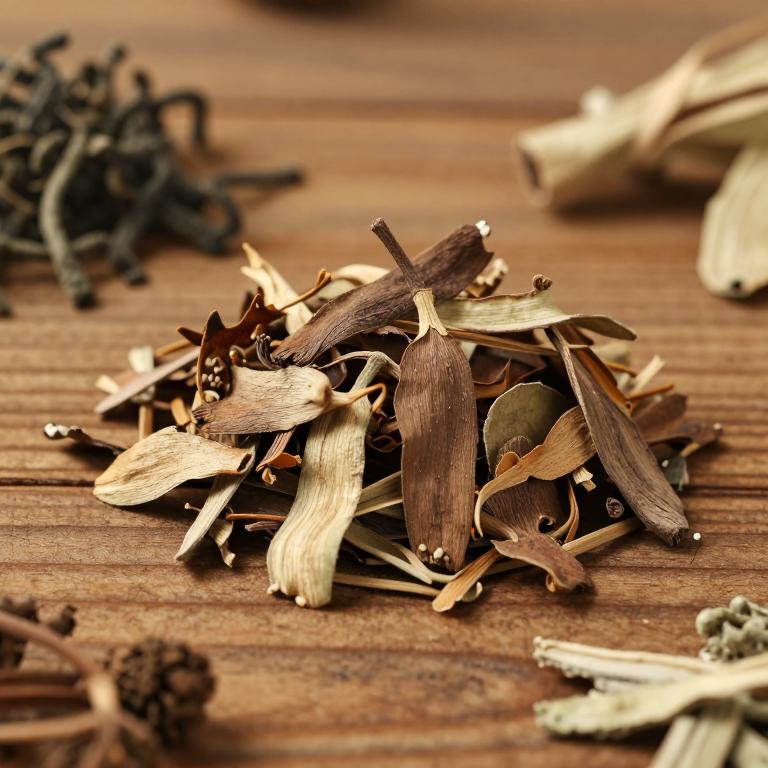
Names and Synonyms
Scientific Names
Accepted name
Lithocarpus haipiniiDistribution
This plant is specifically found within the diverse ecosystems of China. Its natural range is concentrated primarily in the southeastern regions of the country. Within this geographical area, it thrives in the unique environmental conditions provided by the landscape. Consequently, its distribution remains relatively localized to these specific southeastern provinces. This limited presence highlights the importance of protecting its native habitats in China Southeast.
| Region | Area |
|---|---|
| China | China Southeast |
Sources: The World Checklist of Vascular Plants (WCVP)
Botanical Identification
Ecology
The ecology of Lithocarpus haipinii is characterized by a highly specific altitudinal distribution, as it is found within a precise elevational niche. This species occupies a narrow ecological band centered at a mean elevation of 1000 m AMSL. Its habitat range is extremely restricted, with both its minimum and maximum elevation limits documented at 1000 m AMSL, indicating a specialized adaptation to this specific altitudinal zone. Such precise elevational requirements suggest that the plant is highly sensitive to the temperature, moisture, and atmospheric pressure gradients associated with this particular height above sea level.
- Elevational range max:
- 1000 m AMSL
Life history
The life history of Lithocarpus haipinii is characterized by its classification as a phanerophyte, specifically manifesting as both a phanerophyte and a nanophanerophyte depending on its developmental stage and environmental conditions. This plant maintains its perennating buds well above the ground, ensuring survival through various seasonal shifts. Furthermore, it exhibits an evergreen deciduousness, meaning it maintains its foliage throughout the year without the seasonal shedding typical of deciduous species, providing continuous photosynthetic activity. As a phanerophyte, its growth strategy focuses on structural permanence and long-term survival within its ecological niche.
- Deciduousness :
- evergreen
- Life form :
- phanerophyte
Morphology
The morphology of Lithocarpus haipinii is characterized by a robust growth form as a tree, exhibiting a predominantly woody structure. As an independent organism, it does not function as a parasite, and it maintains a terrestrial life habit rather than an epiphytic one. Furthermore, the plant is self-supporting in its structure and does not exhibit climbing habits.
- Climber :
- self-supporting
- Epiphyte :
- terrestrial
- Growth form :
- tree
- Parasite :
- independent
- Woodiness :
- woody
Reproduction
The reproduction of Lithocarpus haipinii is characterized by the development of distinct fruits that exhibit specific morphological variations in size. The fruit dimensions are measured across a range of lengths and widths, showing a clear distribution in physical characteristics. In terms of length, the fruits typically measure a minimum of 1.8 cm, reaching an average length of 2.2 cm, and can extend to a maximum length of 2.6 cm. The width of the fruit follows a similar pattern of variation, with the smallest recorded width being 2 cm, a mean width of 2.5 cm, and a maximum width reaching up to 3 cm. These measurements indicate a consistent structural profile for the reproductive output of the species.
- Fruit length max:
- 2.6 cm
- Fruit length mean:
- 2.2 cm
- Fruit length min:
- 1.8 cm
- Fruit width max:
- 3 cm
- Fruit width mean:
- 2.5 cm
- Fruit width min:
- 2 cm
Sources: Global Inventory of Floras and Traits (GIFT)
Chemicals
Lithocarpus haipinii has 1 reported phytochemicals identified across 0 scientific publications and several other databases. The most consistently reported chemicals include Betulin.
| Chemical | Supporting sources | Consensus |
|---|---|---|
| Betulin | 1 supporting sources | ★☆☆☆☆ |
Betulin
- Dr. Duke
Activities
Lithocarpus haipinii has 12 reported activities identified across 0 scientific publications and several other databases. The most consistently reported activities include AntiHIV, Anticarcinomic, Antifeedant, Antiflu, Antiinflammatory.
| Activity | Supporting sources | Consensus |
|---|---|---|
| AntiHIV | 1 supporting sources | ★☆☆☆☆ |
| Anticarcinomic | 1 supporting sources | ★☆☆☆☆ |
| Antifeedant | 1 supporting sources | ★☆☆☆☆ |
| Antiflu | 1 supporting sources | ★☆☆☆☆ |
| Antiinflammatory | 1 supporting sources | ★☆☆☆☆ |
| Antitumor | 1 supporting sources | ★☆☆☆☆ |
| Antiviral | 1 supporting sources | ★☆☆☆☆ |
| Aphidifuge | 1 supporting sources | ★☆☆☆☆ |
| Cytotoxic | 1 supporting sources | ★☆☆☆☆ |
| Hypolipemic | 1 supporting sources | ★☆☆☆☆ |
AntiHIV
- Dr. Duke
Anticarcinomic
- Dr. Duke
Antifeedant
- Dr. Duke
Antiflu
- Dr. Duke
Antiinflammatory
- Dr. Duke
Antitumor
- Dr. Duke
Antiviral
- Dr. Duke
Aphidifuge
- Dr. Duke
Cytotoxic
- Dr. Duke
Hypolipemic
- Dr. Duke