lychee
Litchi · Accepted scientific name
Scientific literature: Very Sparse (5 studies) · ★☆☆☆☆
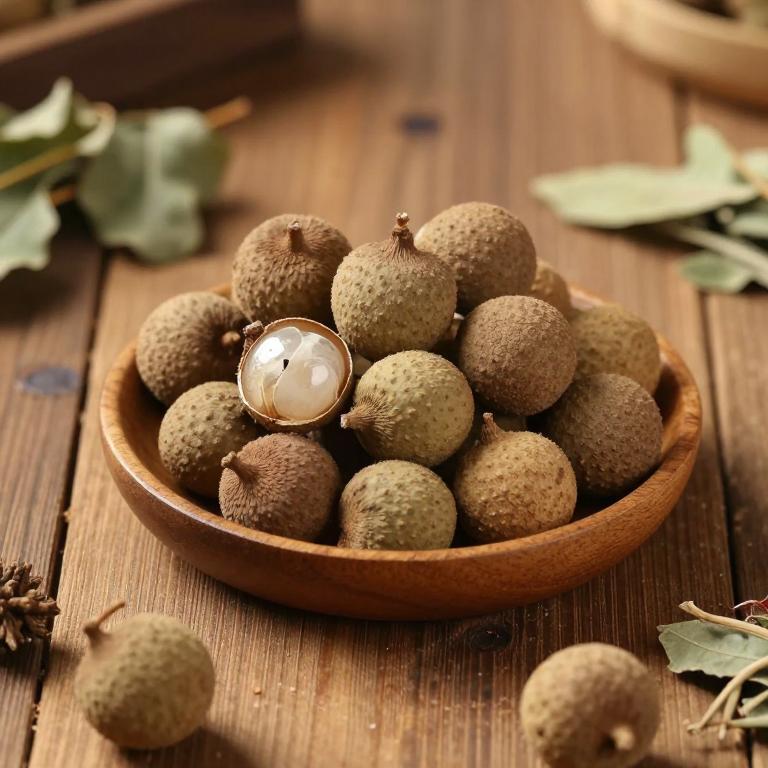
Lychee, scientifically known as Litchi, is a tropical fruit celebrated for its juicy, aromatic flesh. Beyond its delicious taste, it offers significant medicinal benefits, including antioxidant properties that support immunity, improve digestion, and promote skin health. This versatile plant serves as both a nutritious snack and a natural remedy.
- Family
- Sapindaceae
- Native range
- Africa
- Parts used
- Seed
- Common names
- Lychee
- Scientific synonyms
- Euphoria · Corvinia
Names and Synonyms
Common Names
- lychee
Scientific Names
Accepted name
LitchiSynonyms
- Euphoria
- Corvinia
Regional and Traditional Names
Spanish:
- Lechia
German:
- Litschi
Sources: Wikidata, Catalogue of Life
Taxonomical Classification
This plant belongs to the kingdom Plantae within the phylum Streptophyta and the class Equisetopsida. It is further classified under the subclass Magnoliidae and the order Sapindales. Finally, it resides in the family Sapindaceae under the genus Litchi.
| Rank | Classification |
|---|---|
| Kingdom | Plantae |
| Phylum | Streptophyta |
| Class | Equisetopsida |
| Subclass | Magnoliidae |
| Order | Sapindales |
| Family | Sapindaceae |
| Genus | Litchi |
Sources: The World Checklist of Vascular Plants (WCVP)
Distribution
This plant exhibits a diverse geographical distribution spanning across Asia and the Indian Ocean islands. In East Asia, it is found within the provinces of Hainan and China Southeast. Moving toward the Indian Subcontinent, the species is specifically documented in the region of Assam. Its range also extends into the Western Indian Ocean, where it grows in Mauritius. Additionally, the plant can be located on the island of Réunion within the same oceanic region.
| Region | Area |
|---|---|
| Western Indian Ocean | Mauritius |
| Western Indian Ocean | Réunion |
| China | Hainan |
| China | China Southeast |
| Indian Subcontinent | Assam |
| Indian Subcontinent | Bangladesh |
| Indian Subcontinent | East Himalaya |
| Indian Subcontinent | India |
| Indo-China | Andaman Is. |
| Indo-China | Cambodia |
Sources: The World Checklist of Vascular Plants (WCVP)
Plant Parts
Litchi has 1 reported plant parts identified across 2 scientific publications and several other databases that are studied for medicinal purposes. The most consistently reported plant part include seed.
| Plant part | Supporting sources | Consensus |
|---|---|---|
| Seed | 2 supporting sources | ★☆☆☆☆ |
Seed
- Food & function
- Journal of agricultural and food chemistry
Chemicals
Litchi has 1 reported phytochemicals identified across 2 scientific publications and several other databases. The most consistently reported chemicals include Procyanidins.
| Chemical | Supporting sources | Consensus |
|---|---|---|
| Procyanidins | 1 supporting sources | ★☆☆☆☆ |
Procyanidins
- Journal of agricultural and food chemistry
Preparations
Litchi has 2 reported preparations identified across 2 scientific publications and several other databases. The most consistently reported preparations include extract (LSE), extracts.
| Preparation | Supporting sources | Consensus |
|---|---|---|
| Extract (lse) | 1 supporting sources | ★☆☆☆☆ |
| Extracts | 1 supporting sources | ★☆☆☆☆ |
Extract (lse)
- Journal of agricultural and food chemistry
Extracts
- Journal of ethnopharmacology