Liquidambar styraciflua
Liquidambar styraciflua · Accepted scientific name
Scientific literature: Very Extensive (465 studies) · ★★★★★
, scientifically known as Liquidambar styraciflua, is a versatile medicinal plant prized for its aromatic resin. Renowned for its potent antimicrobial and anti-inflammatory properties, it has been used traditionally to treat skin ailments, respiratory issues, and digestive discomfort. This botanical treasure offers significant therapeutic potential in natural pharmacology.
- Family
- Not available
- Native range
- Europe
- Parts used
- Leaf
- Common names
- Not available
- Scientific synonyms
- Not available
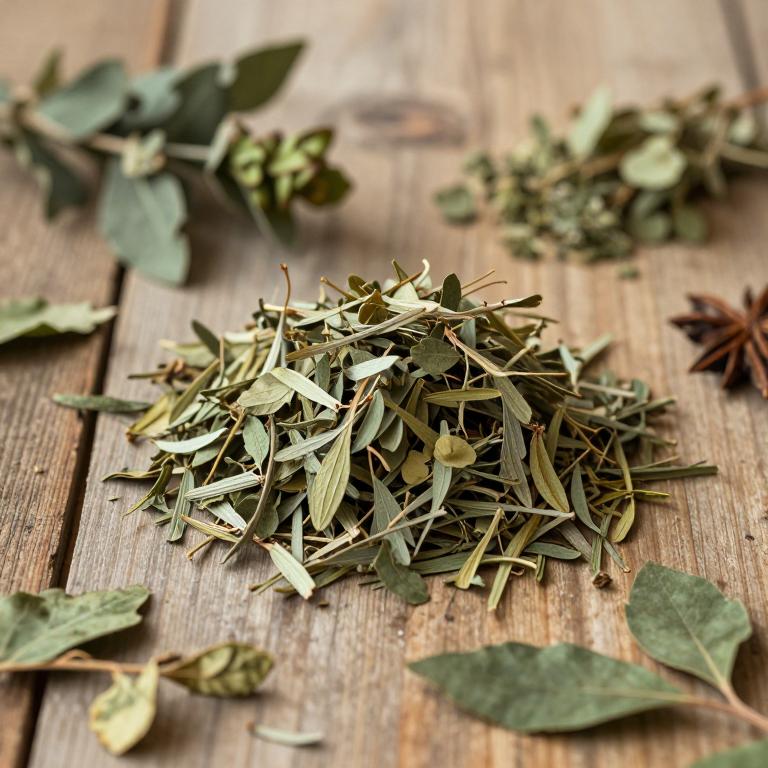
Names and Synonyms
Scientific Names
Accepted name
Liquidambar styracifluaDistribution
This plant exhibits a wide-ranging geographical distribution across multiple continents. In Europe, its presence spans from Belgium in Middle Europe to Spain in the Southwestern region. The species is also found within Southeastern Europe, specifically in Italy. Moving to North America, the plant inhabits the North-Central United States. Within this American region, it can be located in both Illinois and Missouri.
| Region | Area |
|---|---|
| Middle Europe | Belgium |
| Southwestern Europe | Spain |
| Southeastern Europe | Italy |
| North-Central U.S.A. | Illinois |
| North-Central U.S.A. | Missouri |
| North-Central U.S.A. | Oklahoma |
| Northeastern U.S.A. | Connecticut |
| Northeastern U.S.A. | Indiana |
| Northeastern U.S.A. | New York |
| Northeastern U.S.A. | Pennsylvania |
Sources: The World Checklist of Vascular Plants (WCVP)
Botanical Identification
Ecology
The ecology of Liquidambar styraciflua is characterized by its preference for forest environments, where it integrates into complex woodland ecosystems. It typically thrives within these forested habitats, playing a role in the structural and biological composition of the landscape. Regarding its altitudinal distribution, the species is found at a significant elevational range, with a mean elevation of approximately 2600 m AMSL.
- Elevational range mean:
- 2600 m AMSL
- Habitat :
- forest
Life history
The life history of Liquidambar styraciflua is characterized by its status as a perennial organism, ensuring its presence in the ecosystem over many years. As a phanerophyte, its regenerative buds are located on aerial shoots well above the ground, allowing it to grow into a substantial woody structure. The plant follows a deciduous growth pattern, meaning it sheds its foliage annually in response to seasonal changes, typically entering a period of dormancy during the colder months before regenerating new leaves in the spring.
- Deciduousness :
- deciduous
- Life form :
- phanerophyte
- Lifecycle :
- perennial
Morphology
The morphology of Liquidambar styraciflua is characterized by its growth form as a woody tree that is strictly self-supporting rather than being a climber, liana, or vine. It is a terrestrial species that grows independently, functioning neither as an epiphyte nor as a parasite. In terms of stature, the plant exhibits significant variation in height, with recorded minimum heights of approximately 10.06 m and maximum heights reaching 15.24 m, though its mean plant height is documented at approximately 31.74 m.
- Aquatic :
- terrestrial
- Climber :
- self-supporting
- Epiphyte :
- terrestrial
- Growth form :
- tree
- Parasite :
- independent
- Plant height max:
- 15.24 m
- Plant height mean:
- 31.7433333333333 m
- Plant height min:
- 10.0584 m
- Woodiness :
- woody
Physiology
The physiology of Liquidambar styraciflua is characterized by a C3 photosynthetic pathway, which involves the direct fixation of carbon dioxide through the Calvin cycle without the specialized carbon-concentrating mechanisms found in C4 or CAM plants. This metabolic strategy dictates its reliance on specific environmental conditions, particularly moisture availability and temperature, to optimize gas exchange and carbon assimilation. Additionally, this species does not function as a nitrogen fixer, meaning it lacks the symbiotic relationships with nitrogen-fixing bacteria required to convert atmospheric nitrogen into usable forms, and thus depends entirely on the uptake of nitrogenous compounds from the soil to support its growth and metabolic processes.
- Nitrogen fixer :
- no
- Photosynthetic pathway :
- C3
Reproduction
The reproduction of Liquidambar styraciflua is characterized by a biotic pollination syndrome, primarily facilitated by insects, with bees playing a specific role in the process. The plant produces seeds with a highly specialized mass profile, featuring a mean seed mass of approximately 0.00524 g, while individual seed weights range from a minimum of 0.004 g to a maximum of 0.0065 g. Following successful fertilization, the dispersal of the seeds is governed by an anemochorous syndrome, meaning they are primarily dispersed by the wind to facilitate colonization in new environments.
- Dispersal syndrome :
- anemochorous
- Pollination syndrome :
- insect
- Pollination syndrome :
- bee
- Pollination syndrome :
- biotic
- Seed mass max:
- 0.0065 g
- Seed mass mean:
- 0.00524233333333333 g
- Seed mass min:
- 0.004 g
Sources: Global Inventory of Floras and Traits (GIFT)
Plant Parts
Liquidambar styraciflua has 1 reported plant parts identified across 1 scientific publications and several other databases that are studied for medicinal purposes. The most consistently reported plant part include leaf.
| Plant part | Supporting sources | Consensus |
|---|---|---|
| Leaf | 1 supporting sources | ★☆☆☆☆ |
Leaf
- Pakistan journal of biological sciences : PJBS
Chemicals
Liquidambar styraciflua has 61 reported phytochemicals identified across 1 scientific publications and several other databases. The most consistently reported chemicals include 3-Epioleanolic acid, ALPHA-SITOSTEROL, ALUMINUM, Ash, BARIUM.
| Chemical | Supporting sources | Consensus |
|---|---|---|
| 3-Epioleanolic acid | 1 supporting sources | ★☆☆☆☆ |
| ALPHA-SITOSTEROL | 1 supporting sources | ★☆☆☆☆ |
| ALUMINUM | 1 supporting sources | ★☆☆☆☆ |
| Ash | 1 supporting sources | ★☆☆☆☆ |
| BARIUM | 1 supporting sources | ★☆☆☆☆ |
| BENZYL CINNAMATE | 1 supporting sources | ★☆☆☆☆ |
| BETA-SITOSTEROL | 1 supporting sources | ★☆☆☆☆ |
| BORNYL ACETATE | 1 supporting sources | ★☆☆☆☆ |
| BORON | 1 supporting sources | ★☆☆☆☆ |
| Borneol | 1 supporting sources | ★☆☆☆☆ |
3-Epioleanolic acid
- Dr. Duke
ALPHA-SITOSTEROL
- Dr. Duke
ALUMINUM
- Dr. Duke
Ash
- Dr. Duke
BARIUM
- Dr. Duke
BENZYL CINNAMATE
- Dr. Duke
BETA-SITOSTEROL
- Dr. Duke
BORNYL ACETATE
- Dr. Duke
BORON
- Dr. Duke
Borneol
- Dr. Duke
Activities
Liquidambar styraciflua has 377 reported activities identified across 1 scientific publications and several other databases. The most consistently reported activities include (-)-Chronotropic, (-)-Inotropic, ACE-Inhibitor, AP-1-Inhibitor, ATPase-Inhibitor.
| Activity | Supporting sources | Consensus |
|---|---|---|
| (-)-Chronotropic | 1 supporting sources | ★☆☆☆☆ |
| (-)-Inotropic | 1 supporting sources | ★☆☆☆☆ |
| ACE-Inhibitor | 1 supporting sources | ★☆☆☆☆ |
| AP-1-Inhibitor | 1 supporting sources | ★☆☆☆☆ |
| ATPase-Inhibitor | 1 supporting sources | ★☆☆☆☆ |
| Abortifacient | 1 supporting sources | ★☆☆☆☆ |
| Acnegenic | 1 supporting sources | ★☆☆☆☆ |
| Aldose-Reductase-Inhibitor | 1 supporting sources | ★☆☆☆☆ |
| Allelochemic | 1 supporting sources | ★☆☆☆☆ |
| Allergenic | 1 supporting sources | ★☆☆☆☆ |
(-)-Chronotropic
- Dr. Duke
(-)-Inotropic
- Dr. Duke
ACE-Inhibitor
- Dr. Duke
AP-1-Inhibitor
- Dr. Duke
ATPase-Inhibitor
- Dr. Duke
Abortifacient
- Dr. Duke
Acnegenic
- Dr. Duke
Aldose-Reductase-Inhibitor
- Dr. Duke
Allelochemic
- Dr. Duke
Allergenic
- Dr. Duke
Conditions
Liquidambar styraciflua has 2 reported investigations on conditions identified across 1 scientific publications and several other databases. The most consistently reported conditions include antioxidant, thrombosis.
| Condition | Supporting sources | Consensus |
|---|---|---|
| Antioxidant | 1 supporting sources | ★☆☆☆☆ |
| Thrombosis | 1 supporting sources | ★☆☆☆☆ |
Antioxidant
- Pakistan journal of biological sciences : PJBS
Thrombosis
- Zhong yao cai = Zhongyaocai = Journal of Chinese medicinal materials
Preparations
Liquidambar styraciflua has 1 reported preparations identified across 1 scientific publications and several other databases. The most consistently reported preparations include methanolic leaf extracts.
| Preparation | Supporting sources | Consensus |
|---|---|---|
| Methanolic leaf extracts | 1 supporting sources | ★☆☆☆☆ |
Methanolic leaf extracts
- Pakistan journal of biological sciences : PJBS