Liquidambar chingii
Liquidambar chingii · Accepted scientific name
Scientific literature: Very Sparse (35 studies) · ★☆☆☆☆
Liquidambar chingii, scientifically known as Liquidambar chingii, is a remarkable medicinal plant prized for its aromatic resin. Historically used in traditional medicine, this species offers potent therapeutic properties, including anti-inflammatory and antimicrobial effects. Its unique balsamic compounds make it a valuable resource in natural pharmacology and holistic healing.
- Family
- Altingiaceae
- Native range
- Asia-Temperate
- Parts used
- Root · Leaf
- Common names
- Not available
- Scientific synonyms
- Semiliquidambar Chingii · Altingia Chingii · 6 more
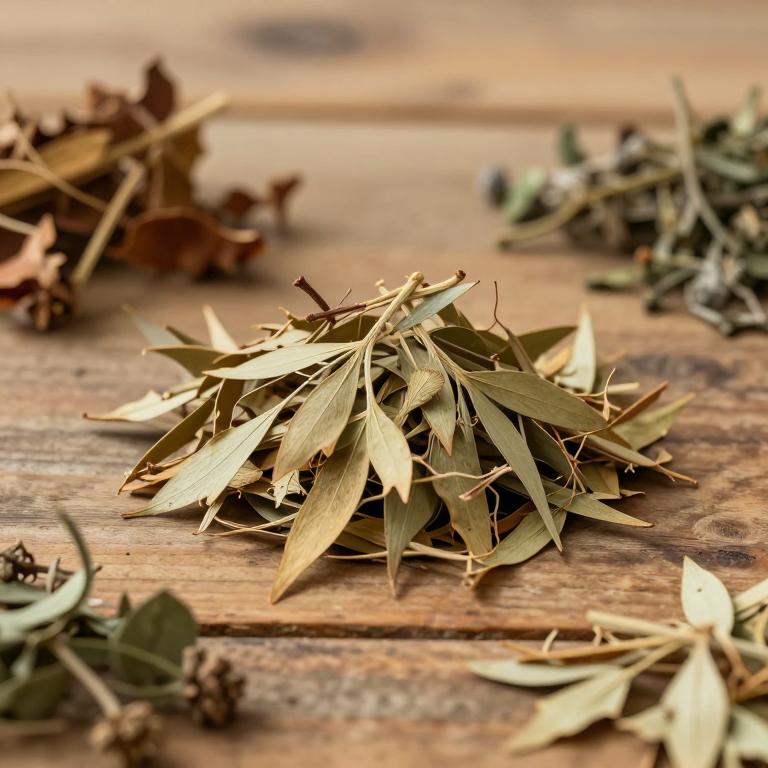
Names and Synonyms
Scientific Names
Accepted name
Liquidambar chingiiSynonyms
- Semiliquidambar chingii
- Altingia chingii
- Altingia chingii var. parvifolia
- Semiliquidambar chingii var. longipes
- Semiliquidambar coriacea
- Semiliquidambar cathayensis
- Semiliquidambar cathayensis var. fukienensis
- Semiliquidambar cathayensis var. parvifolia
Sources: Wikidata
Taxonomical Classification
This plant belongs to the kingdom Plantae within the phylum Streptophyta and the class Equisetopsida. It is further classified under the subclass Magnoliidae and the order Saxifragales, falling into the family Altingiaceae. Ultimately, its taxonomic identity is defined by its placement within the genus Liquidambar.
| Rank | Classification |
|---|---|
| Kingdom | Plantae |
| Phylum | Streptophyta |
| Class | Equisetopsida |
| Subclass | Magnoliidae |
| Order | Saxifragales |
| Family | Altingiaceae |
| Genus | Liquidambar |
Sources: The World Checklist of Vascular Plants (WCVP)
Distribution
This plant, known as Liquidambar chingii, exhibits a specific range of occurrence across East and Southeast Asia. Within China, its distribution is primarily concentrated in the South-Central regions. It can also be found throughout the Southeast portions of the country. Furthermore, the species extends its reach into the Indo-China peninsula. Specifically, Vietnam serves as a key geographical area where this medicinal plant is located.
| Region | Area |
|---|---|
| China | China South-Central |
| China | China Southeast |
| Indo-China | Vietnam |
Sources: The World Checklist of Vascular Plants (WCVP)
Botanical Identification
Life history
The life history of Liquidambar chingii is characterized by a complex developmental cycle and distinct morphological shifts in foliage retention. As a perennial woody species, its growth patterns are heavily influenced by environmental conditions, which dictate its specific foliage strategy. While the species exhibits a degree of variability in its canopy density, its deciduousness is categorized by a spectrum that includes deciduous, evergreen, and variable traits. This variability means that while many individuals undergo a seasonal shedding of leaves, others may retain their foliage throughout much of the year depending on local climatic stability. The plant progresses through a lifecycle of establishing a robust root system and a spreading canopy, eventually reaching maturity where it produces resinous exudates and seeds through a seasonal reproductive cycle. This fluctuating approach to leaf retention serves as an adaptive mechanism, allowing the species to balance photosynthetic efficiency with survival in diverse ecological niches.
- Deciduousness :
- evergreen
Morphology
The morphology of Liquidambar chingii is characterized by its growth form as a large, perennial tree. As a woody species, it develops a robust, lignified structure capable of significant height and diameter. Unlike many other forest species, it does not exhibit a climbing habit; it is not an obligatory, facultative, or self-supporting climber, but rather functions as a self-standing tree within its ecosystem.
- Climber :
- self-supporting
- Growth form :
- tree
- Woodiness :
- woody
Sources: Global Inventory of Floras and Traits (GIFT)
Plant Parts
Liquidambar chingii has 2 reported plant parts identified across 6 scientific publications and several other databases that are studied for medicinal purposes. The most consistently reported plant part include root, leaf.
| Plant part | Supporting sources | Consensus |
|---|---|---|
| Root | 4 supporting sources | ★★☆☆☆ |
| Leaf | 2 supporting sources | ★☆☆☆☆ |
Root
- Zhong yao cai = Zhongyaocai = Journal of Chinese medicinal materials
- Molecular biology reports
- PeerJ
- Molecules (Basel, Switzerland)
Leaf
- Molecular biology reports
- PeerJ
Chemicals
Liquidambar chingii has 19 reported phytochemicals identified across 6 scientific publications and several other databases. The most consistently reported chemicals include Flavonoids, OLEANOLIC ACID, Terpenoids, 3-oxo-olean-12-en-28-oic acid, 4-hydroxyphenylacetate.
| Chemical | Supporting sources | Consensus |
|---|---|---|
| Flavonoids | 2 supporting sources | ★☆☆☆☆ |
| OLEANOLIC ACID | 2 supporting sources | ★☆☆☆☆ |
| Terpenoids | 2 supporting sources | ★☆☆☆☆ |
| 3-oxo-olean-12-en-28-oic acid | 1 supporting sources | ★☆☆☆☆ |
| 4-hydroxyphenylacetate | 1 supporting sources | ★☆☆☆☆ |
| Arjunolic acid | 1 supporting sources | ★☆☆☆☆ |
| Betulonic acid | 1 supporting sources | ★☆☆☆☆ |
| Cyclic peptides | 1 supporting sources | ★☆☆☆☆ |
| Daucosterol | 1 supporting sources | ★☆☆☆☆ |
| Fatty acids | 1 supporting sources | ★☆☆☆☆ |
Flavonoids
- PeerJ
- Molecules (Basel, Switzerland)
OLEANOLIC ACID
- Fitoterapia
- PeerJ
Terpenoids
- Molecular biology reports
- Molecules (Basel, Switzerland)
3-oxo-olean-12-en-28-oic acid
- Zhong yao cai = Zhongyaocai = Journal of Chinese medicinal materials
4-hydroxyphenylacetate
- Metabolites
Arjunolic acid
- Zhong yao cai = Zhongyaocai = Journal of Chinese medicinal materials
Betulonic acid
- Zhong yao cai = Zhongyaocai = Journal of Chinese medicinal materials
Cyclic peptides
- Molecules (Basel, Switzerland)
Daucosterol
- Zhong yao cai = Zhongyaocai = Journal of Chinese medicinal materials
Fatty acids
- Molecules (Basel, Switzerland)
Preparations
Liquidambar chingii has 3 reported preparations identified across 6 scientific publications and several other databases. The most consistently reported preparations include ethyl acetate part of extracts, extracts, petrol ether part of extracts.
| Preparation | Supporting sources | Consensus |
|---|---|---|
| Ethyl acetate part of extracts | 1 supporting sources | ★☆☆☆☆ |
| Extracts | 1 supporting sources | ★☆☆☆☆ |
| Petrol ether part of extracts | 1 supporting sources | ★☆☆☆☆ |
Ethyl acetate part of extracts
- Zhong yao cai = Zhongyaocai = Journal of Chinese medicinal materials
Extracts
- Zhong yao cai = Zhongyaocai = Journal of Chinese medicinal materials
Petrol ether part of extracts
- Zhong yao cai = Zhongyaocai = Journal of Chinese medicinal materials