Lippia turbinata
Lippia turbinata · Accepted scientific name
Scientific literature: Very Sparse (5 studies) · ★☆☆☆☆
Lippia turbinata, scientifically known as Lippia turbinata, is a resilient, aromatic shrub native to various African regions. Highly valued in traditional medicine, this potent plant possesses significant antimicrobial and anti-inflammatory properties. It is frequently utilized in herbal remedies to treat diverse ailments, offering a rich source of bioactive compounds.
- Family
- Verbenaceae
- Native range
- Southern America
- Parts used
- Not available
- Common names
- Not available
- Scientific synonyms
- Lippia Disepala · Lippia Turbinata F. Angustifolia · 3 more
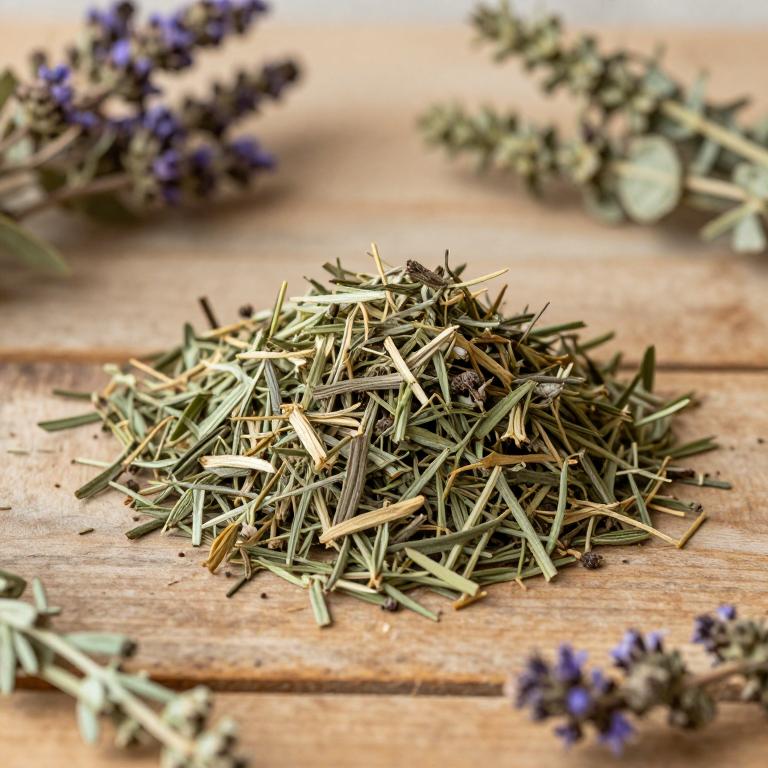
Names and Synonyms
Scientific Names
Accepted name
Lippia turbinataSynonyms
- Lippia disepala
- Lippia turbinata f. angustifolia
- Lippia globiflora f. glabriuscula
- Lippia aprica
- Lippia turbinata f. magnifolia
Regional and Traditional Names
Spanish:
- Poleo
Sources: Wikidata, Catalogue of Life
Taxonomical Classification
This plant belongs to the kingdom Plantae and the phylum Streptophyta within the class Equisetopsida. It is further classified under the subclass Magnoliidae in the order Lamiales and is a member of the family Verbenaceae. Within this family, it is specifically identified under the genus Lippia.
| Rank | Classification |
|---|---|
| Kingdom | Plantae |
| Phylum | Streptophyta |
| Class | Equisetopsida |
| Subclass | Magnoliidae |
| Order | Lamiales |
| Family | Verbenaceae |
| Genus | Lippia |
Sources: The World Checklist of Vascular Plants (WCVP)
Distribution
This plant exhibits a significant presence across various regions of South America. In Western South America, its range includes the countries of Bolivia and Peru. Moving toward the southern part of the continent, it can be found throughout Northeast Argentina. It is also widely distributed across Northwest Argentina. Finally, the species extends its reach into the northern regions of Chile.
| Region | Area |
|---|---|
| Western South America | Bolivia |
| Western South America | Peru |
| Southern South America | Argentina Northeast |
| Southern South America | Argentina Northwest |
| Southern South America | Chile North |
Sources: The World Checklist of Vascular Plants (WCVP)
Botanical Identification
Ecology
The ecology of Lippia turbinata is characterized by its adaptability to diverse topographic gradients, thriving within an elevational range that extends from sea level (0 m AMSL) up to a maximum altitude of 1500 m AMSL. This broad altitudinal distribution allows the species to colonize a variety of ecological niches, ranging from lowland coastal or riverine environments to mid-altitude montane regions. Its presence across such a significant vertical span suggests a tolerance for varying temperature regimes and atmospheric pressures, enabling it to persist in both warmer, more humid lowlands and slightly cooler, temperate highland zones. This ecological plasticity is a key factor in its ability to establish itself across fragmented landscapes within its natural habitat.
- Elevational range max:
- 1500 m AMSL
- Elevational range min:
- 0 m AMSL
Life history
The life history of Lippia turbinata is characterized by its status as a perennial plant, allowing it to persist through multiple growing seasons. In terms of its growth habit and structural adaptation to its environment, it exhibits distinct life forms, specifically categorized as both a chamaephyte and a nanophanerophyte. This indicates that the plant maintains its woody or herbaceous parts close to the ground, typically keeping its buds at or just above the soil surface to survive varying environmental conditions.
- Life form :
- nanophanerophyte
- Life form :
- chamaephyte
- Lifecycle :
- perennial
Morphology
The morphology of Lippia turbinata is characterized by a woody growth form, specifically manifesting as a self-supporting shrub. It functions as an independent organism, lacking any parasitic tendencies, and maintains a terrestrial existence, distinguishing it from aquatic, semiaquatic, or epiphytic lifestyles. Rather than exhibiting climbing habits such as a liana or vine, the plant is structurally self-supporting and does not rely on other vegetation for vertical growth. Its physical development is defined by its woody nature, contributing to its stable, shrubby stature within its terrestrial habitat.
- Aquatic :
- terrestrial
- Climber :
- self-supporting
- Epiphyte :
- terrestrial
- Growth form :
- shrub
- Parasite :
- independent
- Woodiness :
- woody
Sources: Global Inventory of Floras and Traits (GIFT)
Chemicals
Lippia turbinata has 2 reported phytochemicals identified across 0 scientific publications and several other databases. The most consistently reported chemicals include Flavonoids, Piperitenone oxide.
| Chemical | Supporting sources | Consensus |
|---|---|---|
| Flavonoids | 1 supporting sources | ★☆☆☆☆ |
| Piperitenone oxide | 1 supporting sources | ★☆☆☆☆ |
Flavonoids
- Journal of ethnopharmacology
Piperitenone oxide
- Pharmaceutical biology
Conditions
Lippia turbinata has 2 reported investigations on conditions identified across 0 scientific publications and several other databases. The most consistently reported conditions include lipid peroxidation, protein carbonylation.
| Condition | Supporting sources | Consensus |
|---|---|---|
| Lipid peroxidation | 1 supporting sources | ★☆☆☆☆ |
| Protein carbonylation | 1 supporting sources | ★☆☆☆☆ |
Lipid peroxidation
- International journal of toxicology
Protein carbonylation
- International journal of toxicology
Preparations
Lippia turbinata has 3 reported preparations identified across 0 scientific publications and several other databases. The most consistently reported preparations include decoction, essential oil, infusion.
| Preparation | Supporting sources | Consensus |
|---|---|---|
| Decoction | 1 supporting sources | ★☆☆☆☆ |
| Essential oil | 1 supporting sources | ★☆☆☆☆ |
| Infusion | 1 supporting sources | ★☆☆☆☆ |
Decoction
- International journal of toxicology
Essential oil
- Phytotherapy research : PTR
Infusion
- International journal of toxicology