Lippia thymoides
Lippia thymoides · Accepted scientific name
Scientific literature: Very Sparse (31 studies) · ★☆☆☆☆
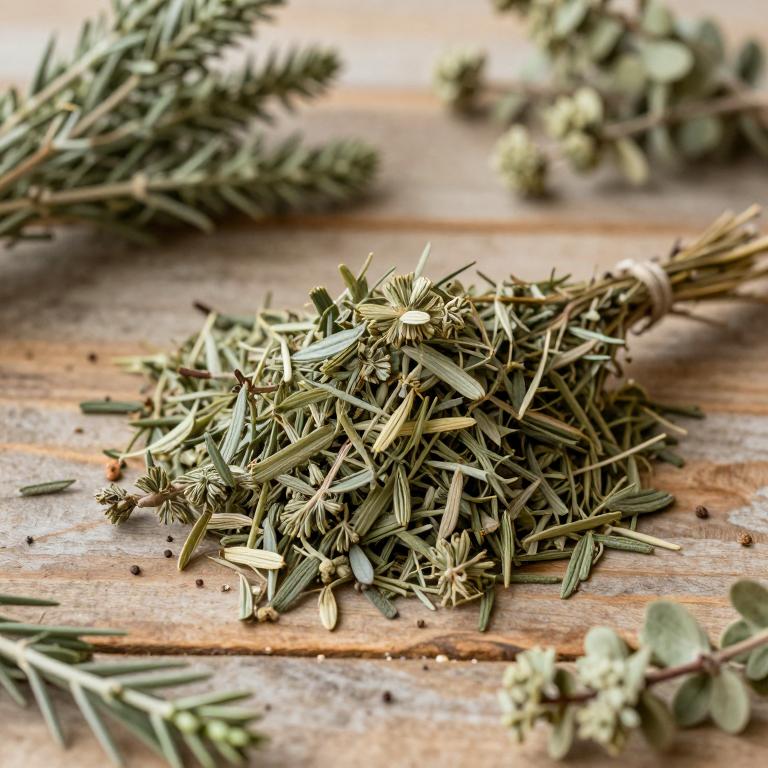
Lippia thymoides, is a versatile medicinal shrub native to Africa, widely revered for its therapeutic properties. Often called "wild basil," this aromatic plant is rich in essential oils. It is traditionally utilized to treat respiratory ailments, digestive issues, and inflammation, serving as a vital resource in many herbal remedies.
- Family
- Verbenaceae
- Native range
- Southern America
- Parts used
- Leaf
- Common names
- Not available
- Scientific synonyms
- Lippia Thymoides Var. Mucronulata · Lippia Thymoides Var. Tonsilis · 2 more
Names and Synonyms
Scientific Names
Accepted name
Lippia thymoidesSynonyms
- Lippia thymoides var. mucronulata
- Lippia thymoides var. tonsilis
- Lippia micromera var. paludicola
- Lippia micromera var. tonsilis
Sources: Wikidata
Taxonomical Classification
This plant belongs to the kingdom Plantae and is classified under the phylum Streptophyta and the class Equisetopsida. Within the subclass Magnoliidae, it is organized under the order Lamiales and the family Verbenaceae. Finally, its specific taxonomic placement is within the genus Lippia.
| Rank | Classification |
|---|---|
| Kingdom | Plantae |
| Phylum | Streptophyta |
| Class | Equisetopsida |
| Subclass | Magnoliidae |
| Order | Lamiales |
| Family | Verbenaceae |
| Genus | Lippia |
Sources: The World Checklist of Vascular Plants (WCVP)
Distribution
This plant, known scientifically as Lippia thymoides, exhibits a specific geographical presence within South America. Its documented distribution is primarily concentrated in the country of Brazil. Within the national territory, it is specifically found in the Northeast region. This localized occurrence suggests that the plant thrives under the particular climatic conditions characteristic of that area. Consequently, the Northeast of Brazil serves as a key location for studying this medicinal species.
| Region | Area |
|---|---|
| Brazil | Brazil Northeast |
Sources: The World Checklist of Vascular Plants (WCVP)
Botanical Identification
Ecology
The ecology of Lippia thymoides is characterized by its ability to thrive across diverse and specialized Brazilian ecosystems, demonstrating significant adaptability to varying environmental conditions. It is frequently found in Campo Limpo (open grasslands) and Campo Rupestre (rocky fields), where it must contend with intense solar radiation and potentially nutrient-poor, well-drained soils. Additionally, the species occupies more humid and sheltered environments, such as Floresta Ciliar (riparian forests) and Galeria (gallery forests), where it benefits from the proximity to water bodies and the moderated microclimates provided by forest canopies. This wide distribution across both open, sun-exposed landscapes and protected, moisture-rich forest margins indicates a versatile ecological strategy that allows the plant to colonize multiple successional stages and moisture gradients within its natural range.
- Habitat :
- Campo Limpo, Campo Rupestre, Floresta Ciliar ou Galeria
Life history
The life history of Lippia thymoides is characterized by its diverse growth strategies and structural adaptations within its natural habitat. In terms of its botanical life forms, the species exhibits significant plasticity, manifesting as both a phanerophyte and a nanophanerophyte depending on environmental conditions and developmental stages. As a phanerophyte, the plant maintains its buds well above the ground, typically through woody stems that allow it to persist through seasonal changes. Concurrently, its classification as a nanophanerophyte indicates a life cycle where the reproductive and vegetative buds are held at a very low height, just above the soil surface, facilitating a compact growth habit that can withstand varied ecological pressures. This combination of life forms enables the plant to navigate different successional stages and environmental stressors, ensuring its persistence and reproductive success within its ecosystem.
- Life form :
- nanophanerophyte
- Life form :
- phanerophyte
Morphology
The morphology of Lippia thymoides is characterized by its growth form as a woody shrub, exhibiting a robust and self-supporting structure. It is not a climber, liana, or vine, nor does it function as an obligate or facultative climber, maintaining its upright posture independently. As an independent organism, it does not exhibit parasitic behavior, functioning as a non-parasitic species. In terms of its ecological habitat and life habit, the plant is primarily terrestrial rather than aquatic or semiaquatic, and it does not function as an epiphyte, whether in holoepiphytic, hemiepiphytic, or facultative forms. Its physical development is defined by its woody nature, distinguishing it from non-woody herbs or graminoids.
- Aquatic :
- terrestrial
- Climber :
- self-supporting
- Epiphyte :
- terrestrial
- Growth form :
- shrub
- Parasite :
- independent
- Woodiness :
- woody
Sources: Global Inventory of Floras and Traits (GIFT)
Plant Parts
Lippia thymoides has 1 reported plant parts identified across 1 scientific publications and several other databases that are studied for medicinal purposes. The most consistently reported plant part include leaf.
| Plant part | Supporting sources | Consensus |
|---|---|---|
| Leaf | 1 supporting sources | ★☆☆☆☆ |
Leaf
- Pharmaceutical biology
Chemicals
Lippia thymoides has 14 reported phytochemicals identified across 1 scientific publications and several other databases. The most consistently reported chemicals include Germacrene D, (E)-Caryophyllene, 1,8-Cineole, Borneol, CAMPHENE.
| Chemical | Supporting sources | Consensus |
|---|---|---|
| Germacrene D | 2 supporting sources | ★☆☆☆☆ |
| (E)-Caryophyllene | 1 supporting sources | ★☆☆☆☆ |
| 1,8-Cineole | 1 supporting sources | ★☆☆☆☆ |
| Borneol | 1 supporting sources | ★☆☆☆☆ |
| CAMPHENE | 1 supporting sources | ★☆☆☆☆ |
| Humulene epoxide II | 1 supporting sources | ★☆☆☆☆ |
| MYRCENE | 1 supporting sources | ★☆☆☆☆ |
| P-CYMENE | 1 supporting sources | ★☆☆☆☆ |
| THYMOL | 1 supporting sources | ★☆☆☆☆ |
| Terpenoids | 1 supporting sources | ★☆☆☆☆ |
Germacrene D
- Chemistry Central journal
- Pharmaceutical biology
(E)-Caryophyllene
- Chemistry Central journal
1,8-Cineole
- Chemistry Central journal
Borneol
- Pharmaceutical biology
CAMPHENE
- Pharmaceutical biology
Humulene epoxide II
- Chemistry Central journal
MYRCENE
- Chemistry Central journal
P-CYMENE
- Chemistry Central journal
THYMOL
- Chemistry Central journal
Terpenoids
- Natural product research
Activities
Lippia thymoides has 1 reported activities identified across 1 scientific publications and several other databases. The most consistently reported activities include Antinociceptive.
| Activity | Supporting sources | Consensus |
|---|---|---|
| Antinociceptive | 1 supporting sources | ★☆☆☆☆ |
Antinociceptive
- Natural product research
Conditions
Lippia thymoides has 7 reported investigations on conditions identified across 1 scientific publications and several other databases. The most consistently reported conditions include fever, bronchitis, headaches, inflammation, pain.
| Condition | Supporting sources | Consensus |
|---|---|---|
| Fever | 2 supporting sources | ★☆☆☆☆ |
| Bronchitis | 1 supporting sources | ★☆☆☆☆ |
| Headaches | 1 supporting sources | ★☆☆☆☆ |
| Inflammation | 1 supporting sources | ★☆☆☆☆ |
| Pain | 1 supporting sources | ★☆☆☆☆ |
| Rheumatism | 1 supporting sources | ★☆☆☆☆ |
| Wounds | 1 supporting sources | ★☆☆☆☆ |
Fever
- Natural product research
- Pharmaceutical biology
Bronchitis
- Pharmaceutical biology
Headaches
- Pharmaceutical biology
Inflammation
- Natural product research
Pain
- Natural product research
Rheumatism
- Pharmaceutical biology
Wounds
- Pharmaceutical biology
Preparations
Lippia thymoides has 3 reported preparations identified across 1 scientific publications and several other databases. The most consistently reported preparations include essential oil, extracts, oils.
| Preparation | Supporting sources | Consensus |
|---|---|---|
| Essential oil | 1 supporting sources | ★☆☆☆☆ |
| Extracts | 1 supporting sources | ★☆☆☆☆ |
| Oils | 1 supporting sources | ★☆☆☆☆ |
Essential oil
- Natural product research
Extracts
- Chemistry Central journal
Oils
- Chemistry Central journal