Lippia scaberrima
Lippia scaberrima · Accepted scientific name
Scientific literature: Very Sparse (4 studies) · ★☆☆☆☆
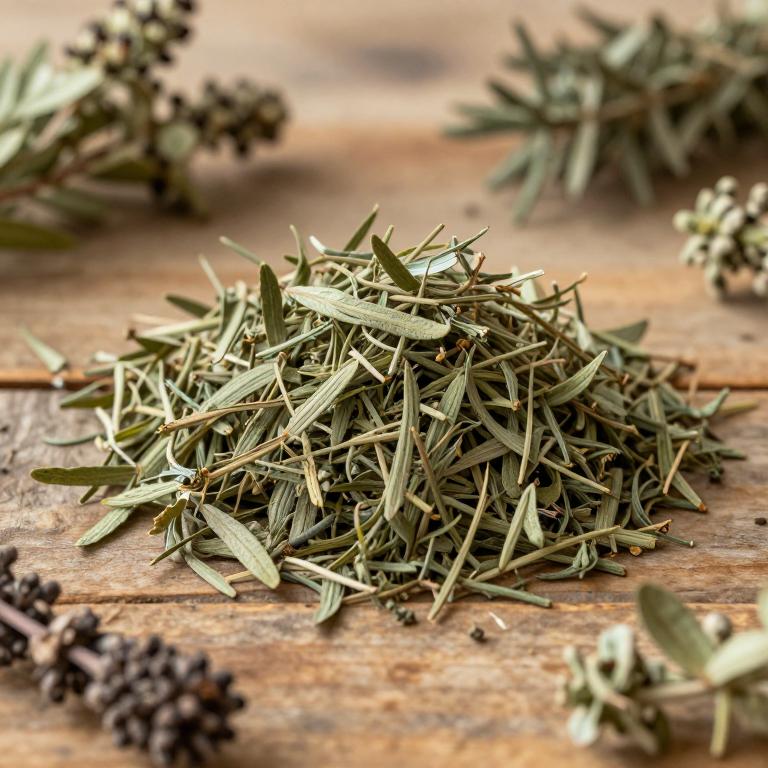
, scientifically known as Lippia scaberrima, is a versatile medicinal shrub native to South America. Renowned for its aromatic properties, this plant is widely utilized in traditional medicine to treat digestive ailments and inflammatory conditions. Its potent essential oils offer significant therapeutic potential for holistic wellness and natural healing.
- Family
- Verbenaceae
- Native range
- Africa
- Parts used
- Not available
- Common names
- Not available
- Scientific synonyms
- Lippia Transvalensis · Camara Salviifolia Var. Transvalensis
Names and Synonyms
Scientific Names
Accepted name
Lippia scaberrimaSynonyms
- Lippia transvalensis
- Camara salviifolia var. transvalensis
Sources: Wikidata, Catalogue of Life
Taxonomical Classification
This plant belongs to the kingdom Plantae and is classified within the phylum Streptophyta and class Equisetopsida. Following its placement in the subclass Magnoliidae and order Lamiales, it is categorized under the family Verbenaceae. Finally, its taxonomic identity is defined by the genus Lippia, specifically the species Lippia scaberrima.
| Rank | Classification |
|---|---|
| Kingdom | Plantae |
| Phylum | Streptophyta |
| Class | Equisetopsida |
| Subclass | Magnoliidae |
| Order | Lamiales |
| Family | Verbenaceae |
| Genus | Lippia |
Sources: The World Checklist of Vascular Plants (WCVP)
Distribution
This plant is native to various regions within the Southern Africa subcontinent. Its distribution includes specific populations located throughout the Cape Provinces. It can also be found growing in the Free State and the Northern Provinces. Furthermore, the species is documented to inhabit the KwaZulu-Natal area. Finally, its geographical range extends into the country of Botswana.
| Region | Area |
|---|---|
| Southern Africa | Botswana |
| Southern Africa | Cape Provinces |
| Southern Africa | KwaZulu-Natal |
| Southern Africa | Free State |
| Southern Africa | Northern Provinces |
Sources: The World Checklist of Vascular Plants (WCVP)
Botanical Identification
Ecology
The ecology of Lippia scaberrima is characterized by its ability to thrive within a specific altitudinal gradient, demonstrating adaptability to varying mountain climates. This species is primarily distributed across mid-to-high altitude zones, occupying an elevational range that begins at 765 m AMSL and extends up to a maximum of 1800 m AMSL. This vertical distribution suggests that the plant is adapted to the temperature fluctuations and moisture regimes typical of these tropical or subtropical montane environments, positioning it within ecological niches that support its specific physiological requirements for growth and medicinal potency.
- Elevational range max:
- 1800 m AMSL
- Elevational range min:
- 765 m AMSL
Life history
The life history of Lippia scaberrima is characterized by a perennial lifecycle, allowing the plant to persist through multiple growing seasons. In terms of its structural life form, it is classified as a hemicryptophyte, a growth habit where the perennating buds are located at or just below the soil surface, typically protected by leaf litter or organic matter during unfavorable conditions. This hemicryptophytic strategy enables the plant to survive seasonal fluctuations and maintain its presence within its ecological niche over an extended period.
- Life form :
- hemicryptophyte
- Lifecycle :
- perennial
Morphology
The morphology of Lippia scaberrima is characterized by a growth form that can be described as both a shrub and a herb, presenting a non-woody structure. This plant is a self-supporting species that does not function as a climber, nor does it act as a parasite or an epiphyte, as it maintains a terrestrial habit. In terms of its physical dimensions, it is a relatively low-growing species with a plant height ranging from a minimum of 0.3 m to a maximum of 0.6 m. Its ecological classification regarding water affinity places it within the terrestrial category, distinguishing it from aquatic or semiaquatic forms.
- Aquatic :
- terrestrial
- Climber :
- self-supporting
- Epiphyte :
- terrestrial
- Growth form :
- shrub
- Growth form :
- herb
- Parasite :
- independent
- Plant height max:
- 0.6 m
- Plant height min:
- 0.3 m
- Woodiness :
- non-woody
Sources: Global Inventory of Floras and Traits (GIFT)
Chemicals
Lippia scaberrima has 1 reported phytochemicals identified across 0 scientific publications and several other databases. The most consistently reported chemicals include Verbascoside.
| Chemical | Supporting sources | Consensus |
|---|---|---|
| Verbascoside | 1 supporting sources | ★☆☆☆☆ |
Verbascoside
- Molecules (Basel, Switzerland)
Activities
Lippia scaberrima has 2 reported activities identified across 0 scientific publications and several other databases. The most consistently reported activities include Antioxidant, Cytotoxic.
| Activity | Supporting sources | Consensus |
|---|---|---|
| Antioxidant | 1 supporting sources | ★☆☆☆☆ |
| Cytotoxic | 1 supporting sources | ★☆☆☆☆ |
Antioxidant
- Molecules (Basel, Switzerland)
Cytotoxic
- Molecules (Basel, Switzerland)
Conditions
Lippia scaberrima has 1 reported investigations on conditions identified across 0 scientific publications and several other databases. The most consistently reported conditions include tuberculosis.
| Condition | Supporting sources | Consensus |
|---|---|---|
| Tuberculosis | 1 supporting sources | ★☆☆☆☆ |
Tuberculosis
- Molecules (Basel, Switzerland)